

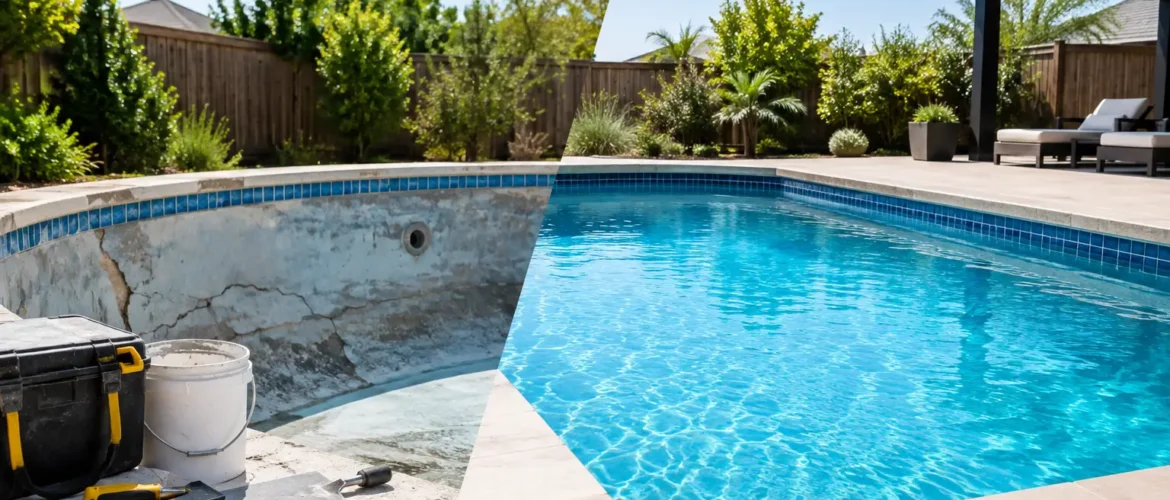
A cracked step, recurring water loss, faded surfaces, or equipment that keeps failing can turn a backyard pool from a favorite gathering place into a source of frustration. Pool repair versus pool replacement is not a one-size-fits-all decision. The right answer depends on what has failed, the condition of the pool structure, how old the system is, and whether a targeted repair will truly solve the problem for years to come.
For Connecticut homeowners, the decision also needs to account for seasonal freeze-thaw cycles, drainage, soil movement, and the condition of the surrounding deck. A good contractor should identify the cause of the problem before recommending a repair or a rebuild. Fixing a symptom without addressing the source can lead to another expensive service call next season.
When Pool Repair Is the Smart Investment
Repair is often the right choice when the pool shell, walls, floor, and overall structure are still sound. Many pool problems are isolated to a specific component, surface area, or piece of equipment. In those cases, replacing the entire pool would add cost and disruption without delivering enough additional value.
A liner replacement is a common example for vinyl-lined inground pools. Vinyl liners do not last forever, but a worn, faded, or leaking liner does not automatically mean the pool itself needs to be replaced. If the walls, vermiculite floor, plumbing, and coping are in good condition, a properly fitted new liner can make the pool look and function like new.
Equipment repairs can also be highly worthwhile. A failed pump, filter issue, leaking valve, damaged heater component, or outdated light may be repairable or replaceable without affecting the pool structure. The same applies to many plumbing leaks, especially when testing identifies a specific damaged line or fitting.
Fiberglass pools can often be repaired when the issue is limited to the gel coat or finish. Minor chips, scratches, staining, small blisters, and certain cosmetic cracks can usually be evaluated and addressed without removing the shell. Fiberglass is known for its durable, nonporous surface, but it still benefits from professional assessment when damage appears.
Repair generally makes sense when these factors are true: the problem is isolated, the pool has a solid structural foundation, the repair addresses the underlying cause, and the remaining pool components have useful life left. A repair may also be the practical choice when homeowners want to extend the pool’s life while planning a larger backyard upgrade in the future.
Signs Pool Replacement May Be the Better Choice
There comes a point when repeated repairs stop being a cost-saving strategy. If a pool has multiple major problems at the same time, putting money into one repair after another can become more expensive than rebuilding or replacing the pool properly.
Structural damage is one of the clearest reasons to consider replacement. For concrete pools, major cracks, deteriorating walls, extensive surface failure, or shifting that affects the pool’s shape may require more than patching. For vinyl pools, rusting or failing wall panels, major floor deterioration, or persistent issues behind the liner may point to a more involved rebuild. With fiberglass pools, significant shell damage, settlement, bulging, or damage caused by poor installation requires careful professional evaluation to determine whether repair is dependable or replacement is the safer long-term option.
Persistent leaks are another warning sign. A single plumbing leak is often repairable. But if water loss continues after multiple repairs, or if the source is tied to widespread plumbing deterioration, the pool may need a larger renovation. Water can undermine backfill, affect decking, increase chemical use, and create problems that grow beyond the original leak.
Replacement is also worth considering when the pool no longer fits the way your family uses the backyard. A shallow pool that children have outgrown, an aging design with limited entry options, or a pool without features you now want may justify a fresh start. A replacement project can provide an opportunity to change the shape, depth, steps, tanning ledge, lighting, safety features, patio layout, and equipment package.
Pool Repair Versus Pool Replacement Cost Factors
The lowest estimate is not always the least expensive decision over time. A repair may cost less today, but its value depends on how long it lasts and whether other major components will soon need work. Replacement has a higher upfront cost, yet it can eliminate several aging systems at once and provide a more predictable ownership experience.
Start by looking beyond the visible problem. If a vinyl liner needs replacement, ask about the condition of the walls, floor, skimmer, returns, plumbing, and coping. If a fiberglass surface needs repair, inspect the shell, surrounding backfill, drainage, and pool deck. If equipment has failed, consider its age and whether the rest of the system is nearing the end of its service life.
The surrounding backyard matters as well. Removing and replacing a pool can affect patios, fencing, landscaping, electrical connections, and drainage. On the other hand, a renovation may be the ideal time to replace cracked decking, improve access, add a safety cover, or update old equipment with more efficient options. The best scope of work considers the whole pool area rather than treating every issue as separate.
Financing can also influence the decision. Some homeowners prefer a smaller repair expense now. Others would rather invest in a replacement that creates a more usable backyard and avoids several years of piecemeal repairs. There is no universal answer, but the decision should be based on total value, not just the first invoice.
What a Professional Pool Assessment Should Include
Before choosing repair or replacement, get a detailed inspection from a pool professional who works with your type of pool. A proper assessment should not begin and end with a quick look at a crack or a leak. The goal is to determine why the damage occurred and whether it is likely to return.
For a leaking pool, this may include checking the water level, examining the plumbing, pressure testing lines when appropriate, inspecting fittings, and reviewing the shell or liner. For surface problems, the contractor should distinguish cosmetic wear from structural movement. For equipment concerns, the assessment should consider the pump, filter, heater, electrical components, plumbing connections, and overall circulation.
Ask for a clear explanation of the recommended work. You should understand what will be repaired, what is not included, how long the repair is expected to last, and what conditions could affect the result. If replacement is recommended, ask whether a partial rebuild is possible and what improvements can be made while the work is underway.
Connecticut Conditions Can Change the Answer
Connecticut pools face conditions that are different from pools in warmer climates. Winterization, ice, ground movement, snow load around the pool area, and spring water tables can all affect the pool and its surrounding structure. Poor drainage is especially important to address. Water collecting around a pool can contribute to deck movement, liner concerns, plumbing issues, and stress on the pool area.
That does not mean every crack or leak requires replacement. It means the repair plan needs to account for local conditions. A durable solution may include correcting drainage, repairing decking, replacing worn components, or updating a safety cover along with the primary pool work.
Choose the Fix That Gives You Confidence
A pool should be a place to spend time with family, not a project that keeps returning to the top of the to-do list. If the structure is sound and the issue is isolated, a professional repair can protect your investment and get your pool back in service. If the pool has widespread damage, recurring leaks, or an outdated design that no longer works for your home, replacement may offer better value and a better backyard.
EZ Aqua Fiberglass Pools can help Connecticut homeowners evaluate the condition of their pool, compare repair and replacement options, and choose a practical path forward. The best decision is the one that addresses the real problem and gives you confidence when pool season returns.