

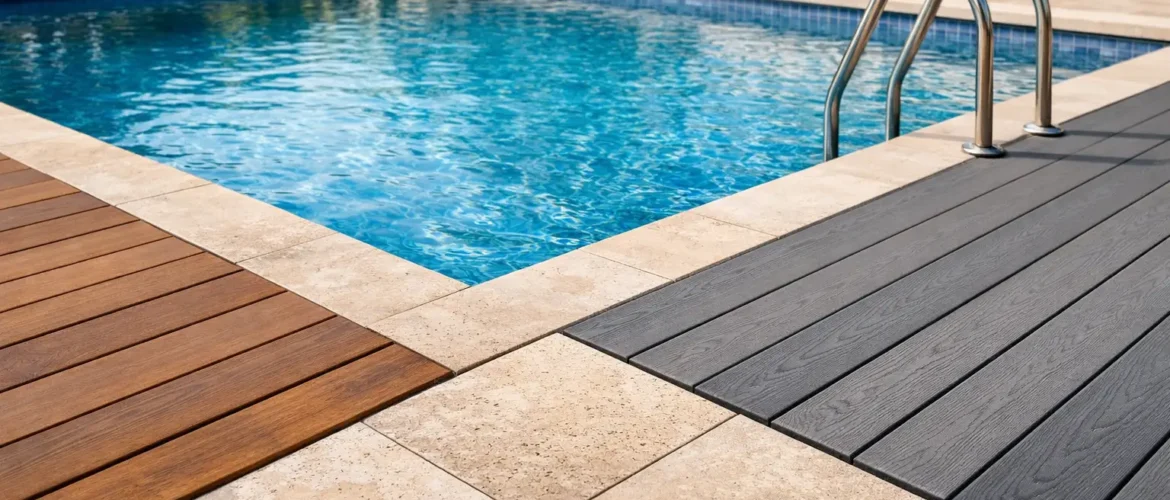
A pool deck does more than frame the water. It handles wet bare feet, patio furniture, chlorine splashes, winter freeze-thaw cycles, and years of foot traffic. For Connecticut homeowners, choosing the best pool decking materials for durability means looking beyond color and upfront price. The right material must hold up to local weather, provide dependable traction, and fit the way your family plans to use the backyard.
A beautiful deck that cracks, shifts, gets too hot, or becomes slippery can turn into an expensive repair project. The goal is a surface that looks right with your pool, drains properly, and remains easy to maintain season after season.
What Makes Pool Decking Durable in Connecticut?
Durability around a pool is not simply about picking the hardest material. Installation details matter just as much. Water needs a place to go, the base must be properly prepared, and the deck needs room to move as temperatures change.
Connecticut winters put extra pressure on outdoor surfaces. Moisture can enter small cracks or joints, freeze, expand, and worsen the damage. Pool decking also needs to tolerate de-icing products used nearby, pool chemicals, UV exposure, and occasional impacts from grills, chairs, and pool equipment.
A durable deck should offer a textured, slip-resistant finish, especially where swimmers enter and exit the pool. It should also be comfortable enough for bare feet during summer. No material is entirely maintenance-free, but some require far less attention than others.
Best Pool Decking Materials for Durability
Poured Concrete: A Strong, Flexible Choice
Poured concrete remains one of the most common pool deck materials for good reason. When it is properly installed with a compacted base, correct slope, reinforcement where needed, and well-placed control joints, concrete provides a long-lasting and cost-effective surface.
It also gives homeowners plenty of design flexibility. Broom-finished concrete provides practical traction, while stamped or colored concrete can create a more customized patio appearance. Exposed aggregate is another popular option because its textured surface holds up well around wet areas.
The trade-off is cracking. All concrete has the potential to crack over time, particularly in a climate with seasonal ground movement. Control joints help manage where cracking occurs, but they do not eliminate it completely. Sealing concrete periodically and addressing small cracks early can extend its useful life. Avoid a smooth trowel finish around a pool, since it can become slippery when wet.
Concrete Pavers: Excellent for Repairability
Concrete pavers are among the best choices for homeowners who want a durable deck without the long-term concern of repairing one large slab. Individual pavers are installed over a prepared base and joint material. Because the system has joints, it can accommodate minor movement better than monolithic concrete.
If a paver becomes stained, chipped, or settles unevenly, a contractor can usually remove and replace the affected area rather than demolishing the entire deck. That repairability is a major advantage for pool owners who expect to keep their backyard for many years.
Pavers come in many shapes, colors, and patterns, making them easy to coordinate with a fiberglass pool, retaining wall, outdoor kitchen, or landscaping. Choose a paver rated for outdoor use and a surface with enough texture for wet feet. The base preparation is critical. A poorly built base can lead to shifting, low spots, and drainage problems regardless of how attractive the pavers look on day one.
Natural Stone: Long-Lasting With the Right Selection
Natural stone can create a high-end pool area and, in many cases, deliver outstanding longevity. However, “natural stone” is a broad category. The best choice depends on the specific stone, finish, thickness, and installation method.
Dense stones such as granite can perform very well outdoors, while certain bluestone products are a familiar fit for Connecticut properties. A thermal or naturally cleft finish typically provides better traction than polished stone. Stone coping also gives a pool a classic finished edge and can complement a larger patio made from pavers or concrete.
Stone has a higher material and labor cost than most concrete options. Some types can also absorb moisture, flake, stain, or crack if they are not suited to freeze-thaw exposure. Ask your pool contractor about the stone’s rating for exterior use, the recommended sealant, and how it will be installed. A stone that performs beautifully in a mild climate is not automatically the right product for a New England pool deck.
Porcelain Pavers: Low Absorption and Modern Style
Porcelain pavers have become a strong option for homeowners who want a clean, contemporary look with low water absorption. Quality exterior porcelain resists staining, fading, and moisture penetration better than many natural materials. It can also mimic stone, wood, or concrete while delivering a consistent color and finish.
For pool areas, the product must be rated for exterior applications and wet conditions. Many porcelain pavers are available with textured finishes designed to improve slip resistance. They can be installed on a prepared base, pedestal system, or concrete slab depending on the project design.
Porcelain is highly durable, but it is not indestructible. Edges can chip if a heavy object strikes them, and installation must be precise. This is not a material to treat as a simple patio overlay. Proper layout, cuts, drainage, and edge restraint make the difference between a deck that lasts and one that develops problems.
Composite Decking: Best for Raised Deck Areas
Composite decking is not the usual choice for a ground-level pool surround, but it can be an excellent solution for raised decks, above-ground pools, and multi-level outdoor living areas. It resists rot, insect damage, and splintering better than traditional wood. Many homeowners also appreciate that it does not require regular staining or painting.
For an above-ground pool, composite can create a comfortable, finished transition from the house to the pool. It is particularly useful where a grade change makes a patio-style deck impractical.
The limitations are heat and traction. Some darker composite boards can become hot in direct summer sun, and not every board has the same slip resistance. Choose a pool-rated product, use hidden fasteners and proper framing, and make sure water does not become trapped below the deck. Composite may cost more upfront than pressure-treated lumber, but its lower maintenance needs can make it the better long-term value.
Materials That Need Extra Care
Wood decking can look warm and inviting, but it demands more maintenance near a pool. Moisture, splashes, sun, and foot traffic can lead to splinters, fading, warping, and mildew. It can work for select raised-deck designs, especially when maintained consistently, but it is rarely the lowest-maintenance durability choice.
Brick is another attractive material, particularly around traditional homes. Still, older brick surfaces may become uneven or slick, and mortar joints can deteriorate in freeze-thaw conditions. Brick generally works best as an accent, border, or part of a carefully designed hardscape rather than a default choice for every pool deck.
Do Not Overlook Coping, Drainage, and Deck Layout
Even the best material can fail if water collects against the pool, house, or deck edge. A pool deck should slope away from the pool where appropriate and direct runoff toward a planned drainage area. Depending on the property, this may involve grading, channel drains, or perimeter drainage solutions.
Coping deserves the same attention as the larger deck. It is the edge swimmers grip, sit on, and step across most often. For fiberglass pools, properly selected and installed coping helps create a clean transition between the pool shell and surrounding patio while allowing for necessary movement.
Leave adequate room for circulation, furniture, and safety. A narrow strip of decking may save money initially, but it can feel crowded once lounge chairs, a table, and active swimmers enter the picture. Planning the deck and pool together is usually more efficient than treating decking as an afterthought.
How to Choose the Right Material for Your Backyard
Start with how you will use the space. A family pool with frequent wet traffic needs traction and easy cleaning. A more formal entertaining area may place greater value on appearance, larger patio zones, and coordinated hardscaping. An above-ground pool may benefit from composite, while an inground fiberglass pool often pairs well with concrete, pavers, porcelain, or natural stone.
Next, consider long-term ownership costs. Concrete may offer the lowest initial price, while pavers can make future repairs simpler. Natural stone and porcelain can command a higher investment but may provide the finish and performance a premium backyard calls for. The most durable choice is the one that fits the site, budget, maintenance expectations, and installation plan.
Before finalizing a design, ask about base preparation, drainage, expansion joints, surface texture, sealing requirements, and winter care. Those answers reveal more about expected performance than a showroom sample ever can.
A pool deck should make your backyard easier to enjoy, not harder to maintain. EZ Aqua Fiberglass Pools can help Connecticut homeowners plan a pool and decking layout that fits the property, the budget, and the years of use ahead.
Pingback: Pool Repair Versus Pool Replacement Decisions - EZ Aqua Fiberglass Pools