

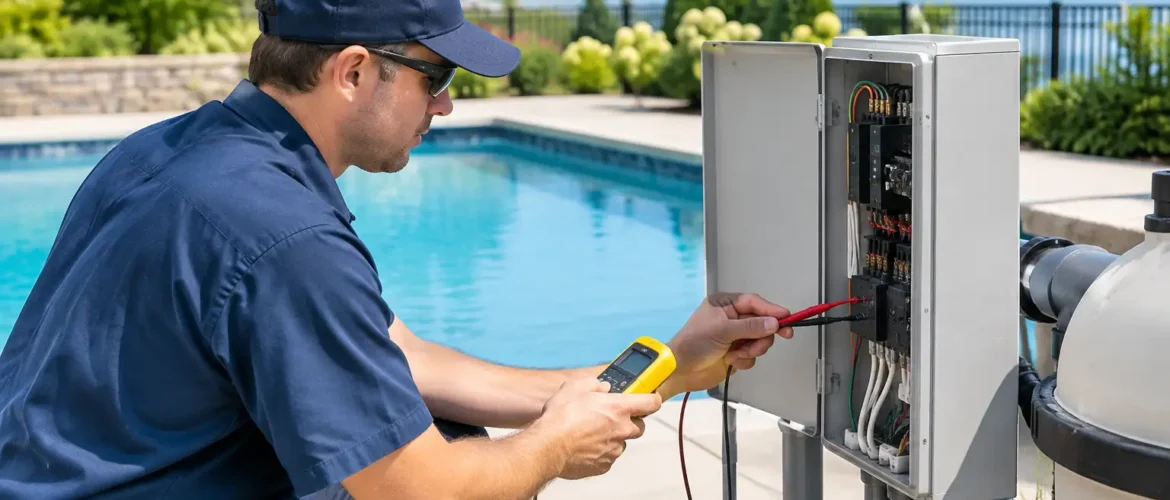
A pool should feel like the safest place in the backyard, especially when family and friends are in the water. This pool electrical safety guide focuses on the areas homeowners cannot afford to guess about: lighting, pumps, bonding, GFCI protection, equipment upgrades, and the warning signs that call for a licensed electrician.
Electricity and water are a serious combination, but a properly designed, maintained pool system manages that risk through multiple layers of protection. If you own an older pool, are planning a renovation, or are adding equipment such as a heater, salt system, or new lighting, electrical safety should be part of the plan from the start.
Start With the Equipment Pad
The equipment pad is where many pool electrical issues begin. Pumps, heaters, filters, automation controls, salt chlorinators, and landscape lights can all compete for space around the pool. A clean, accessible setup makes maintenance easier and allows a technician to spot trouble before it becomes a bigger repair.
Your pump and other hardwired equipment should be supplied by properly sized circuits and protected where required by ground-fault circuit interrupters, commonly called GFCIs. A GFCI is designed to shut off power quickly when it detects an imbalance in electrical current. That fast response can help prevent a dangerous shock.
A tripped GFCI is not simply an inconvenience to reset and ignore. It may be reacting to moisture inside a receptacle, damaged wiring, a failing pump motor, or another fault. If an outlet or breaker trips repeatedly, leave it off and schedule service. Repeated resets can mask the problem while putting people and equipment at risk.
Keep the area around the equipment pad dry and clear. Do not stack bags of chemicals against electrical controls, run temporary extension cords to pool equipment, or allow shrubs to block access to disconnects and panels. Pool chemicals can also corrode metal components and wiring connections over time, particularly in a damp Connecticut climate.
Grounding and Bonding Are Not the Same Thing
Homeowners often hear the terms grounding and bonding used together, but they perform different jobs. Both matter around a swimming pool.
Grounding provides a path for fault current to return safely to the electrical system, helping breakers and GFCIs operate as intended. Bonding connects conductive components around the pool so they remain at a similar electrical potential. The goal is to reduce the chance that someone in or near the water becomes the path between two different electrical charges.
A proper pool bonding system may include metal pool components, pump motors, ladders, handrails, diving equipment, metal fencing components, and reinforcing steel, depending on the pool design and applicable code. In a fiberglass pool, the shell itself is nonconductive, but that does not eliminate the need for proper bonding of the surrounding equipment and metal features.
This work is not a homeowner DIY project. Bonding connections can be hidden beneath decking, inside equipment areas, or integrated into the original installation. When a pool is rebuilt, a deck is replaced, or equipment is upgraded, have a qualified professional verify that the bonding system has not been damaged or left incomplete.
Pool Lighting Needs Extra Attention
Underwater lights are one of the most common areas of concern because they operate directly at the pool wall. Modern pool lighting systems are often low voltage, but they still require correct installation, listed components, appropriate junction boxes, and safe wiring methods.
Never swim if a pool light flickers, fails unexpectedly, produces a tingling sensation, or trips a breaker. Turn off power to the light at the breaker and keep swimmers out of the pool until a qualified pool professional or licensed electrician identifies the cause. Do not attempt to remove a light fixture while the circuit is energized.
Older pools may have aging incandescent fixtures, deteriorated cords, cracked niches, or outdated electrical connections. Replacing an older light with a modern LED system can improve visibility and reduce energy use, but compatibility matters. The fixture, transformer, controls, and wiring all need to work together safely.
Outdoor landscape lighting also deserves a closer look. Low-voltage lighting can make steps, pathways, and pool edges easier to see after dark, but loose wires, damaged fixtures, and improvised connections create avoidable hazards. Keep all lighting equipment rated for its location and installed according to manufacturer requirements.
Keep Portable Electrical Devices Away From the Water
The simplest safety rule is still one of the best: do not bring plugged-in electrical devices near the pool. That includes phone chargers, radios, fans, extension cords, power strips, and corded tools.
Battery-powered speakers and devices can reduce the need for cords, but they should still stay well away from the pool edge. A device dropped into the water can create panic, damaged equipment, and a distraction during active swimming. Set up music, outdoor television equipment, and charging stations in a dry entertaining area away from splash zones.
Be equally cautious during backyard projects. Homeowners sometimes use corded trimmers, pressure washers, drills, or shop vacuums near the pool during opening, closing, or deck repairs. Use properly protected outdoor receptacles, keep cords out of walking paths, and stop work if rain or standing water creates unsafe conditions.
Warning Signs That Need Professional Service
Electrical problems are not always obvious. Some begin as small annoyances before becoming a safety concern or causing costly equipment damage. Call for professional evaluation if you notice any of the following:
- A pool pump, light, heater, or salt system repeatedly trips a breaker or GFCI.
- You feel a tingling sensation when touching a handrail, ladder, equipment, or nearby metal surface.
- Pool lights flicker, dim unexpectedly, show water inside the lens, or stop working after rain.
- An outlet, switch, control panel, or electrical box is cracked, loose, corroded, hot, or making a buzzing sound.
- You see exposed wire, damaged conduit, temporary wiring, or an extension cord supplying permanent pool equipment.
If someone feels a shock in or around the pool, do not enter the water to investigate. Shut off power if it can be done safely from a dry location, keep everyone away from the pool, and contact emergency services if anyone is injured. The pool should remain closed until the electrical system has been inspected.
Plan Electrical Safety During Renovations
A renovation is the right time to correct electrical issues that are difficult to access later. If you are replacing a liner, installing new decking, adding a safety cover, upgrading the pump, or rebuilding an older pool, ask how the project affects wiring, bonding, lighting, and equipment clearances.
For example, a variable-speed pump can reduce operating costs and run more quietly than an older single-speed unit, but it may need updated controls or electrical connections. Adding a heat pump, electric heater, or automation system can require more capacity than the existing service can provide. The answer depends on your current equipment, panel capacity, and local code requirements.
Connecticut homeowners should also think about seasonal conditions. Freeze-thaw cycles, heavy rain, snow, and long periods of inactivity can expose weak seals, aging conduit, and corroded connections. A professional pool opening is a good opportunity to inspect visible electrical components before the first swim of the season.
Permits and inspections are not paperwork to work around. They help confirm that new circuits, equipment, and safety features meet the requirements for their location. A qualified installer will coordinate the electrical side of a pool project rather than treating it as an afterthought.
A Safer Backyard Is Built Into the Design
Electrical safety works best when it supports the way your family uses the backyard. Clear paths to the equipment pad, adequate lighting around steps, properly placed switches and receptacles, and dependable pool controls all make the space easier to enjoy.
At EZ Aqua Fiberglass Pools, we help homeowners look beyond the pool shell and consider the complete backyard system, including equipment placement, upgrades, repairs, and long-term maintenance needs. A well-planned project protects your investment while giving you more confidence every time the pool is open.
Before your next pool season, take a few minutes to walk the deck and equipment area with fresh eyes. If something looks worn, improvised, damp, or repeatedly unreliable, treat that as a reason to have it checked before your family gets back in the water.