

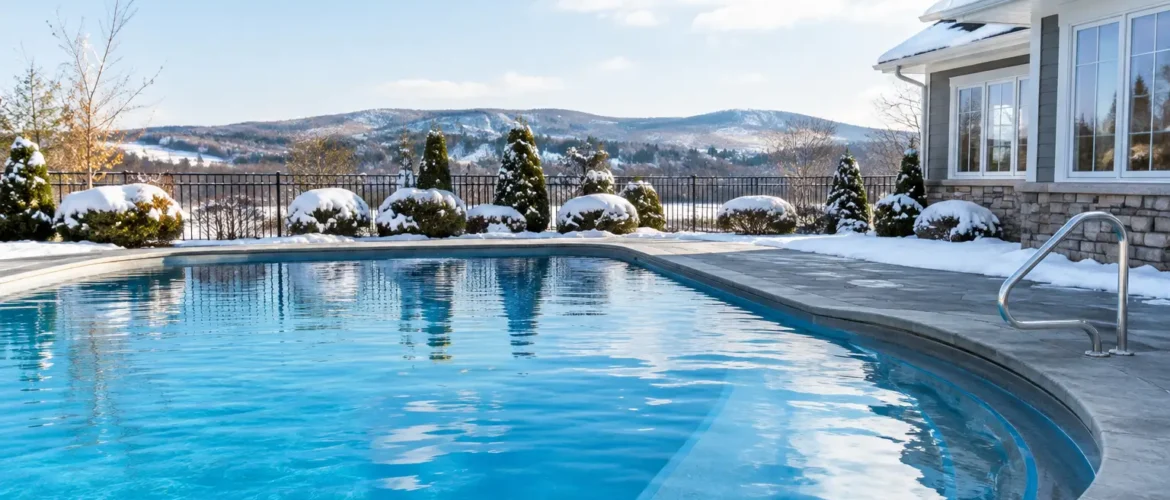
A Connecticut winter tests every part of a backyard pool system. Freezing temperatures, snow loads, groundwater, and repeated thaw cycles can expose weak plumbing, poor covers, and rushed winterization. So, are fiberglass pools good in winter? Yes – when they are professionally installed and properly closed, fiberglass pools are a strong choice for cold-climate homeowners.
The key is understanding what winter actually asks of a pool. Your fiberglass shell is not the only concern. The water level, plumbing lines, equipment, safety cover, surrounding deck, and site drainage all need to work together. A well-built fiberglass pool is designed for years of seasonal changes, but it still needs the right off-season care.
Are Fiberglass Pools Good in Winter in Connecticut?
Fiberglass pools perform very well through Connecticut winters because the shell is a one-piece, nonporous structure with some natural flexibility. Unlike a rigid concrete surface, fiberglass can accommodate minor ground movement without the same risk of surface cracking. Its smooth gelcoat finish also resists staining and algae attachment, which can make spring cleanup more manageable.
That does not mean a fiberglass pool is maintenance-free in winter. No inground pool should simply be drained, covered, and forgotten until April. Connecticut freeze-thaw conditions put pressure on pool plumbing and can shift saturated soil around the shell. Proper installation and closing procedures are what protect the investment.
A fiberglass pool should never be emptied for winter unless a qualified pool professional has specifically instructed you to do so for a repair. The water inside the pool helps balance the pressure from groundwater outside the shell. Removing it can create a serious risk of the shell lifting or shifting, especially after heavy rain, snowmelt, or a high water table.
Why Fiberglass Handles Cold Weather Well
The fiberglass shell itself is built in a controlled manufacturing environment, then delivered as a finished vessel. That differs from a concrete pool, which is constructed and cured on-site and has a more porous interior surface. The nonporous nature of fiberglass limits water absorption and helps the pool hold up well over years of changing temperatures.
Its smooth finish also has practical benefits once the pool is closed. Leaves, organic debris, and algae are less likely to cling aggressively to the surface than they are on rough plaster. When the cover comes off in spring, many fiberglass owners find the cleanup process more straightforward, provided the water was balanced and the cover stayed secure.
The shell’s flexibility is another advantage, but it should not be confused with invincibility. Proper backfill, drainage, leveling, and plumbing installation remain essential. A high-quality shell installed on a poorly prepared site can still develop problems. This is why local installation experience matters as much as the pool material itself.
The Winter Risks That Matter Most
For Connecticut homeowners, frozen water in plumbing is usually the biggest preventable winter problem. Water expands when it freezes. If water remains in return lines, skimmer lines, pumps, filters, heaters, or other equipment, it can crack fittings and damage expensive components.
A proper pool closing involves lowering the water to the appropriate level for the pool and cover setup, balancing the water, blowing out and plugging the lines, and protecting equipment. The exact water level is not the same for every pool. It can vary based on whether you have a mesh safety cover, solid cover, skimmer configuration, automatic cover, or special features such as a spillover spa or waterline tile.
Groundwater is the other issue that deserves attention. Rain and melting snow can saturate the soil around an inground pool. A professionally installed fiberglass pool includes careful site preparation, appropriate backfill, and drainage planning to manage that pressure. If you notice standing water around the pool area, a cover that is consistently submerged, or signs of soil erosion, address the drainage concern rather than waiting for spring.
A Safety Cover Is a Winter Essential
A durable, properly fitted safety cover is one of the best investments a Connecticut pool owner can make. It helps keep leaves and debris out of the water, reduces sunlight exposure that can encourage algae growth, and provides a critical safety barrier for children, pets, and unexpected visitors.
Mesh safety covers drain precipitation through the fabric, so water does not collect on top. They are a popular choice because they are strong, secure, and generally easier to manage through snowy weather. A solid cover blocks more sunlight and debris, but it requires a pump or drainage system to prevent water accumulation. The right choice depends on your property, preferences, and how much winter cover maintenance you are prepared to handle.
Snow on a properly installed safety cover is typically not an emergency. Avoid using sharp tools or aggressively chipping ice near the cover or pool edge. If the cover becomes loose, damaged, or heavily burdened by water and debris, call for service before the problem affects anchors, hardware, or the pool structure.
How to Winterize a Fiberglass Pool Properly
A good closing starts before the first hard freeze. Waiting until temperatures stay below freezing can turn a routine service visit into a preventable repair. Most homeowners should plan their closing during the fall, once swimming season is over but before sustained cold weather arrives.
First, the water chemistry should be adjusted. Balanced water helps protect the fiberglass finish and reduces the chance of staining or scale forming while the pool is covered. Debris should be removed, the pool vacuumed, and the filter cleaned so organic material is not left breaking down in the water all winter.
Next comes the technical work: lowering the water if needed, winterizing features, clearing the plumbing lines with air, adding winter plugs, and protecting or storing removable equipment. Heaters, pumps, chlorinators, and filters all have specific winterization requirements. Missing one drain plug or failing to remove water from one section of plumbing can lead to costly spring repairs.
Finally, install and secure the cover. Check that anchors are properly set, straps are tight, and the cover sits correctly around any raised features. Once the pool is closed, inspect it periodically. You do not need to work on it every week, but a quick look after heavy snow, windstorms, or major rain can catch issues early.
Can You Install a Fiberglass Pool Before Winter?
In many cases, yes. Fall can be an excellent time to install a fiberglass pool in Connecticut, depending on weather, site conditions, permitting, and contractor availability. Completing excavation and installation before winter may give the landscaping and surrounding ground time to settle before the next swimming season.
However, late-season installation is not right for every property. Excessive rain, early freezes, difficult access, or unfinished hardscape plans can affect the schedule. A reputable pool contractor will evaluate the site and give you a realistic recommendation instead of pushing a rushed installation.
If your pool is installed in the fall, it still needs to be properly closed like any other pool. The fact that it is new does not eliminate the need for balanced water, protected plumbing, and a reliable cover.
Winter Care Protects Your Long-Term Investment
A fiberglass pool is a practical choice for homeowners who want a durable, low-maintenance pool surface that can handle Connecticut’s seasonal changes. The shell itself is well suited to winter, but its performance depends on the quality of installation and the care it receives after swim season ends.
At EZ Aqua Fiberglass Pools, we help homeowners plan for the full life of their pool, including professional closings, safety covers, repairs, and spring openings. If you are considering a fiberglass pool or want a more dependable winter plan for the one you own, the best next step is a site-specific conversation before the cold weather arrives.