

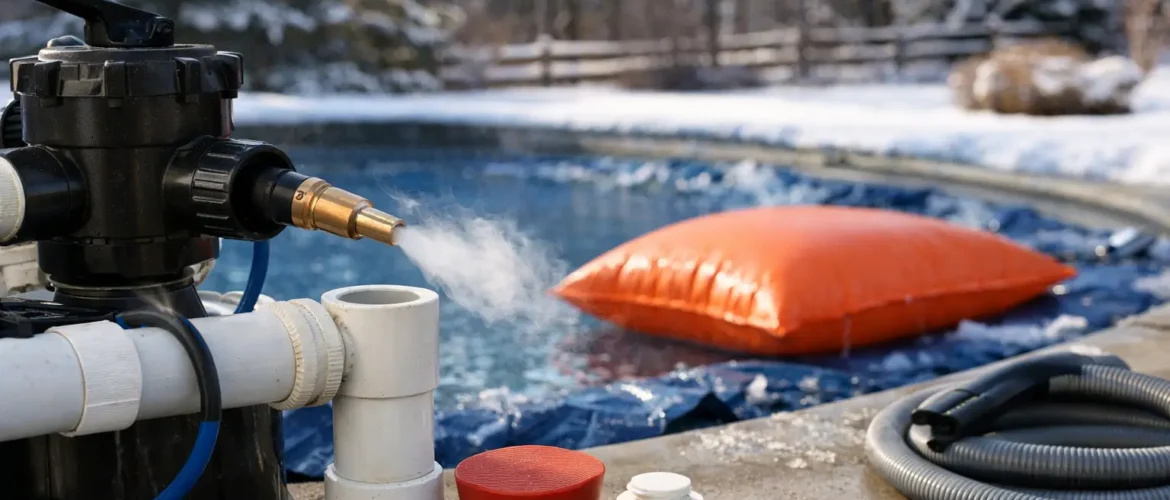
A Connecticut cold snap can turn a small amount of trapped water into a cracked pipe, split filter housing, or damaged heater component. Knowing how to winterize pool plumbing is one of the most valuable parts of closing an inground pool correctly. The goal is simple: remove water from every vulnerable line and piece of equipment before sustained freezing temperatures arrive.
Pool closings are not one-size-fits-all. A fiberglass pool, vinyl-lined pool, and above ground pool each have details that affect the water level and closing procedure. Your circulation system also matters. A pool with a heater, salt system, water features, an attached spa, or in-floor cleaning lines requires more attention than a basic skimmer-and-return setup.
Why Pool Plumbing Must Be Winterized
Water expands when it freezes. Inside a pool line, that expansion can place enough pressure on PVC plumbing, valves, pumps, filters, and fittings to cause cracks. Some damage is obvious when the pool is opened in spring. Other problems show up as a slow underground leak, poor circulation, or a system that will not hold pressure.
The risk is especially high in Connecticut, where winter temperatures can stay below freezing for long stretches. Draining the pool equipment alone is not enough. Water can remain in underground suction and return lines unless those lines are properly blown out and sealed.
A professional closing protects the investment you have made in your pool and helps prevent an expensive repair call before the next swim season.
What You Need Before Closing the Lines
Do not begin by disconnecting random fittings or opening every valve. First, identify the plumbing layout and make sure your equipment pad is accessible. If you are not certain where each line runs, take photos of the valve positions and equipment connections before making adjustments. This makes spring startup much easier.
For a typical pool, the closing process requires a dedicated high-volume pool blower, winter plugs sized for your return fittings, skimmer plugs or a skimmer protection device, and basic hand tools. You may also need a filter drain cap, expansion plugs, and pool-safe antifreeze for specific short sections of plumbing where complete blowout is not possible.
Do not use automotive antifreeze in pool plumbing. It is toxic and not intended for pool systems. Also, a small household air compressor is often not sufficient for long underground runs. Pool plumbing needs high-volume air at controlled pressure, not simply high pressure.
Before you blow out the plumbing, balance the water and add any recommended winter closing chemicals. Clean the pool thoroughly, remove leaves and debris, and brush the walls and floor. Organic debris left in the water all winter can cause stains, algae growth, and difficult cleanup in spring.
How to Winterize Pool Plumbing Step by Step
Lower the water only as needed
The correct water level depends on your pool type, cover, skimmer configuration, and manufacturer recommendations. Many inground pools are lowered below the skimmer opening so the skimmer line can be protected. However, do not drain a fiberglass or vinyl-lined pool unnecessarily.
A fiberglass pool needs water in the shell to help stabilize it against groundwater pressure. Draining it too far can create serious structural risks. With a safety cover, the recommended level may also differ from a pool covered with a standard winter cover. When in doubt, stop lowering the water and get advice for your specific pool.
Turn off power and drain the equipment
Turn off power to the pump, heater, lights, and any automated equipment at the breaker. Then open the drain plugs on the pump, filter, heater, chlorinator, and any additional equipment connected to the circulation system.
Remove and store the pump drain plugs in a labeled bag or container. Small parts are easy to lose over winter, and replacing them in spring delays startup. If your filter has a pressure gauge, remove and store it indoors if the manufacturer recommends it.
A heater requires extra care. Water can remain inside its heat exchanger even after the main system is drained. Follow the heater manufacturer’s winterizing instructions, especially if the unit has bypass valves or low-point drains. A missed heater drain can become one of the costliest closing mistakes.
Set valves to isolate each plumbing line
At the equipment pad, position the valves so you can clear one line at a time. Most pools have suction lines from the skimmer and main drain, plus return lines that send filtered water back to the pool. You may also have separate lines for a cleaner, slide, waterfall, spa, or dedicated vacuum connection.
Clearing one line at a time helps confirm that air is reaching the correct location. If you try to blow out every line at once, air may take the easiest path and leave water trapped in another pipe.
Blow out the skimmer and suction plumbing
Connect a proper pool blower at the equipment pad using the correct adapter. Start with the skimmer line. Air should push water out through the skimmer opening in the pool. Once the line is clear, install the appropriate skimmer protection device or plug while maintaining air pressure, depending on the closing method used for your system.
The main drain is different because it sits at the bottom of the pool and cannot usually be plugged from above. The common professional method is to blow air through the main drain line until a steady stream of bubbles rises from the drain. Then close the valve at the equipment pad while the blower is still running. This creates an air lock that keeps water from refilling the line.
An air lock works only when the valve holds properly. If you have an older valve that leaks or is difficult to turn, do not assume the line is protected. Have it inspected before winter.
Blow out and plug the return lines
Next, direct air into the return plumbing. Watch each return fitting in the pool until water is forced out and a steady flow of air appears. Beginning with the return farthest from the equipment pad can make it easier to verify that each line has cleared.
Install a winter plug in each return fitting while air is still moving through the line. This prevents water from flowing back into the pipe. If the pool has multiple returns, do not move on until every opening is blowing air and has been plugged.
Water features need their own attention. Raised spas, waterfalls, deck jets, slides, and fountain lines can have low spots that collect water. These lines may require separate valves, plugs, or additional blowout time. If you are unsure whether a feature line has been cleared, it is safer to schedule service than to guess.
Protect specialty equipment and accessories
Salt chlorine generators should be removed or winterized according to the manufacturer’s directions. Store removable chlorinator cells and accessories indoors if recommended. Disconnect and drain hoses for cleaners, solar lines, and removable water features.
For a multiport valve, set the handle to the winter position if your manufacturer specifies one. Never force the handle. If your system uses a cartridge filter, remove the cartridges, clean them, allow them to dry, and store them in a protected location.
Common Winterizing Mistakes to Avoid
The biggest mistake is assuming visible drainage means the plumbing is empty. Underground lines can retain water in low sections even after the pump and filter are drained. A complete blowout and proper plugging process are what protect those pipes.
Another mistake is lowering the pool water too much. This is particularly risky for fiberglass pools. Water inside the pool is part of the pool’s stability, and Connecticut’s wet fall and spring conditions can increase groundwater concerns. Use the water level appropriate for the pool construction and cover type, not a generic rule from an online video.
Homeowners also sometimes forget secondary plumbing. Cleaner ports, spa spillways, heater bypasses, slide lines, and automation components all need to be accounted for. A pool can look fully closed while one isolated line remains full of water.
Finally, do not close the pool so late that you are working during freezing weather. Schedule the work once swim season is over and water temperatures begin to stay consistently cool. Closing at the right time also helps reduce the chance of algae growth under the cover.
When Professional Pool Closing Service Makes Sense
DIY winterizing can be practical for an experienced owner with a simple system and the right equipment. It becomes less practical when the pool has several water features, a heater, an attached spa, complex automation, or a plumbing layout you do not fully understand.
Professional pool technicians can identify the lines, use the right blower volume, confirm air locks, and inspect valves or equipment that may be nearing failure. This can be especially worthwhile after a renovation, equipment replacement, or a season when the pool had circulation or leak concerns.
EZ Aqua Fiberglass Pools helps Connecticut homeowners close and protect pool systems with the same attention required for dependable spring opening. A properly winterized plumbing system gives you one less thing to worry about when the first hard freeze arrives.
Pingback: How to Prime Pool Pump: A Homeowner’s Guide - EZ Aqua Fiberglass Pools