

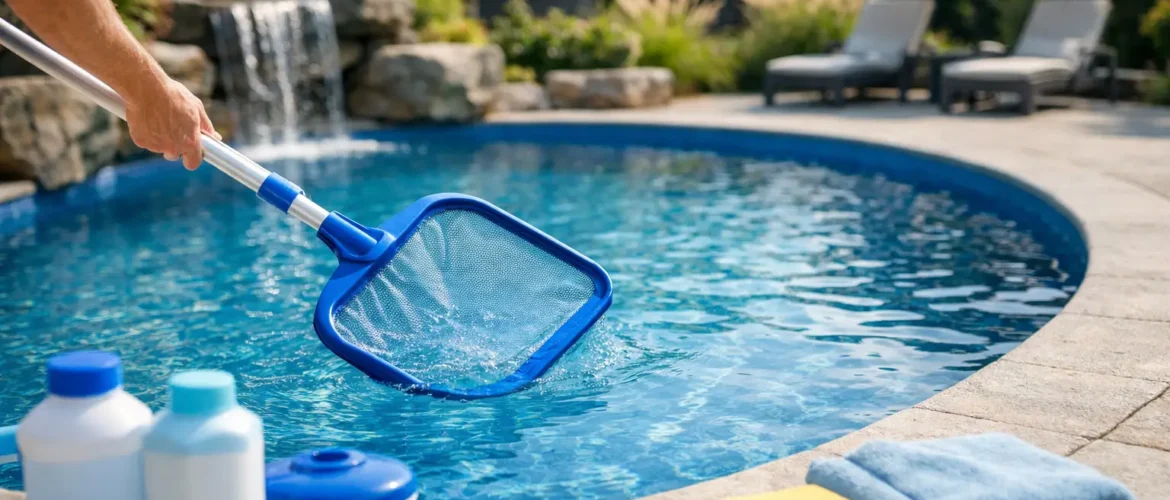
A fiberglass pool’s smooth gelcoat is one of its biggest advantages. It resists algae better than rougher pool surfaces, feels comfortable underfoot, and does not need the regular liner replacements associated with vinyl pools. Still, it is not maintenance-free. Knowing how to maintain a fiberglass pool surface protects its color, limits staining, and helps you avoid costly cosmetic repairs down the road.
For Connecticut homeowners, the key is consistent care through the swim season and a careful approach to opening and closing. Most surface problems begin with neglected water chemistry, debris left sitting too long, or cleaning methods that are too aggressive for gelcoat.
How to Maintain Fiberglass Pool Surface Without Damaging It
Fiberglass pools are finished with gelcoat, a durable protective layer that gives the shell its smooth appearance. The goal is to keep that layer clean and chemically stable, not to scrub it like concrete or treat it like a vinyl liner.
Use a soft nylon pool brush once or twice a week during the season. Brush the walls, steps, benches, and waterline, paying special attention to areas with limited circulation. A fiberglass surface is less likely to hold algae, but pollen, body oils, sunscreen, and fine debris can still collect in corners and along the waterline.
Avoid stiff wire brushes, steel wool, pumice stones, and abrasive pads. These products can dull the gelcoat or create tiny scratches where dirt and algae are more likely to cling. If you use an automatic cleaner, confirm that its wheels, brushes, and tracks are approved for fiberglass surfaces.
A soft vacuum head and a telescoping pole are usually all you need for routine floor cleaning. Vacuum slowly so fine sediment is picked up rather than stirred back into the water. After heavy rain, construction nearby, or a week of high pollen, you may need to vacuum and brush more often.
Clean the Waterline Before Buildup Hardens
The waterline is where most homeowners first notice a dull ring or discoloration. This is usually a mix of body oils, sunscreen, airborne debris, and minerals. Wipe it regularly with a nonabrasive cleaner made for fiberglass pools and a soft cloth or sponge.
Do not wait until the ring becomes dark and stubborn. Regular light cleaning is safer and faster than trying to remove months of buildup with a harsh chemical. If the waterline keeps returning quickly, the issue may be water balance, poor filtration, or heavy swimmer use rather than the surface itself.
Keep Water Chemistry in the Right Range
Balanced water is the most effective way to protect a fiberglass finish. Water that is too acidic can slowly etch or dull the gelcoat. Water with high calcium, high pH, or excess metals can leave scale and stains. The surface may look damaged when the real problem is in the water.
Test your pool water at least two or three times per week during active use. In periods of intense heat, frequent swimming, or major storms, test it more often. Focus on pH, total alkalinity, sanitizer level, calcium hardness, and stabilizer. Your pool professional can recommend the right target ranges for your specific equipment, sanitizer system, and source water.
As a general rule, keep pH in the mid-7 range, typically about 7.2 to 7.6. When pH climbs too high, calcium scale is more likely to form on steps, fittings, and the waterline. When it drops too low, the water can become aggressive and may affect the surface and pool equipment.
Add chemicals carefully. Pre-dissolve products when the manufacturer directs you to do so, pour them slowly into the water with the pump running, and never leave granular chlorine or shock sitting on the pool floor. Concentrated chemicals can bleach, stain, or mark a fiberglass surface if they settle in one area.
Saltwater pools also need regular testing. Salt systems make chlorine generation more convenient, but they do not eliminate the need to manage pH, alkalinity, calcium, and metals. In fact, salt pools often require closer pH attention because pH can drift upward over time.
Remove Stains Based on Their Cause
Not every mark on a fiberglass pool is a permanent stain, and not every stain should be treated the same way. Identifying the cause first prevents unnecessary scrubbing or the wrong chemical treatment.
Brown, reddish, or rust-colored staining often points to metals such as iron or copper in the water. This can happen with well water, certain fill-water sources, corroding equipment, or some chemical products. Green or black spots may be algae, especially if sanitizer levels have dropped or circulation is poor. White, rough deposits are more likely calcium scale.
Start with water testing and a gentle surface cleaning. If discoloration does not lift, have the water checked for metals and calcium balance before applying stain removers. A professional can determine whether you need a metal sequestrant, targeted algae treatment, scale removal, or a more involved surface service.
Be cautious with acid-based stain products. They can be useful in the right situation, but repeated or improper use can affect gelcoat. Homeowners should not use harsh acid washing techniques designed for plaster pools on a fiberglass shell.
Watch for Fading, Chalkiness, and Surface Changes
Over many years, sun exposure, unbalanced water, and improper chemical use can cause a fiberglass finish to lose some shine. Light fading is not always a structural issue, but chalkiness, roughness, blistering, cracking, or deep discoloration deserves professional attention.
Do not assume a faded surface needs complete replacement. In some cases, cleaning, polishing, spot repair, or refinishing may improve the appearance. The right repair depends on the age of the pool, the condition of the gelcoat, and whether the issue is cosmetic or related to the shell.
Maintain Circulation and Filtration
A clean pool surface depends on clean, moving water. Run the circulation system long enough each day to turn over the water effectively, particularly during hot weather and heavy use. The exact runtime depends on pump size, pool volume, plumbing layout, and whether you use a variable-speed pump.
Empty skimmer baskets and pump baskets frequently. A clogged basket reduces flow and allows debris to stay in the pool longer. Keep the water level near the middle of the skimmer opening so the system can skim the surface effectively.
Clean or backwash the filter according to the type of filter you own and its pressure readings. Poor filtration can make a fiberglass pool look dull even when the surface is in good condition. Fine particles, pollen, and early algae growth often create that cloudy or dusty appearance.
Protect the Surface During Connecticut’s Seasons
Connecticut’s freeze-thaw cycles make proper winterization especially important. At closing, the pool should be balanced, cleaned, vacuumed, and treated before the cover goes on. Leaves, organic debris, and untreated water left over the winter can contribute to staining when the pool is opened in spring.
Use a properly fitted safety cover or winter cover that keeps debris out while handling snow and seasonal weather. Check the cover periodically and remove standing water or excessive debris when needed. A cover that sags into the pool or allows large amounts of leaves through creates extra cleanup and potential staining issues.
At opening, remove debris before it enters the water, inspect the waterline, and bring chemistry back into balance gradually. Do not rush to add large doses of chemicals just because the water looks cloudy. Test first, circulate the system, brush the surface, and make measured adjustments.
Never drain a fiberglass pool without professional guidance. Groundwater pressure can create serious problems for an empty inground shell, especially after wet weather. If major repairs, deep cleaning, or water replacement are needed, work with a qualified pool service team that understands fiberglass construction.
Know When to Call for Pool Service
Routine cleaning and testing handle most fiberglass pool surface care. Call for professional help when staining returns despite balanced water, the gelcoat feels rough or looks chalky, cracks or blisters appear, or you suspect a chemical imbalance has affected the finish.
EZ Aqua Fiberglass Pools can help Connecticut homeowners evaluate surface concerns, correct water-related problems, and plan repairs or renovations when needed. Acting early is usually less expensive than waiting for a cosmetic issue to become a larger repair.
A well-maintained fiberglass surface should stay smooth, clean, and inviting for years. Give it steady attention, use products made for gelcoat, and treat unusual stains or changes as a reason to investigate – not something to scrub harder.
Pingback: How to Winterize Pool Plumbing Before a Connecticut Freeze - EZ Aqua Fiberglass Pools