

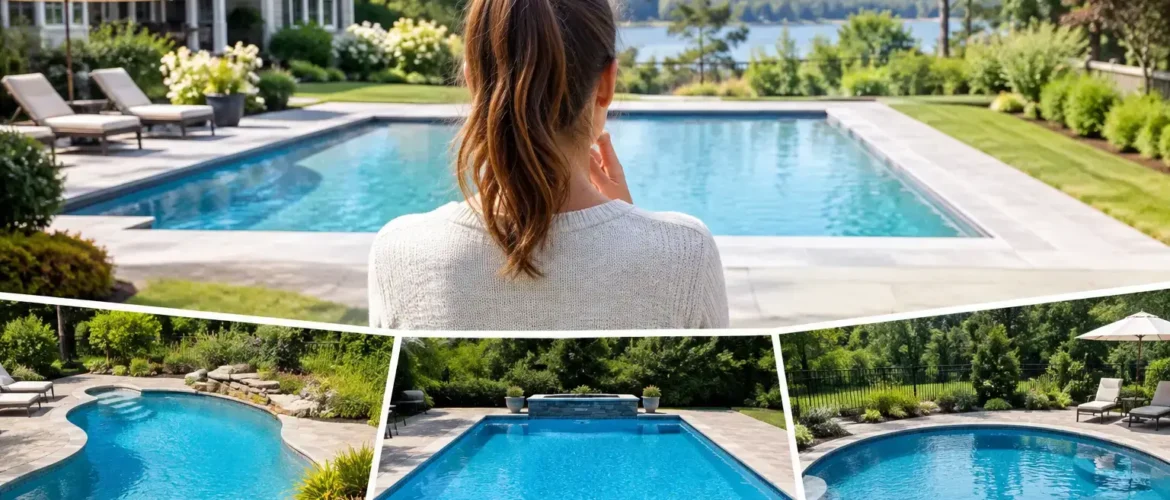
A pool shape can look great in a showroom photo and still be the wrong fit for the way your family uses the backyard. When homeowners ask how to choose pool shape, the best answer starts with daily life: who will use the pool, what they will do in it, and how the pool needs to work with the space around it. Size matters, but shape determines traffic flow, usable swimming room, deck layout, and the overall feel of the project.
For Connecticut homeowners, the right choice also depends on property lines, local setbacks, slopes, mature trees, and the shorter seasonal window for outdoor use. A shape that makes room for a large tanning area, easy access steps, and comfortable seating may deliver more value than a larger pool with less usable space.
Start With How Your Family Will Use the Pool
Before comparing pool profiles, decide what the pool needs to do most often. A family with young children may want broad entry steps, shallow lounging space, and open water for games. A household focused on exercise may prioritize a long, uninterrupted swim lane. Homeowners who entertain often may care more about a spacious shallow end, benches, and room for people to gather without blocking swimmers.
Many pools need to support more than one activity. In that case, look for a balanced design instead of choosing a shape built around a single purpose. A rectangular pool may be ideal for laps, but a rectangle with entry steps or a tanning ledge can still work well for family use. A freeform pool can create an inviting resort-style setting, but its curves may reduce the straight-line swimming area some homeowners expect.
Think beyond the first summer. Children grow, routines change, and a pool often becomes a central part of backyard entertaining. Choose a shape that will remain useful as your needs evolve.
Match the Shape to Your Backyard Layout
The pool should complement the yard instead of forcing every other feature into an awkward position. Measure the available area, then account for required setbacks, equipment placement, access paths, fencing, drainage, and enough decking to actually enjoy the pool. The usable installation area is often smaller than the open lawn suggests.
Rectangular Pools for Clean, Flexible Layouts
Rectangular pools are popular because they make efficient use of space. Their straight lines work naturally with patios, retaining walls, outdoor kitchens, and modern landscaping. They also provide the clearest layout for lap swimming, automatic safety covers, and furniture placement.
A rectangle is often a strong choice for narrow yards or lots where the pool needs to sit parallel to the house, a fence, or a property line. It can also make a backyard appear more organized and intentional. The trade-off is that a basic rectangle can feel more formal, so homeowners may want to add visual interest through coping, lighting, water features, or landscaping.
Freeform Pools for Softer, Natural Lines
Freeform pools use curved edges to create a more relaxed appearance. They can fit nicely into yards with irregular boundaries, existing landscape features, or a less formal patio design. This style is especially appealing when the goal is a natural, vacation-inspired backyard rather than a geometric outdoor room.
The main consideration is deck planning. Curves can create small areas that are harder to furnish, and they may require more thoughtful placement of seating, umbrellas, and walkways. A freeform design can be a great fit, but it should be planned from the deck inward, not just from the pool outward.
Kidney and Oval Shapes for Family-Friendly Flow
Kidney and oval pool shapes offer a middle ground between a formal rectangle and a highly curved freeform design. Their rounded profiles soften the look of a backyard while keeping the pool layout straightforward. They often work well for casual swimming, play, and social use.
These shapes can also create natural zones. A curved end may become the gathering area, while the longer section remains open for swimming. If you want a classic pool appearance without sharp corners, this can be a practical option.
Understand Fiberglass Pool Shape Options
Fiberglass pools are manufactured in predetermined molds, which means shape selection is different from designing a fully custom concrete pool. That is not a disadvantage for most homeowners. It means you can choose from proven designs with known dimensions, integrated steps, benches, and ledges while avoiding the longer construction timeline associated with some custom pool types.
When selecting a fiberglass pool shape, focus on the interior features as closely as the outer profile. Wide entry steps make a difference for families, guests, and homeowners who want an easy place to sit in the water. Built-in benches create a social area, while tanning ledges offer space for younger children to play under supervision or for adults to relax partially in the water.
A fiberglass model with a deep end may suit active swimmers and older children, but it can reduce the amount of shallow water available for lounging. A flat-bottom or gradual-depth design may be more useful for everyday family activity. There is no universal best option. The right fiberglass shape is the one that supports your priorities without taking away from the features you will use most.
Plan the Deck and Safety Features at the Same Time
Pool shape and deck shape should be chosen together. A pool may fit physically in the yard, but if there is no comfortable route from the house to the water or no room for chairs, dining, and supervision, the finished space can feel cramped.
Leave enough deck space near the entry area for towels, lounge chairs, and people getting in and out of the pool. If you plan to add a grill, outdoor kitchen, fire feature, or dining area, establish those locations early. It is much easier to adjust the pool shape before installation than to redesign hardscape after the fact.
Safety should also influence the decision. A pool safety cover, fence gates, steps, lighting, and clear sightlines from the home all deserve consideration during the design phase. Rectangular pools are often especially compatible with automatic safety covers, but cover options and site conditions should be reviewed for any pool shape.
Consider the View From Inside Your Home
A pool is not only experienced from the water. You will see it through windows, from the patio, and from the kitchen or family room throughout the year. That view should feel balanced with the house and surrounding landscape.
A geometric home often pairs well with a rectangular or Roman-style pool. A property with curved garden beds, natural stone, and informal planting may look better with a freeform or kidney shape. This is not a hard rule. A well-designed contrast can look excellent, but the relationship between the home, deck, and pool should be deliberate.
Also consider where the sun falls. A tanning ledge on the sunniest side may get more use, while an entry area near a shaded tree line may stay cooler. Your installer can help identify practical site issues before a shape is selected.
Avoid Choosing Based on Looks Alone
The most common mistake is selecting a pool shape purely because it looks impressive online. Photos rarely show the lot dimensions, slope, deck size, drainage conditions, or family needs behind the finished project. A dramatic freeform pool may not suit a narrow yard. A large lap pool may leave too little room for the patio you really want.
Instead, rank your priorities. Decide whether swimming space, play space, relaxation, entertaining, visual style, or a safety cover matters most. If two shapes meet the same needs, compare their usable water area, access points, and how much deck each design leaves available.
Work With a Local Pool Professional Before You Commit
A site evaluation turns broad ideas into a buildable plan. A local pool professional can review grade changes, access for equipment, utility locations, town requirements, drainage, and the practical limits of the property. That guidance is especially valuable in Connecticut, where established neighborhoods often have tighter lots, stone walls, ledge, and mature landscaping to work around.
EZ Aqua Fiberglass Pools can help homeowners compare fiberglass shapes, placement options, decking needs, safety features, and financing considerations before installation begins. The goal is not simply to fit a pool into the yard. It is to create a backyard that works well from the first swim through years of ownership.
The best pool shape is the one that gives your household room to use the water the way you actually live. Bring a rough wish list, a few yard measurements, and an honest picture of your priorities to the planning conversation. That is where a pool that looks good becomes one you will use every chance you get.