

A saltwater pool is not a chlorine-free pool. It is still a chlorine pool, but the chlorine is made on-site by a salt chlorine generator rather than added primarily through tablets, granules, or liquid. For homeowners asking, “can you convert pool to saltwater,” the answer is usually yes. The more useful question is whether your existing pool equipment, finish, and maintenance habits make the conversion a smart investment.
For many Connecticut pool owners, a salt system can make weekly water care more consistent and reduce the sharp chlorine smell associated with poorly balanced water. It also requires the right equipment, regular testing, and proper winterization. A saltwater conversion is an upgrade, not a set-it-and-forget-it replacement for pool maintenance.
Can You Convert a Pool to Saltwater?
Most inground and above ground pools can be converted to saltwater, including fiberglass, vinyl-lined, and concrete pools. The basic process is straightforward: install a salt chlorine generator, add the correct amount of pool-grade salt, balance the water, and program the system to produce chlorine as the pool needs it.
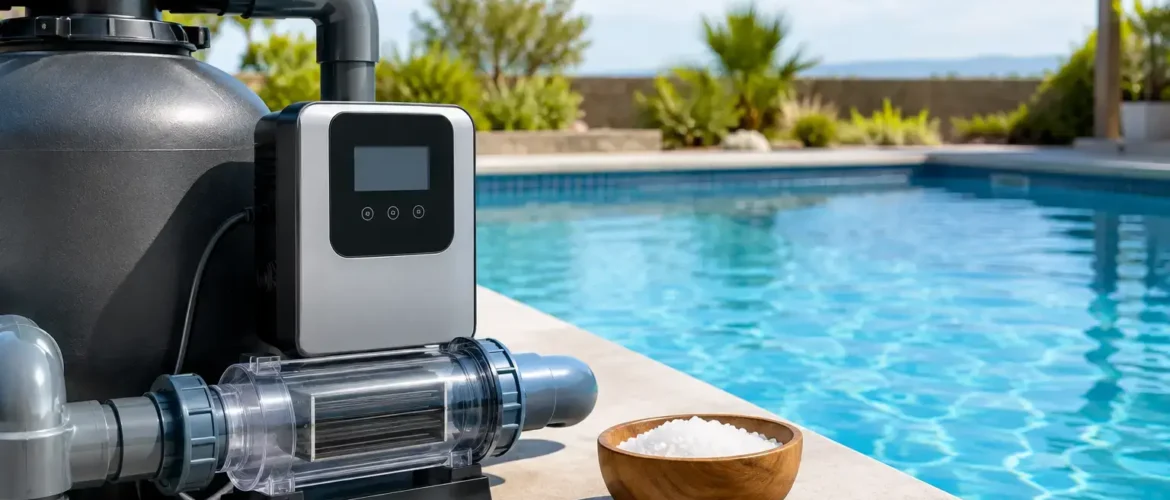
The generator has two main components: a control unit and a salt cell installed in the plumbing line. As pool water passes through the cell, a low-voltage electrical process converts dissolved salt into chlorine. That chlorine sanitizes the water, then eventually returns to salt, allowing the cycle to continue.
The conversion itself does not require replacing the pool shell or draining a properly balanced pool. However, an equipment inspection should come first. Older pumps, undersized plumbing, failing heaters, damaged bonding, and aging filters can complicate an otherwise simple upgrade.
Fiberglass pools are especially well suited to salt systems
Fiberglass pool surfaces are smooth, nonporous, and durable, which makes them a strong match for saltwater sanitation. Unlike plaster surfaces, fiberglass does not require the same level of attention to calcium saturation to prevent surface damage. That does not mean chemistry can be ignored, but it can simplify the ownership experience.
Vinyl-lined pools can also use saltwater systems successfully. The key is protecting metal components and keeping salt levels within the manufacturer’s recommended range. If a liner is near the end of its life or there are visible signs of corrosion around fittings, it may make sense to address those repairs before installing a generator.
What Equipment Do You Need for a Saltwater Conversion?
The salt chlorine generator is the centerpiece of the upgrade, but it must work with the rest of your circulation system. A professional installer will look at pump flow, pipe size, filter condition, electrical access, and the pool’s total water volume before recommending a unit.
Generator sizing matters. A cell rated for a pool larger than yours generally has an easier time meeting chlorine demand because it can run at a lower output percentage. Running a correctly oversized unit less aggressively may also help extend cell life. A generator that is too small can struggle during hot weather, heavy swimming periods, or after storms bring contaminants into the pool.
Your existing pump may be compatible, especially if it has adequate flow and run time. Many homeowners pair a salt conversion with a variable-speed pump because it can circulate water efficiently for longer periods while using less electricity than a single-speed pump. This is not required in every case, but it is worth considering if your current pump is old or costly to operate.
If your pool has a heater, automation system, water feature, or metal handrails, those details should be reviewed during planning. Saltwater at normal pool concentrations is far less salty than ocean water, but it can accelerate corrosion when bonding, grounding, water balance, or equipment maintenance is neglected.
How Much Salt Does a Pool Need?
Most residential saltwater pools operate around 2,700 to 3,500 parts per million of salt, depending on the generator manufacturer. For comparison, ocean water is roughly 35,000 parts per million. Pool water at this concentration should not taste like seawater, though swimmers may notice that it feels softer on their skin.
The exact number of bags needed depends on pool volume and the starting salt level. A typical inground pool may need several hundred pounds of pool-grade salt during the initial conversion. Once the proper level is reached, salt generally stays in the water. It leaves only when water is removed through splash-out, backwashing, leaks, draining, or overflow.
Do not use salt intended for water softeners, ice melt, or food preparation unless it specifically meets pool equipment requirements. Additives and anti-caking agents can create water-quality problems. Pool-grade salt is inexpensive compared with the cost of correcting avoidable chemistry issues.
Saltwater Still Requires Water Testing
One of the biggest misconceptions about saltwater pools is that they do not need chemicals or routine care. They do. The generator makes chlorine, but it does not automatically correct pH, alkalinity, calcium hardness, stabilizer, or metals in the water.
Saltwater systems commonly cause pH to drift upward over time. That means homeowners should test water regularly and add acid when needed to keep pH in the proper range. In Connecticut, spring opening is a particularly important time to test and balance every parameter before relying on the generator to carry the chlorine load.
The salt cell also needs periodic inspection. Calcium scale can collect on the cell plates, especially when water chemistry is out of balance. Many cells have a self-cleaning function that helps reduce buildup, but they still need to be checked. Cleaning too often or using the wrong cleaning method can shorten cell life, so follow the equipment manufacturer’s guidance.
You will still need to shock the pool occasionally. Heavy use, pollen, rain, algae risk, and opening after winter can create demand that temporarily exceeds what the generator can produce. Think of the salt system as your day-to-day chlorine source, not the only tool for maintaining clean water.
Costs and Long-Term Trade-Offs
The cost to convert a pool to saltwater varies with pool size, generator capacity, electrical work, plumbing modifications, and the condition of existing equipment. The initial investment is usually higher than buying a season’s supply of traditional chlorine, and salt cells eventually need replacement. Cell life often depends on usage, water balance, and how hard the unit is required to work.
In return, many homeowners appreciate more stable chlorine levels, fewer trips to buy sanitizer, and water that feels less harsh. Salt systems can be especially convenient for families who use the pool frequently and want a more automated sanitation routine.
There are trade-offs. Saltwater does not eliminate maintenance costs. It may increase the importance of corrosion prevention around metal fixtures, heaters, and masonry. Natural stone, coping materials, and nearby surfaces should also be evaluated, since repeated saltwater splash and poor drainage can leave deposits or contribute to deterioration over time.
For a pool with aging equipment or substantial renovation needs, it may be wiser to combine the salt conversion with a pump replacement, filter upgrade, liner replacement, or plumbing repair. Addressing everything as part of one project can prevent a new generator from being installed on a system that is already nearing failure.
Connecticut Winter Care for Saltwater Pools
A salt chlorine generator is typically not operated once water temperatures fall below its recommended minimum range, often around 50 to 60 degrees. Cold water reduces chlorine production and can trigger low-temperature warnings. As temperatures drop, you may need to manage sanitizer levels with conventional chlorine until the pool is closed.
Proper winterization remains essential. The cell and control equipment should be protected according to the manufacturer’s instructions, plumbing should be cleared, and water chemistry should be balanced before closing. A quality safety cover also helps keep debris out and supports a cleaner, easier spring opening.
When reopening, test the existing salt level before adding more. Salt does not disappear over winter, and adding too much can require partial draining and dilution. This is one reason accurate testing is more valuable than guessing.
Is a Saltwater Conversion Right for Your Pool?
A saltwater system is often a good fit when the pool structure is sound, the circulation system is reliable, and the homeowner wants more consistent chlorination with less hands-on sanitizer handling. It may be less appealing when major equipment repairs are overdue, when corrosion has already become a problem, or when the owner expects maintenance to disappear entirely.
The best next step is an on-site assessment of the pool, equipment pad, plumbing, and water condition. EZ Aqua Fiberglass Pools can help Connecticut homeowners determine whether a salt chlorine generator fits their pool and whether other upgrades should be handled at the same time. A properly planned conversion can make everyday pool care easier while protecting the investment you already have in your backyard.