

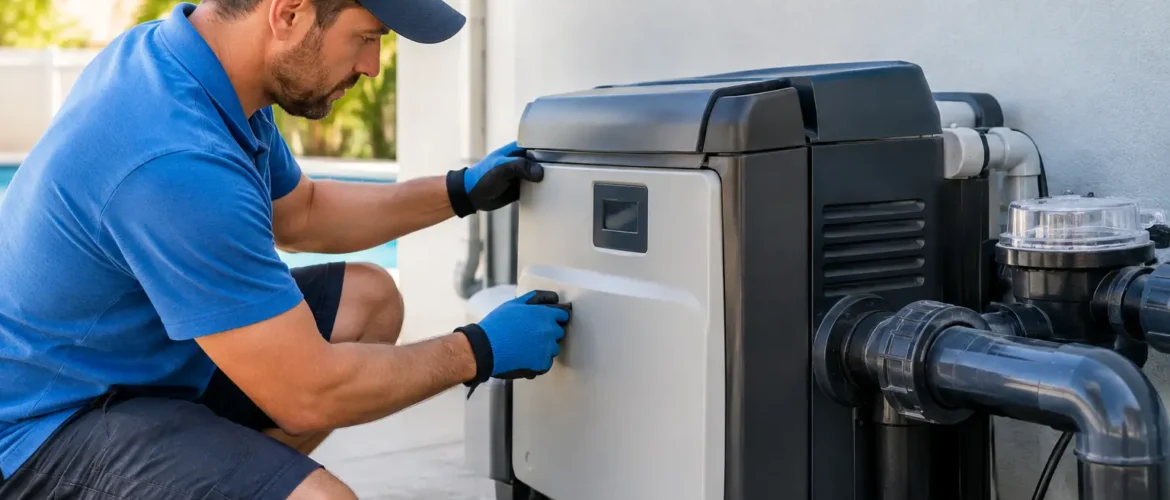
A saltwater pool should feel easier to own, not mysterious. The generator handles much of the day-to-day chlorine production, but it still needs regular attention to work efficiently. Homeowners searching for how to maintain saltwater generator equipment should focus on water balance, cell condition, proper settings, and seasonal care. A few small checks can help prevent cloudy water, scale buildup, premature cell failure, and avoidable service calls.
Understand What the Saltwater Generator Does
A saltwater generator, also called a salt chlorine generator, does not eliminate the need for pool care. It uses dissolved salt and electricity to create chlorine as water passes through the salt cell. That chlorine sanitizes the pool in the same way traditional liquid or tablet chlorine does.
The major advantage is consistency. Rather than adding chlorine by hand every few days, the system produces it gradually while the circulation system runs. However, the generator can only do its job when the pool water is properly balanced and the cell is clean. Treat the generator as one part of your pool equipment system, along with the pump, filter, heater, and plumbing.
How to Maintain a Saltwater Generator Week to Week
Most saltwater generator maintenance is simple when it becomes part of your normal pool routine. During the swim season, test the water at least once or twice per week. Heavy rain, high temperatures, frequent swimming, and pool parties can change water chemistry quickly.
Test chlorine and pH first
Check free chlorine and pH before changing the generator output. If chlorine is low, do not automatically turn the output setting to 100 percent. First, confirm that the cell is producing, the pump is running long enough, and the water chemistry is within range.
A saltwater pool often has a natural tendency for pH to rise over time. Keep pH in the recommended range for your pool, generally about 7.2 to 7.8. High pH can lead to scale inside the cell, on the waterline, and on pool surfaces. Low pH can be corrosive to equipment and fixtures.
Your free chlorine target depends on the stabilizer level, pool use, sunlight, and your equipment manufacturer’s guidance. Connecticut homeowners should expect to adjust output as conditions change. A setting that works in May may not keep up with a hot, busy July weekend.
Check salt level without guessing
The control panel may display a salt reading, but it is smart to verify it periodically with an independent salt test. Most systems need a salt level in a specific operating range, often around 2,700 to 3,400 parts per million. Always follow the range listed for your specific generator.
Too little salt can cause low-chlorine warnings or stop the unit from generating. Too much salt may trigger an error, accelerate corrosion in certain conditions, or require partial draining and refilling to correct. Add only pool-grade salt that does not contain anti-caking additives, and add it in small, measured amounts.
Inspect the cell and equipment pad
Take a quick look at the salt cell, unions, wires, and control panel every week or two. Look for leaks, loose connections, warning lights, unusual error messages, or mineral deposits visible through the cell housing. Keep the equipment area clear so the system has airflow and can be serviced safely.
The cell should only generate chlorine when there is adequate water flow. A dirty filter, clogged skimmer basket, closed valve, failing pump, or low water level can all reduce flow and cause the generator to shut down. If the unit shows a flow warning, address circulation first instead of assuming the cell has failed.
Clean the Salt Cell Only When It Needs It
Scale is the most common maintenance issue inside a salt cell. It usually appears as white, hard mineral buildup on the metal plates. Calcium hardness, high pH, warm water, and extended operation can all contribute to scale.
Before cleaning, turn off power to the pool equipment and remove the cell according to the manufacturer’s instructions. Inspect the plates with a flashlight. If they look clean, reinstall the cell and leave it alone. Over-cleaning can shorten cell life.
If scale is present, use the manufacturer-approved cleaning method. Some cells can be rinsed with a garden hose first. More stubborn buildup may require a proper cell-cleaning solution or a carefully diluted acid wash. Never use a metal tool, screwdriver, or aggressive scraping method on the plates. Damage to the coating can reduce chlorine production and lead to an expensive replacement sooner than expected.
How often you need to clean the cell depends on your water chemistry. Some pools may go an entire season with little buildup; others with hard water may need inspection and cleaning more often. The goal is not to clean on a fixed schedule. The goal is to maintain balanced water so cleaning is rarely necessary.
Keep the Whole Pool Balanced
A generator cannot compensate for poor water balance. In fact, unbalanced water is one of the fastest ways to create generator problems. Along with free chlorine, salt, and pH, monitor total alkalinity, calcium hardness, and cyanuric acid, often called stabilizer.
Alkalinity helps prevent rapid pH swings. Calcium hardness matters because excessively high calcium can create scale in the cell, heater, and plumbing. Stabilizer protects chlorine from sunlight, but too much can make chlorine less effective. These levels should be managed as a system, not corrected at random.
It also helps to keep the pool clean. Brush walls and steps, vacuum debris, empty baskets, and maintain the filter. A clean pool with good circulation allows the generator to maintain chlorine more efficiently. If algae starts growing, the generator may not be able to recover the pool quickly by itself. You may need to shock the water and correct the underlying chemistry before returning the unit to normal operation.
Adjust Output for Weather and Pool Use
The output percentage controls how much chlorine the cell produces while the pump is running. It does not mean the generator runs all day unless your pump schedule does. For example, an output setting of 50 percent during an eight-hour pump cycle generally means the cell generates chlorine for part of that run time.
Start with the setting recommended by your installer or equipment manual, then make small adjustments based on actual test results. Raise output gradually during hot weather, heavy bather loads, or periods of intense sun. Lower it during cooler weather or when chlorine tests consistently read high.
Do not chase every single test result with a major adjustment. Give the pool a day or two to respond unless chlorine is dangerously low or high. Consistent testing and modest changes are more reliable than constantly moving the setting up and down.
Winterize the Generator for Connecticut Conditions
Connecticut winters require a proper pool closing plan. Freezing water can damage a salt cell, plumbing, and other equipment. Before closing an inground pool, balance the water, clean the cell if needed, and follow your generator manufacturer’s instructions for shutting down and storing the equipment.
In many cases, the cell should be removed, drained, and stored in a dry location protected from freezing temperatures. Do not leave standing water trapped inside it. The control panel typically remains installed but should be powered down as part of the overall equipment closing process.
When opening in spring, reinstall the cell, inspect the O-rings and connections, restore water flow, and test salt and chemistry before expecting normal chlorine production. Salt may be diluted after winter rain, snowmelt, or a partial water replacement, so test before adding more.
Know When a Service Call Makes Sense
A low-salt or no-flow message is not always a bad cell. It may be caused by cold water, a dirty filter, low water flow, old sensors, poor wiring, or an inaccurate salt reading. Salt cells also have a limited lifespan, commonly several years depending on usage, water chemistry, and maintenance habits.
Call for professional help if the generator repeatedly shows errors after chemistry and flow have been corrected, if the cell has visible damage, or if chlorine remains low despite normal salt readings and proper output settings. EZ Aqua Fiberglass Pools can help Connecticut pool owners diagnose whether the issue is the cell, the control system, circulation equipment, or water balance.
A well-maintained generator should quietly do its job in the background. Keep the water balanced, inspect the cell before cleaning it, and protect the equipment during winter. That approach gives you more time enjoying the pool and less time trying to solve a preventable equipment problem.