

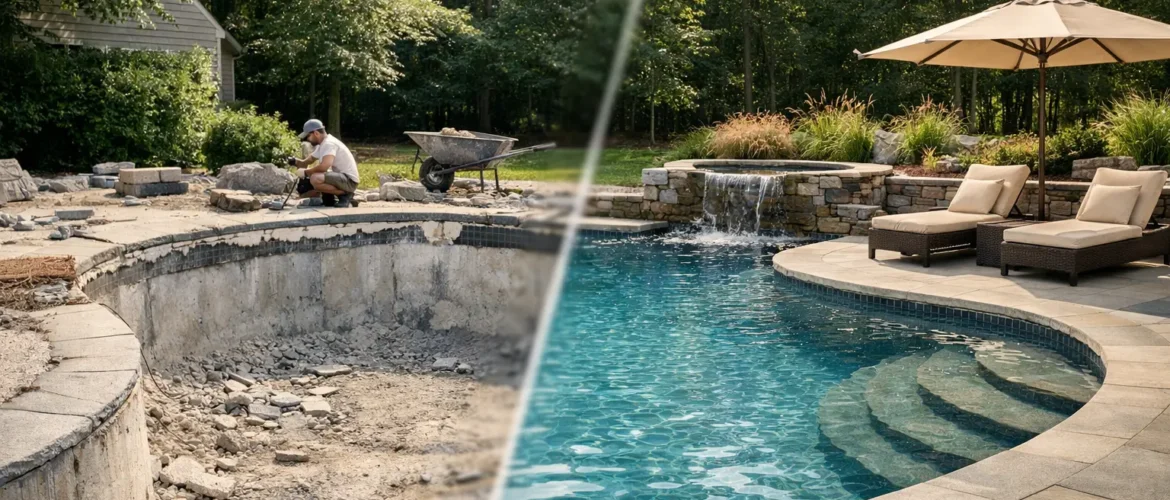
A pool rebuild example is often more useful than a list of repair options because it shows how the pieces fit together. For many Connecticut homeowners, the problem starts with a pool that still holds water but no longer feels dependable: the liner is faded, the coping is loose, plumbing is aging, and the surrounding concrete has settled or cracked. At that point, a few isolated repairs may only delay a larger project.
A rebuild is not the same as routine maintenance. It is a planned renovation that addresses the pool structure, surface, equipment, and safety features based on the condition of the existing pool and the homeowner’s long-term plans. The right scope depends on what is failing, what can be preserved, and whether the family wants the backyard to work differently than it did 15 or 20 years ago.
Pool Rebuild Example: An Aging Vinyl Pool
Consider a typical suburban Connecticut property with a 20-year-old vinyl-lined inground pool. The pool has served the family well, but the liner has wrinkles and staining, the shallow-end floor feels soft in spots, and the old concrete deck has several uneven sections. The pump still runs, but it is loud, inefficient, and nearing the end of its service life.
The homeowner’s first question is usually simple: should they replace the liner and move on? In this example, a liner replacement alone would improve the appearance, but it would not correct the deteriorated pool base, worn fittings, leaking plumbing connections, or trip hazards around the deck. It could make sense as a short-term solution, but it would not be the best value if the owners plan to stay in the home for years.
The recommended rebuild begins with a site evaluation. A qualified pool contractor checks the wall panels, coping, steps, floor condition, plumbing lines, skimmer, returns, main drain, and equipment pad. The deck is evaluated separately because concrete movement can affect drainage, safety, and access around the pool even when the pool shell itself is sound.
In this case, the walls are structurally usable, but the liner track and coping need replacement. The pool base needs to be reworked before a new liner is installed. Several underground lines show signs of leakage, and the equipment should be upgraded rather than reconnected to old plumbing.
What the Rebuild Includes
A well-planned rebuild is completed in the right order. Skipping steps to save money can create problems that are harder and more expensive to correct after new finishes are in place.
Removal and inspection
The crew first drains the pool and removes the old liner. This is the moment when hidden issues become visible. The exposed floor may reveal washouts, soft spots, rusted wall hardware, or damage caused by years of ground movement and freeze-thaw cycles.
In this example, the old pool base is removed where needed and rebuilt to create a smooth, stable surface for the replacement liner. The wall panels are cleaned and inspected, with any compromised components repaired before new materials go in. Addressing the base correctly matters because a new liner will follow the surface beneath it. A wrinkle, dip, or rough area in the floor will not disappear once the pool is filled.
Plumbing and equipment upgrades
Next comes the work that homeowners do not always see but rely on every day. Old flex pipe, failing fittings, and questionable valves are replaced. New plumbing is pressure-tested before the pool is closed up, helping identify leaks while access is still straightforward.
The equipment pad is updated with a properly sized pump, filter, and controls that match the pool’s volume and circulation needs. Some homeowners choose a variable-speed pump for quieter operation and lower energy use. Others add a salt chlorine system, heater, or automation controls during the rebuild. These upgrades are optional, but a rebuild is often the most practical time to make them because the system is already being opened and reconfigured.
The trade-off is budget. A homeowner who only needs a functional pool may choose a basic equipment replacement. A homeowner planning to use the pool more often, extend the season, or simplify daily care may see greater value in upgrading now rather than paying for separate work later.
New liner, steps, and coping
Once the structure, floor, and plumbing are ready, the new liner is installed. This is also an opportunity to replace worn step components, skimmer faces, return fittings, and coping. Choosing a liner pattern is the visible part of the project, but material quality and installation detail matter more than a color sample alone.
For this pool rebuild example, the homeowners select a medium-blue liner that keeps the water looking clean without showing every small bit of debris. They replace the aging ladder with new entry steps and add a handrail for easier access. These are practical improvements for children, guests, and family members who want more secure footing.
Deck and drainage repairs
The existing concrete deck has settled toward the pool in a few areas and has cracks that catch bare feet. Rather than covering the issue, the damaged sections are removed and rebuilt with proper pitch away from the pool. Drainage is part of the rebuild, not an afterthought. Water that runs toward the pool, house, or equipment area can create avoidable problems over time.
Depending on the condition of the deck, homeowners may choose targeted concrete replacement, a full deck renovation, or a new patio material. The best option depends on the size of the affected area, the condition of the base, and the desired backyard design. A few cracked panels do not always require a complete patio replacement. However, extensive settlement or poor drainage usually warrants a more comprehensive plan.
When a Rebuild Makes More Sense Than Small Repairs
A pool rebuild is worth considering when several major components are aging at once. Replacing a liner, repairing a leak, patching deck cracks, and changing equipment in separate seasons can be reasonable if each issue is isolated. When those problems overlap, coordinating the work can reduce repeat disruption and produce a better finished result.
Homeowners should be especially cautious when a pool has recurring water loss, shifting deck areas, failed plumbing, visibly deteriorated coping, or a liner that has already outlived its expected service life. These signs do not automatically mean the entire pool must be replaced. They do mean the pool needs a complete assessment before money is spent on cosmetic repairs.
Fiberglass pools present a different set of considerations. A damaged fiberglass surface may be repairable, while serious structural damage or a poor original installation may call for a larger renovation plan. In some situations, a homeowner with an aging vinyl or concrete pool may also decide that replacing the pool with a new fiberglass model is the better long-term investment. That decision depends on site access, existing structure, budget, and the homeowner’s priorities for maintenance and appearance.
Planning the Project Around Connecticut Conditions
Connecticut weather affects both pool wear and construction scheduling. Freeze-thaw cycles can worsen deck movement, plumbing issues, and coping damage. Spring and summer are busy construction seasons, so homeowners who begin planning early usually have more flexibility with material choices and scheduling.
Before approving a rebuild, ask for a clear scope of work that separates structural repairs, plumbing, equipment, liner or surface work, deck work, and safety upgrades. This helps prevent confusion about what is included and makes it easier to compare options. It also gives you a sensible place to adjust the project if the budget has limits.
Safety should be part of the conversation as well. A rebuild may be the right time to add or replace a safety cover, update gates and latches, improve lighting, or repair access points around the pool. These details protect the people using the backyard and help make the finished space easier to enjoy.
A pool should not become a yearly cycle of emergency repairs. If your pool is showing its age, a professional evaluation can clarify whether a targeted repair, a full rebuild, or a new pool solution makes the most sense. EZ Aqua Fiberglass Pools can help Connecticut homeowners assess the condition of an existing pool and build a practical plan for bringing the backyard back into service.