

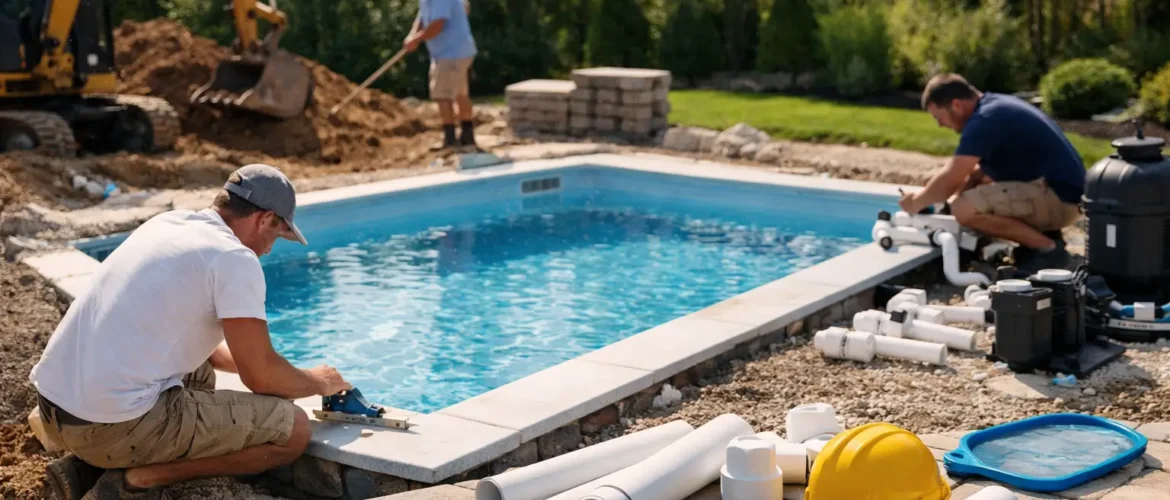
A pool quote can look simple until you realize that the shell itself is only one part of the project. Homeowners asking, “what does pool installation include?” usually want to know where the contractor’s work ends, what they need to arrange separately, and what can change the final price. Those are the right questions to ask before choosing a pool.
For Connecticut homeowners, installation often involves planning around sloped yards, ledge, drainage, local permits, and a relatively short construction season. A good installation plan accounts for the entire backyard, not just the hole where the pool will sit.
What Does Pool Installation Include in Connecticut?
A standard inground pool installation generally includes design planning, excavation, placement of the pool structure, plumbing, equipment installation, backfilling, startup, and basic grading around the pool. With a fiberglass pool, the process also includes setting the pre-manufactured shell on a carefully prepared base and filling the pool with water as backfill is placed around it.
The exact scope depends on the pool type, site conditions, package selected, and municipality. A fiberglass pool installation has different steps than a vinyl-lined pool or an above ground pool. Decking, fencing, landscaping, electrical upgrades, and specialty features may be part of the contract, quoted as options, or completed by another contractor.
That is why the proposal matters more than a single starting price. It should clearly identify what is included, what is an allowance, and what conditions could create additional work.
Site Visit, Design, and Project Planning
Before equipment arrives, the contractor needs to understand the property. A site evaluation looks at access for trucks and machinery, the proposed pool location, elevation changes, soil conditions, drainage patterns, overhead wires, septic systems, wells, and underground utilities.
This is also when homeowners make practical design decisions. Pool shape, size, depth, entry steps, tanning ledges, orientation, equipment location, and the relationship between the pool and the house all affect the installation. A pool that looks ideal on a drawing may not be the best fit if it crowds a septic reserve area or creates difficult drainage near the foundation.
For a fiberglass pool, the shell must be able to reach the backyard. In many cases, that means planning for a large delivery truck and crane. A narrow side yard, mature trees, utility lines, or nearby structures can affect access and may require a different delivery approach or additional preparation.
Permits, Utility Marking, and Local Requirements
Pool installation commonly includes help with the permitting process, although each town has its own requirements and fees. Connecticut homeowners may need building permits, zoning approval, electrical permits, and inspections. Setback rules, lot coverage limits, barriers, alarms, and drainage requirements can all influence the final plan.
Underground utilities must be marked before excavation begins. If the project involves moving utility lines, upgrading an electrical service, or working near a well or septic system, the scope can expand. These items should never be treated as afterthoughts. They can affect the schedule, budget, and placement of the pool.
Safety requirements are especially important. Most towns require a compliant barrier around an inground pool, and the details matter: fence height, gate latches, door alarms, and pool covers may all be part of the approved safety plan. A safety cover is often a smart addition for Connecticut pool owners because it protects the pool during the off-season while helping meet safety needs.
Excavation and Base Preparation
Excavation is where site conditions become real. The crew marks the pool location, removes soil, and digs to the depth and shape required for the selected pool. Access limitations, rocky ground, groundwater, ledge, unstable soils, and unexpected buried materials can make this phase more involved.
Once the excavation is complete, the crew prepares a level base. For fiberglass pools, this base is critical. The shell needs stable, even support across its bottom so it can be set correctly and perform as intended over time. Crushed stone is commonly used because it can be accurately graded and supports drainage.
The excavated soil may be spread on site if there is a suitable location and local regulations allow it. In other cases, excess material must be hauled away. Hauling, ledge removal, dewatering, and retaining work are common examples of costs that may not be fully known until excavation begins. A dependable contractor explains these possibilities before the project starts rather than presenting them as a surprise later.
Pool Delivery, Setting, and Backfilling
With a fiberglass installation, the pool shell arrives ready-made. A crane lifts it from the delivery truck and lowers it into the prepared excavation. The crew checks level, alignment, and elevation before moving forward. This is a major advantage of fiberglass: homeowners can see the actual finished pool shape right away instead of waiting for a shell to be constructed on site.
After the pool is set, plumbing lines are installed for the skimmer, returns, main drain if included, and any water features. The pool is then filled with water in stages while clean backfill is placed around the outside of the shell. Filling and backfilling together helps keep pressure balanced and supports the pool walls correctly.
A vinyl-lined inground pool follows a different path. Its wall structure, floor, liner, and fittings are assembled on site. Above ground pool installation is generally less invasive, but it still requires a level base, proper electrical service, safety planning, and equipment setup.
Plumbing, Equipment, and Electrical Work
Every pool needs a circulation system to keep the water clean and usable. Installation typically includes plumbing the pool to the equipment pad and setting up the core components: a pump, filter, valves, and controls. Depending on the package, the equipment may also include a heater, salt chlorine generator, automatic cleaner connection, automation system, or a variable-speed pump.
Electrical work provides safe power for the pump, lights, heater, and controls. A licensed electrician typically handles bonding, grounding, GFCI protection, wiring, and any required subpanel work. If the existing electrical panel does not have enough capacity, an upgrade may be needed.
Homeowners should ask exactly which equipment brands and models are included. A quote that simply says “filter system” does not tell you whether it includes the features, efficiency, or capacity your pool needs. The same is true for lights, heaters, and automation. The right equipment package depends on pool size, how often you plan to use it, and whether you expect to add features later.
Coping, Decking, Drainage, and the Finished Backyard
The pool may be installed before the backyard is finished. Coping and decking create the usable surface around the water, but they are often separate from the base pool installation. Common choices include poured concrete, pavers, stamped concrete, stone, and composite decking. Each has different costs, appearance, maintenance needs, and drainage requirements.
Plan for more deck space than just a narrow walking path. Families often want room for chairs, a table, a grill area, or a lounge zone. At the same time, more hardscape can increase the need for drainage planning. Water should be directed away from the pool, house, and neighboring properties.
Final grading restores the work area as much as possible, but landscaping is usually a separate phase. Sod, planting beds, irrigation repairs, retaining walls, outdoor kitchens, and fencing may be completed after the pool is operating. Clarify whether restoration includes rough grading only or a finished lawn-ready surface.
Startup, Orientation, and What Happens After Installation
Once the system is connected, the pool is filled, equipment is started, and the water chemistry is adjusted. A professional startup should include checking for leaks, confirming circulation, demonstrating equipment operation, and explaining basic maintenance. You should know how to run the pump, clean the filter, manage sanitizer levels, use any automation controls, and respond to common water issues.
This is also the time to discuss long-term service. Pools need seasonal opening and closing, water testing, equipment maintenance, repairs, and occasional upgrades. Choosing a local company that can support the pool after installation makes ownership easier, especially when a pump, heater, liner, or cover needs attention years down the road.
Questions to Ask Before You Sign a Pool Contract
Ask whether the price includes permits, excavation, utility marking, delivery, crane work, backfill, plumbing, electrical work, equipment, startup, and cleanup. Then ask what happens if the crew encounters ledge, groundwater, unsuitable soil, buried debris, or limited access.
You should also confirm whether the following are included or separate: fencing, safety cover, decking, concrete, drainage, landscaping, heater, salt system, lighting, and removal of excess soil. There is no single package that fits every property. A straightforward scope of work lets you compare pool proposals fairly and budget for the full project instead of only the pool shell.
A pool should feel like an improvement to your home, not a string of unanswered questions. Before selecting a design, walk the property with an experienced installer, review the scope line by line, and build a plan that fits your yard, your family, and the way you expect to use the pool for years to come.