

A pool pump that runs without moving water is not just frustrating. It can overheat, damage the seal, and leave your pool circulation at a standstill. Knowing how to prime pool pump equipment properly can often get water moving again after opening the pool, cleaning the basket, or losing water during maintenance.
Priming is simply the process of filling the pump housing and suction line with water so the pump can create the vacuum it needs to pull water from the pool. Most residential pumps are not designed to pull water through an empty pipe for long. A few minutes of dry running can turn a simple maintenance task into a repair call.
What It Means to Prime a Pool Pump
Your pump moves water from the skimmer and main drain, through the filter, and back to the pool through the return jets. For that system to work, the pump needs a sealed path full of water. If air enters through an open valve, low pool water, a loose lid, or a cracked fitting, the pump may lose its prime.
You may need to prime the pump after emptying the pump basket, backwashing certain filters, opening the pool in spring, repairing plumbing, or dealing with a power outage. It is also common after a Connecticut winter opening, when equipment has been drained and disconnected to protect it from freezing.
A pump that has lost prime often makes a louder-than-normal sound, shows air in the clear pump lid, has little or no water flow at the returns, or displays a low pressure reading on the filter gauge. Do not assume the pump itself has failed. In many cases, the cause is a simple air leak or a closed valve.
How to Prime Pool Pump Equipment Safely
Before handling the pump, turn off power at the timer, switch, or breaker. Never remove a pump lid while the system is running. If your equipment pad has several valves and you are not sure what they control, take a moment to identify them before changing anything. Turning the wrong valve can restrict flow or create unnecessary pressure in the system.
1. Check the pool water level
The water should sit around the middle of the skimmer opening or slightly higher. If it is too low, the skimmer pulls air instead of water, and the pump cannot maintain prime. Add water before moving on, especially if the pool has been uncovered, heavily used, or recently vacuumed to waste.
If your pool has more than one skimmer, check that the skimmer valves are set to allow water into the pump. A main-drain line can sometimes help the system prime, but only if that line is open and functioning properly.
2. Open the correct valves
Confirm that the suction-side valves leading from the skimmer and main drain are open. Then check the return-side valves after the filter. A valve handle that sits perpendicular to the pipe is typically closed, while a handle in line with the pipe is typically open.
Valve setups vary. Some pools have a single three-way valve, while others have separate valves for a skimmer, main drain, spa, cleaner, or water feature. If you have recently adjusted valves for vacuuming or winterizing, return them to their normal circulation position before starting the pump.
3. Clean and fill the pump basket
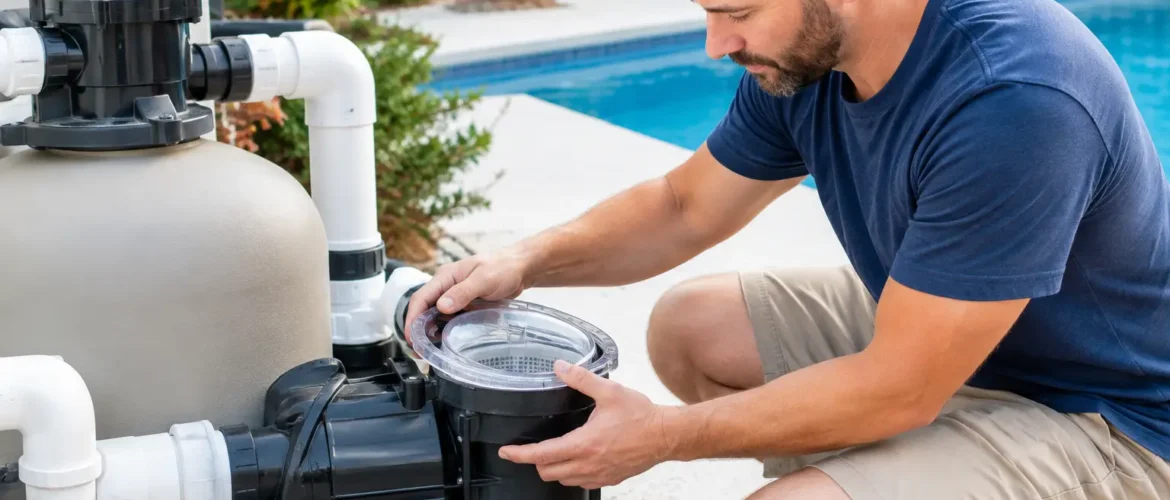
Remove the clear pump lid and lift out the basket. Empty leaves, mulch, hair, and other debris, then rinse the basket if needed. A clogged basket reduces flow and makes priming harder.
With the basket back in place, fill the pump housing with a garden hose or a bucket of pool water until it is nearly full. This gives the pump a head start and reduces the time it spends trying to move air. Do not force the lid closed over a twisted or dry O-ring.
4. Inspect and lubricate the lid O-ring
The lid O-ring creates the seal that allows the pump to draw water. Wipe away grit, inspect it for flattening, cracks, or stretching, and apply a small amount of silicone-based pool lubricant if it looks dry. Avoid petroleum jelly, which can damage some rubber seals.
Set the O-ring evenly in its groove, replace the lid, and tighten it by hand. Overtightening can make future removal difficult and does not fix a worn O-ring. If the lid continues to pull in air, replacement is usually inexpensive and worthwhile.
5. Release trapped air at the filter
Open the air-relief valve on top of the filter if your filter has one. This gives trapped air a place to escape as the pump begins moving water. Keep the valve open until a steady stream of water comes out, then close it.
For sand, cartridge, and DE filters, this step helps prevent pressure fluctuations and gives you a clearer sign that the system is filling correctly.
6. Start the pump and watch the water level
Turn the power back on and watch through the clear pump lid. The housing may not fill instantly, but it should begin pulling in water within 30 seconds to a minute. Air bubbles can appear at first. They should steadily decrease as the pump and plumbing fill.
Let the pump run for a minute or two while checking the return jets. A strong, consistent flow is a good sign. Once water is flowing normally, check the filter pressure gauge and compare it to your usual clean operating pressure.
7. Repeat once if necessary
If the pump housing does not fill, turn the pump off. Refill the housing, reseat the lid, and try again. It may take two attempts after a seasonal opening or after plumbing has been completely drained.
Do not keep restarting a dry pump over and over. If it cannot establish prime after one or two careful attempts, stop and look for the issue causing the air leak or blockage.
Why a Pool Pump Will Not Hold Its Prime
A pump that loses prime repeatedly needs more than another bucket of water. Start with the obvious causes: low water in the pool, a full skimmer basket, a full pump basket, or a valve that is partly closed. These are common homeowner fixes.
If those check out, inspect the clear pump lid, O-ring, drain plugs, unions, and visible plumbing fittings on the suction side of the pump. Even a small air leak can prevent reliable circulation. You may see bubbles under the lid, hear a hissing sound near a fitting, or notice air returning to the pool through the jets.
Other possible causes include a clogged impeller, a blocked suction line, a worn shaft seal, or plumbing damage underground. These problems are less DIY-friendly. Opening a pump motor or forcing a stuck valve can create a larger repair, particularly on older equipment.
When to Call for Pool Pump Service
Call a pool professional if the pump runs but will not pull water after basic priming steps, if it shuts off or hums without starting, or if you see water leaking beneath the motor. A burning smell, repeated breaker trips, and unusually loud grinding are also reasons to shut the system down rather than keep troubleshooting.
For Connecticut homeowners, spring startup is a particularly good time to address a pump that will not prime. Winterizing can expose aging O-rings, brittle fittings, and small plumbing issues that were not obvious at closing. Catching them before the swimming season prevents poor circulation, cloudy water, and unnecessary strain on your equipment.
EZ Aqua Fiberglass Pools can help homeowners diagnose circulation problems, repair pool equipment, and get systems operating properly for the season. Whether you own a fiberglass, vinyl-lined, or above-ground pool, the basic goal is the same: a sealed circulation system with dependable water flow.
Preventing Prime Problems Next Time
Keep the pool water at the proper level, empty baskets before they become packed with debris, and check the pump lid O-ring during routine maintenance. After cleaning the basket, always refill the pump housing before restarting if the water has drained out.
It also helps to note your normal filter pressure when the system is clean. A pressure gauge cannot identify every pump issue, but it gives you a useful baseline when circulation changes. A few minutes of attention at the equipment pad can protect one of the most important parts of your backyard pool.
When a pump will not prime, resist the temptation to let it run dry and hope it catches. Shut it down, work through the water level, valves, basket, lid, and filter air-relief steps, then get professional help if the problem persists. A properly primed pump keeps your water clear, your equipment protected, and your pool ready when your family wants to use it.