
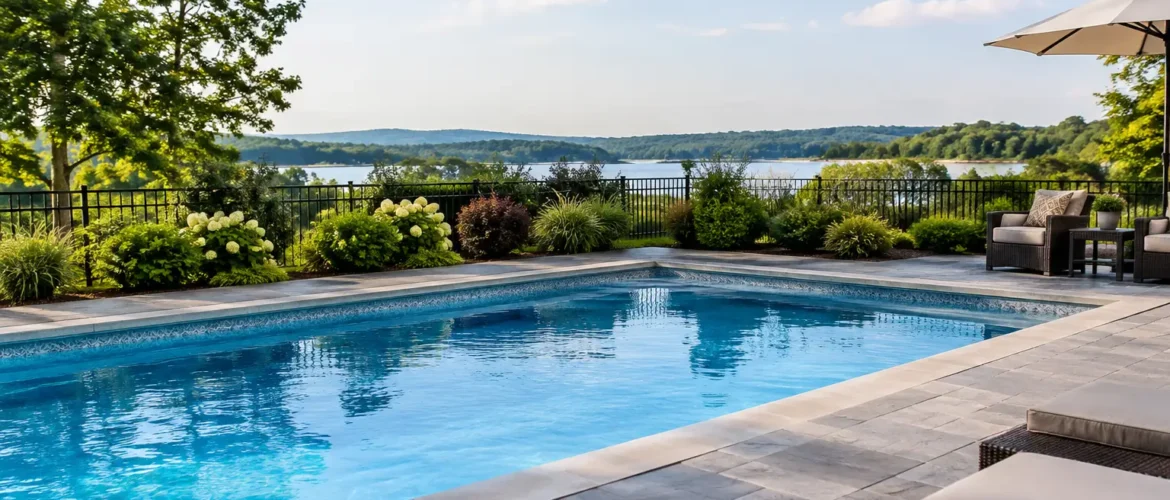
A pool can look perfect in a brochure and still be the wrong fit for your property. The shallow end may not work for the way your family swims, the deep end may take up too much usable yard, or the access route may complicate delivery. This San Juan pool selection guide helps Connecticut homeowners narrow the choices before they commit to an inground fiberglass pool.
San Juan fiberglass pools are available in a wide range of shapes, lengths, depths, and built-in features. That variety is a major advantage, but it also means the best choice is rarely just the largest model that fits on paper. Your yard layout, intended use, budget, and long-term maintenance expectations should all guide the decision.
Start With How Your Family Will Use the Pool
The first question is not which shape looks best. It is what you want the pool to do most days. A family with younger children often benefits from a broad shallow area where adults can stand nearby and kids can play comfortably. Homeowners focused on fitness may prefer a long, unobstructed swim lane. If weekend entertaining is the priority, steps, tanning ledges, and generous seating can matter more than maximum water depth.
Think about your household three to five years from now as well. Small children grow, teenagers invite friends over, and a pool that feels oversized for two people may become the center of family gatherings. At the same time, there is no benefit in installing more pool than you will realistically use and maintain.
A compact fiberglass pool can be an excellent choice for a smaller Connecticut backyard, a second-home property, or homeowners who want a place to cool off without giving up the entire lawn. Larger designs create more room for swimming and entertaining, but they require more surrounding deck space, a larger investment, and a more deliberate landscape plan.
San Juan Pool Selection Guide: Shape and Size
Fiberglass pool shells come in freeform, rectangular, kidney, Roman, and contemporary designs. Each can work well, but the best fit depends on the character of the house and the shape of the available build area.
Rectangular pools are a practical choice for modern homes, automatic safety covers, lap swimming, and clean-lined patio designs. Their straight edges make furniture placement and hardscape planning more predictable. Freeform pools have softer curves and can feel more natural in a wooded or informal landscape. Kidney and Roman styles can provide a traditional look while creating distinct areas for steps, benches, or conversation seating.
Do not measure only the open lawn and assume that is the pool footprint. A proper plan needs room for the shell, excavation access, patio or coping, drainage, equipment, required setbacks, and safe walking space around the water. A pool that technically fits may not leave enough room for the outdoor living area you expected.
Depth deserves the same attention as length. Many homeowners picture a very deep pool because that is what they remember from older pools. In reality, a moderate-depth design is often more useful for everyday family swimming, games, and socializing. A deeper end may make sense if diving is part of the plan, but diving suitability depends on the specific pool model and installation requirements. Never assume that a deep-looking pool is appropriate for a diving board.
Built-In Features Change the Experience
Steps, benches, tanning ledges, and spillover features are not just visual upgrades. They affect how people use the pool.
A tanning ledge is especially useful for parents supervising children, homeowners who enjoy lounging in shallow water, or anyone who wants an easy place to set a chair or in-water umbrella. Wide entry steps create a more welcoming transition into the pool and can improve accessibility. Benches give guests a place to sit without leaving the water, which is valuable in an entertaining-focused backyard.
The trade-off is swimming area. In a smaller shell, a large tanning ledge or oversized step system can reduce the open water more than expected. Review the interior layout carefully rather than choosing features based on photos alone. What looks spacious in a staged image may feel different when several people are in the water.
Plan Around Your Connecticut Property
Connecticut properties bring practical installation considerations that should be addressed early. Sloped yards, ledge, high water tables, mature trees, septic systems, drainage patterns, and narrow side access can all affect the project scope. None of these automatically prevents a fiberglass pool installation, but each may influence the selected model, equipment location, construction approach, and overall budget.
Fiberglass shells are delivered as one piece, so access is a real selection factor. A tight driveway, overhead utility lines, stone walls, or limited space between homes may require careful planning. In some cases, a crane is needed to place the pool shell. That can be a workable solution, but it should be accounted for before you become attached to a particular size.
Local zoning and permit requirements also shape the project. Setbacks from property lines, wetlands restrictions, fencing rules, electrical requirements, and safety barriers need to be considered before finalizing a layout. An experienced local contractor can help identify these issues before the design reaches the installation stage.
Drainage is another detail that should never be treated as an afterthought. Snowmelt and heavy rain need a clear path away from the pool deck, foundation, and equipment area. A well-planned patio and drainage system protects the investment and helps prevent water from collecting where it does not belong.
Choose a Budget That Includes the Whole Backyard
The pool shell is only one part of the project cost. A realistic budget should account for excavation, installation, backfill, plumbing, electrical work, filtration equipment, coping, patio or decking, fencing, permits, and site-specific needs such as rock removal or drainage work.
Many homeowners also want lighting, heaters, saltwater systems, automatic safety covers, water features, or upgraded hardscaping. These choices can make the pool easier to enjoy, but prioritizing them is important. For example, a safety cover may be a more practical early investment than a decorative water feature, especially for families with children or homeowners who want easier off-season protection.
Financing can help spread out the cost of a complete project, but it should not lead to rushed design decisions. Decide what is essential on day one and what can be added later. Some features are easier and less expensive to include during construction, while others, such as certain lighting or landscape improvements, may be suitable for a future phase.
Think About Ownership After Installation
Fiberglass is popular because its smooth, nonporous surface is generally easier to clean than more porous pool finishes. It can also reduce the opportunity for algae to take hold. That said, every pool needs regular attention. Water chemistry, filtration, seasonal opening and closing, and equipment care still determine how enjoyable ownership will be.
When comparing San Juan pool models, consider how your preferred design supports routine maintenance. Look at skimmer placement, step configuration, circulation, and whether your planned cover will work with the shape. A pool with dramatic curves may be exactly right for your yard, but a rectangular design can be more compatible with certain automatic cover systems.
If you expect to heat the pool or run a saltwater system, discuss that during planning. Equipment selection should match the pool size, local climate, and how often you expect to swim. Connecticut homeowners who want to extend their season need a practical heating plan, not just a heater added as an afterthought.
Make the Decision With a Site Plan, Not a Guess
The most useful pool comparison happens when you can place prospective shapes and sizes into a real plan for your property. A professional consultation can show how the pool, patio, equipment, fencing, and access routes work together before excavation begins. It also gives you a chance to compare a few models that meet your needs instead of trying to choose from an entire catalog.
EZ Aqua Fiberglass Pools works with homeowners through the selection, installation, financing, and service sides of pool ownership, so the goal is not simply to sell a shell. It is to help you build a backyard that works for your family, your property, and the way you plan to use it.
Before choosing a model, bring photos of your yard, a property survey if available, and a clear picture of how you want to spend time outside. Those details turn a pool conversation into a practical plan and help ensure the finished backyard feels right long after the first swim.