

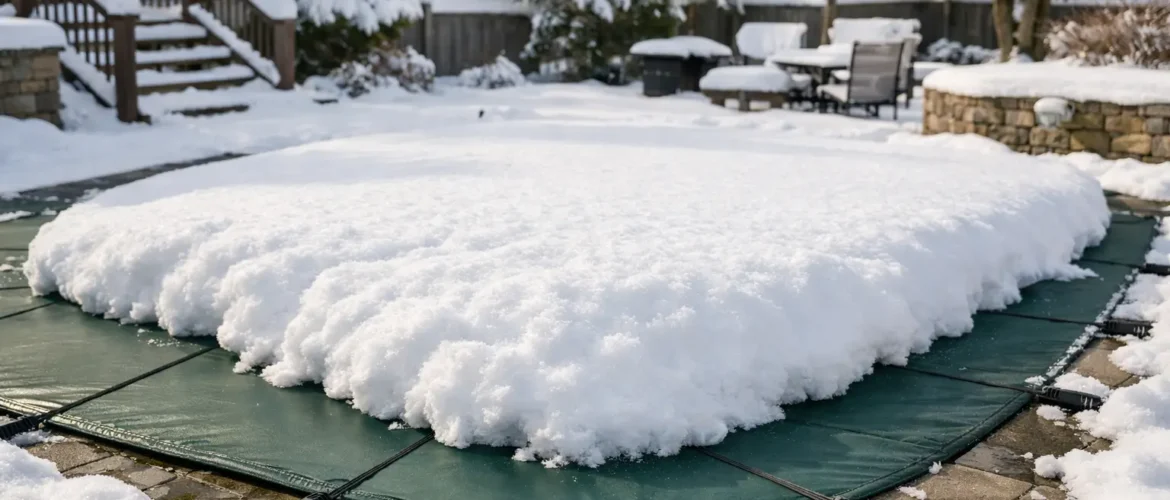
A Connecticut snowstorm can turn a clean, tightly secured pool cover into a white blanket overnight. So, do safety covers hold snow? Yes. A properly installed, quality safety cover is designed to support snow and other winter loads far better than a standard floating winter cover. But that does not mean every cover, every pool, or every accumulation should be treated the same way.
The condition of the cover, the strength of its anchors, the amount and type of snow, and whether water is collecting on top all affect how well it performs. For homeowners closing a fiberglass, vinyl, or concrete pool in Connecticut, the goal is not simply to put a cover on and forget about it until spring. The goal is to use the right cover and check it after significant weather.
Do Safety Covers Hold Snow Safely?
A true pool safety cover is engineered to span the pool and transfer weight to anchors installed around the deck. The cover is held under tension by straps, springs, and hardware, creating a secure barrier over the water. This is very different from a basic winter cover that floats directly on the water and relies on water bags, cable, or deck clips around the edge.
Most professionally installed mesh and solid safety covers are made to meet recognized safety and load requirements. When the cover is correctly measured, manufactured for the pool, and installed according to the manufacturer’s specifications, it can typically support a substantial amount of snow.
Still, “supports snow” does not mean “ignore any amount of snow.” Wet, compacted snow weighs far more than light, powdery snow. A cycle of snowfall, rain, melting, and refreezing can create a heavy layer of ice and slush that puts more stress on the cover and its hardware than fresh snow alone.
A safety cover should never be treated as a deck, a play surface, or a place for children or pets to walk. Its safety function matters, but it is not an invitation to stand on it.
Mesh vs. Solid Safety Covers in Snow
Both mesh and solid safety covers can be excellent choices for Connecticut pools. The best option depends on your priorities for water quality, maintenance, appearance, and seasonal workload.
Mesh safety covers let meltwater drain
A mesh safety cover allows rain and melting snow to pass through into the pool. This is one of its biggest practical advantages during winter. Because water drains through the material, it does not normally pool on top of the cover, reducing the need for a cover pump.
Snow can still rest on a mesh cover until it melts. However, as temperatures rise, the water drains through rather than adding a standing-water load above the cover. Mesh covers are often the lower-maintenance choice for homeowners who want dependable winter protection without regularly pumping water off the surface.
The trade-off is that fine debris and sunlight can pass through some mesh materials. Your pool may need more cleanup at opening than it would with a solid cover.
Solid safety covers block debris and light
A solid safety cover blocks leaves, dirt, and sunlight more effectively. Keeping light out of the pool can help limit algae growth, which may make spring opening easier. For homeowners with heavy tree cover, that cleaner opening can be a real benefit.
The key consideration is drainage. A solid cover needs a properly functioning cover pump, drainage panel, or other manufacturer-approved drainage setup. If melted snow and rainwater are allowed to collect on the cover, the added weight can become a serious issue. The pump must be checked throughout the offseason, especially after storms and winter thaws.
A solid cover is not a poor choice for snowy areas. It simply requires more active winter oversight than mesh.
What Determines How Much Snow a Safety Cover Can Handle?
There is no responsible one-number answer to how many inches of snow a pool safety cover can hold. Snow density varies widely. Six inches of dry snow may be relatively light, while six inches of wet snow mixed with rain can be much heavier.
The cover’s real-world capacity also depends on several connected factors:
- The cover type, material, age, and manufacturer specifications
- Proper custom measurement and installation for the pool shape
- The condition and spacing of straps, springs, anchors, and deck hardware
- Whether the pool has features such as steps, raised walls, waterfalls, or diving boards that require special cover treatment
- Accumulated water, ice, branches, or debris sitting on the cover
A cover that was installed years ago may still look acceptable from a distance while having weakened stitching, worn straps, damaged springs, or loose anchors. That is why a preseason inspection is worth the time. A safety cover works as a system. One failed component can compromise the tension and performance of the entire cover.
When Should You Remove Snow From a Pool Cover?
In many situations, fresh snow can be left on a properly installed safety cover to melt naturally. Trying to remove light snow too aggressively can cause more harm than good, especially if you use sharp tools or walk near the pool edge on ice.
However, it is wise to inspect the cover after a heavy storm, prolonged melting and refreezing, or rain falling on top of existing snow. Watch for sagging, unusually low areas, loose straps, displaced anchors, standing water, or a cover pump that has stopped working.
If snow removal is necessary, follow the cover manufacturer’s instructions. Use caution and work from the pool deck, not from the cover itself. Avoid metal shovels, sharp ice choppers, and any tool that can cut the fabric. Do not use salt or harsh de-icing products on the cover without confirming they are safe for the material and pool equipment.
For a solid cover, the priority is usually removing water with the appropriate pump, not scraping every bit of snow away. Once the snow melts, standing water is often the more immediate concern.
Common Problems That Make Snow Loads Riskier
The wrong type of cover is one of the most common issues. A lightweight winter tarp can protect water from debris, but it is not a safety cover and should not be expected to support people, pets, or significant snow loads in the same way.
Poor tension is another concern. A safety cover should be taut and evenly supported, not excessively loose or sagging. If the springs are not adjusted correctly, straps are twisted, or anchors have loosened, weight may be concentrated in areas that were not meant to carry it.
Drainage problems also create unnecessary stress. On solid covers, a failed pump can allow hundreds of pounds of water to build up. On mesh covers, clogged areas, debris piles, or ice can slow drainage and create low spots. Clearing branches and large debris before winter weather arrives helps prevent these problems.
Protect Your Pool Before the First Major Storm
The best time to address snow-load concerns is before the cover is under snow. At closing, inspect the fabric for tears, check straps and springs, confirm anchors are secure, and make sure the cover fits the pool correctly around steps and features. For solid covers, test the pump and make sure its discharge path is clear.
After a major storm, a quick visual inspection from the deck can catch a problem early. If the cover is sagging, hardware is pulling loose, or water is building up, do not wait for spring to deal with it. Prompt service can help protect the cover, deck anchors, and pool itself.
For Connecticut homeowners, a professionally fitted safety cover is one of the smartest offseason investments you can make. EZ Aqua Fiberglass Pools can help you choose, install, inspect, or replace a cover that fits your pool and gives you more confidence when winter weather arrives.
Pingback: Pool Liner Replacement Planning Guide for Homeowners - EZ Aqua Fiberglass Pools
Pingback: Connecticut Inground Pool Permit Requirements - EZ Aqua Fiberglass Pools
Pingback: Are Safety Covers Required for Connecticut Pools? - EZ Aqua Fiberglass Pools
Pingback: San Juan Pool Selection Guide for Connecticut - EZ Aqua Fiberglass Pools