

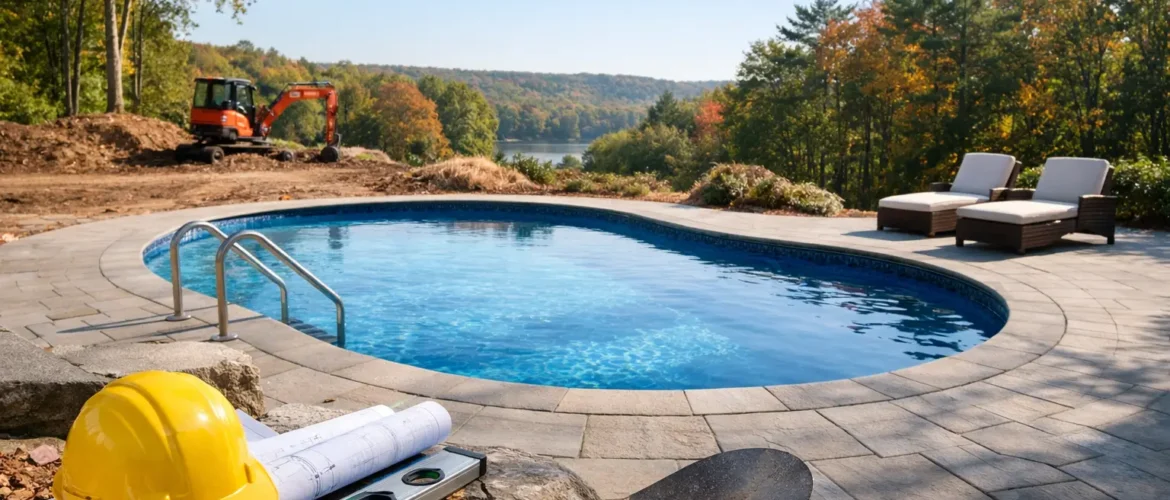
A Connecticut backyard can look very different in April than it does in August, but the best time to install a pool is not always the season when homeowners first start thinking about swimming. Pool installation involves design decisions, permits, excavation, delivery access, utility work, decking, and landscaping. Starting at the right time gives you more control over the schedule and a better chance of having the finished backyard ready when you want it.
For many homeowners, fall through early spring is the most strategic time to begin planning and scheduling an inground pool. That does not mean every project should break ground in winter. It means the right installation window depends on your yard, your pool type, your desired completion date, and how much work is planned around the pool.
Best Time to Install a Pool: Start Planning Before Spring
If your goal is to swim next summer, do not wait until the first warm weekend of spring to request estimates. Spring is traditionally one of the busiest periods for pool contractors. Homeowners are eager to build, schedules fill quickly, and permit offices may receive a higher volume of applications.
A fall or winter consultation gives you time to choose the pool shape and size, review your property, establish a budget, and work through financing before construction season is in full swing. It also allows time to address practical details that can affect the schedule, such as setbacks, septic systems, easements, drainage, underground utilities, retaining walls, and access for equipment.
For fiberglass pool buyers, early planning is especially helpful. Fiberglass shells are manufactured in set shapes and sizes, so selecting a model, confirming availability, and coordinating delivery should happen well before the planned installation date. The installation itself can move quickly once conditions are right, but preparation is what keeps a project moving.
Fall Is Often the Strongest Installation Season
Fall is an excellent time to install a pool in Connecticut. The summer heat has eased, but the ground is generally still workable. Many families are no longer trying to coordinate construction around daily swimming, school vacations, or summer entertaining. That can make the process less disruptive.
A fall installation can also position your pool for an easier spring opening. The major construction work is completed before winter, and the pool can be properly winterized and covered until warm weather returns. When spring arrives, you are focused on opening, balancing the water, and enjoying the pool rather than waiting for excavation and deliveries.
Fall does come with a trade-off. As temperatures drop, daylight becomes shorter and weather patterns become less predictable. Concrete, paving, and landscaping work may have their own temperature requirements. If your pool project includes a large patio, outdoor kitchen, planting plan, or extensive grading, it is wise to discuss which items can be completed before winter and which may be better scheduled for spring.
Can You Install a Pool During Winter?
In some cases, yes. Winter pool installation is possible when site conditions, temperatures, and contractor scheduling allow it. A fiberglass pool may be a practical option for winter construction because the shell is delivered as a finished structure rather than built onsite over an extended period.
Still, winter is not automatically the best choice for every property. Frozen ground, snow cover, mud, and limited access can delay excavation or make it harder to protect finished areas of the yard. A property with a steep driveway, narrow access route, poor drainage, or heavy tree cover may require more favorable conditions.
The advantage of winter is planning and scheduling flexibility. Homeowners who begin during the off-season may be further ahead when spring demand arrives. Even if installation is scheduled for early spring, completing the design, site review, permit work, and material selections in winter can prevent avoidable delays.
Spring Installation Gets You Ready for Summer, With Limits
Spring is the most popular season for pool construction for a reason. Homeowners want a finished pool for the coming summer, and the weather is improving. Installing in spring can be a good choice if you begin early, your yard has dried out sufficiently, and the project scope is manageable.
The challenge is that spring weather in Connecticut is rarely predictable. Rain can slow excavation, create muddy access conditions, and delay concrete or patio work. Municipal permitting timelines can also vary, particularly when an application requires zoning review, building approvals, fencing plans, electrical work, or safety documentation.
A spring project should be approached with realistic expectations. A pool installation involves more than setting a shell or installing a liner. The site must be excavated, the base prepared, plumbing and equipment connected, electrical work completed, water added, inspections handled where required, and the pool area made safe. If decking and landscaping are part of the same project, allow additional time.
Summer Is Possible, But Usually Requires Patience
Installing a pool in summer is absolutely possible, especially for homeowners who have decided they would rather start now than lose another season. The weather is generally cooperative, and construction crews can work efficiently when the site is accessible.
However, summer is often the busiest time for pool installers, subcontractors, and material suppliers. You may have fewer preferred installation dates available, and a larger project may not be completed in time for much swimming that year. In addition, construction can interrupt the exact season when you most want to use your backyard.
Summer installation makes sense when timing is flexible or when the priority is having the pool ready for the following season. It can also be a smart move after a home purchase, major renovation, or landscape project where waiting until fall would delay the entire backyard plan.
Your Yard Conditions Matter as Much as the Calendar
The best installation date is not determined by temperature alone. A qualified site evaluation should look closely at how water moves through your property, whether equipment can access the yard, and what is located underground or near the planned pool area.
Wet soil can complicate excavation, while a high water table may require specific construction considerations. Ledge, boulders, tree roots, septic components, and existing drainage systems can affect the project scope in any season. On compact suburban lots, access may be the deciding factor. A fiberglass pool shell needs a clear route for delivery and placement, which may involve a crane or coordinated site preparation.
It is also important to think beyond the pool itself. Fencing, gates, alarms, safety covers, equipment placement, walkways, and drainage should be considered early. A pool that fits physically in the yard still needs to fit the way your family uses the space.
Build the Schedule Around the Whole Backyard Project
A common mistake is treating the pool as a separate project from the patio, fencing, landscaping, and outdoor living area. In reality, these elements affect one another. Installing a pool before replacing a deck or building a patio may avoid redoing work later. Planning drainage before new sod and plantings can protect the finished yard.
If you are adding a pool house, retaining wall, fire feature, or extensive hardscape, start the design conversation earlier than you think. Coordinating trades and materials is easier when the pool plan is established first. This is particularly valuable for fiberglass pools, where the shell dimensions and placement can be confirmed before surrounding features are finalized.
Budget timing matters, too. Planning months ahead gives homeowners time to review financing options, compare project phases, and decide whether to complete the backyard all at once or in stages. The lowest-stress route is usually the one that matches the scope to a realistic schedule and budget.
When Should You Contact a Pool Contractor?
Contact a pool contractor as soon as a pool becomes a serious possibility, ideally six months or more before your preferred completion date. You do not need to have every design choice made. A professional consultation helps answer the questions that shape the rest of the project: what pool type fits your property, where it should go, what access is required, what permits may apply, and what work should be included from the start.
EZ Aqua Fiberglass Pools works with Connecticut homeowners through those early decisions as well as installation, safety, service, and long-term care. A site-specific plan is more useful than a generic calendar because every property has its own access, soil, grade, and backyard goals.
The right time to begin is when you have enough lead time to make smart decisions without rushing them. Whether you build in fall, break ground in spring, or plan through winter for next season, a well-timed pool project gives your family a backyard that is ready to enjoy for years.