

A faded liner can make an otherwise well-kept pool look tired. A small tear can turn into a water-loss problem quickly. For Connecticut homeowners with vinyl-lined inground pools, this pool liner replacement planning guide explains how to recognize the right time for replacement, prepare the project, and avoid surprises once the old liner comes out.
A new liner is not simply a cosmetic upgrade. It is the waterproof surface that protects the pool structure, supports safe use, and gives the entire backyard a cleaner appearance. Planning ahead gives you more choice in liner patterns, better scheduling options, and time to address any issues hiding behind the existing liner.
Know When a Pool Liner Needs Replacement
Most vinyl pool liners last roughly 8 to 15 years, but age alone does not decide the job. Sun exposure, water chemistry, winter conditions, installation quality, and how the pool has been maintained all affect liner life. A liner that is only eight years old may need attention if it has become brittle, while a properly cared-for liner may last well beyond a decade.
Look closely at the liner each spring and throughout the swimming season. The most common warning signs include:
- Cracks, tears, or holes, especially around fittings, corners, and steps
- Fading or staining that does not improve with normal cleaning
- Wrinkles that keep returning after the pool is properly filled and maintained
- A bead that is pulling out of the coping track
- Water loss that suggests a leak in the liner or around pool fittings
Some issues can be repaired, particularly a small isolated tear in a newer liner. Large splits, multiple patches, severe fading, or a liner that feels stiff and brittle usually point toward replacement. Trying to stretch a failing liner through another season can lead to greater water loss, damaged walls or floors, and a rushed replacement when contractor schedules are tight.
Start Your Pool Liner Replacement Planning Guide Early
The best time to begin planning is before the liner fails completely. In Connecticut, many homeowners want liner work completed before peak swimming season. That makes late winter and early spring busy periods for pool service companies, while a fall replacement can sometimes offer more scheduling flexibility.
Timing depends on your goals. If the pool needs to be ready for Memorial Day weekend, start discussing the project months earlier. If your liner is leaking late in summer, replacing it before winter may prevent the pool from sitting through a freeze-thaw cycle with compromised protection. Weather matters too. Vinyl needs appropriate temperatures to stretch and set correctly, so the installation date must account for seasonal conditions.
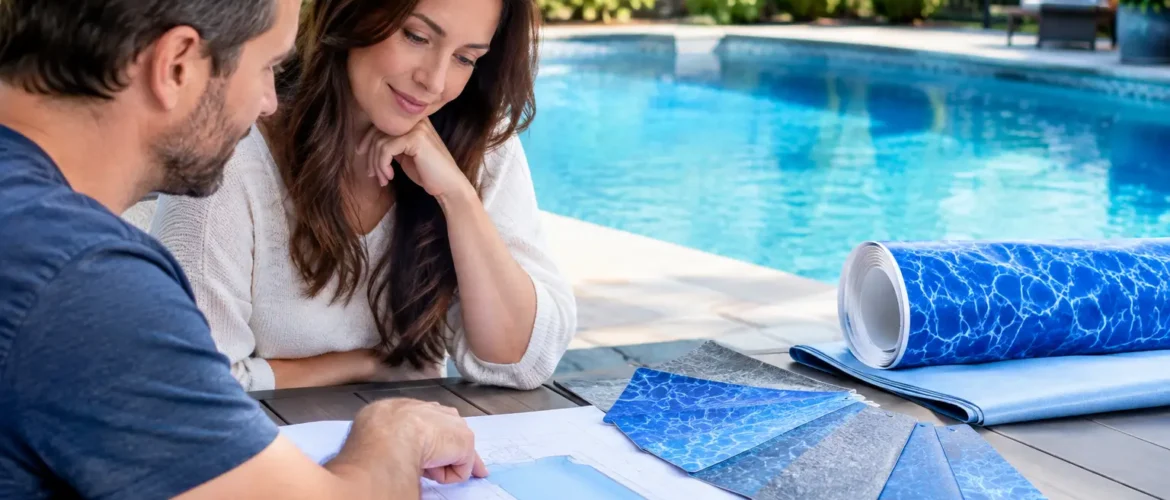
Early planning also gives you time to select a liner pattern you will be happy with for years. Samples can look different in direct sunlight and under water than they do in a catalog. Consider how the pattern will work with your coping, deck color, landscaping, and the amount of shade around the pool.
Confirm the Pool Type Before You Budget
This guide applies to vinyl-lined inground pools. Fiberglass pools have a gelcoat finish rather than a removable vinyl liner, so their renovation needs are different. Above ground pools can also use liners, but their sizing, installation process, and structural considerations are not the same as an inground vinyl pool.
If you are unsure what type of pool you own or whether an older pool has been modified over the years, a professional site visit can clarify the scope before you commit to a budget.
Build a Realistic Replacement Budget
The liner itself is only one part of the project. A proper estimate should consider the pool’s shape and dimensions, liner thickness and pattern, step configuration, water features, and the condition of the pool underneath. A rectangular pool with standard steps is generally more straightforward than a freeform pool with a custom liner, multiple returns, built-in benches, or a deep end hopper.
Once the pool is drained and the liner is removed, the crew can inspect areas that were not visible before. Common findings include wall rust, damaged vermiculite or concrete floors, loose fittings, worn gaskets, coping issues, or plumbing leaks. Not every pool will need repairs, but smart planning includes room in the budget for work uncovered during removal.
Ask what is included in the proposal. Homeowners should understand whether the estimate covers draining, removal and disposal of the old liner, floor preparation, new gaskets, resetting faceplates, filling the pool, and start-up service. Clear scope prevents the frustration of comparing a low initial number with a more complete estimate later.
Do Not Skip the Inspection of Fittings and Structure
The skimmer, returns, main drain, lights, stairs, and other penetrations have gaskets and faceplates that need careful attention. These areas are common sources of leaks. Reusing worn components may save a little upfront, but it can create a service call after the new liner is installed.
The pool floor deserves the same attention. A smooth base helps the liner sit correctly and feel comfortable underfoot. If the floor has divots, cracks, washouts, or deterioration, repairs should be made before the new liner goes in. This is also the practical time to address wall corrosion or structural concerns rather than covering them back up.
Prepare the Yard and Equipment Area
Liner replacement involves draining the pool, moving materials, using hoses and equipment, and providing clear access for the crew. Before installation day, remove patio furniture, toys, planters, and loose objects from the pool deck. Trim back branches or shrubs that block access to the pool edge. Keep pets indoors or in a secure area while work is underway.
Homeowners should also identify the location of outdoor electrical outlets, gates, septic components, irrigation heads, and any yard areas that may be affected by drainage or equipment access. Draining a pool must be handled responsibly. Water should be directed appropriately and in accordance with local requirements, not simply sent toward a neighbor’s property or a location that can cause erosion.
If you have a safety cover, discuss how it will be handled during the project. The cover may need to be removed, cleaned, or inspected before it is stored again. This is a good opportunity to check springs, straps, anchors, and hardware so the pool is ready for a secure closing when the season ends.
Choose a Liner for Daily Use, Not Just a Sample Board
Pattern and color matter, but practical fit matters more. Darker liners can give water a deep blue appearance and may hide some staining, while lighter patterns can make the pool look brighter and make debris easier to spot. Border designs, tile effects, and textured patterns change the look of the waterline, but they also need to complement the pool’s overall style.
Thickness is another decision homeowners often ask about. A thicker liner can offer greater durability in certain situations, but it is not automatically the right answer for every pool. Proper measurement, fit, installation, water balance, and avoiding sharp objects play major roles in liner performance. Your contractor can recommend options based on your pool’s shape, age, and how your family uses it.
Avoid selecting solely by price. The lowest-cost liner may not provide the pattern, warranty, fit, or construction you want for a long-term renovation. A quality installation protects the investment more than a small savings on material alone.
Plan for Water, Start-Up, and Follow-Up Care
After the liner is installed, the pool must be filled without interruption until the water reaches the proper level. Arrange for a reliable water source and understand how long filling may take. Some homeowners use a well, while others may prefer delivered water depending on volume, water quality, and local conditions. If using well water, plan for potential metal content or other water-balance needs during start-up.
Once the pool is full, the system should be inspected, circulation started, and water chemistry balanced. New liners benefit from careful water management. Keep pH, alkalinity, and sanitizer levels in the proper range, and avoid aggressive chemical treatment that can stain, fade, or shorten liner life. Never place concentrated chemicals directly on the liner surface.
For Connecticut pool owners, replacement is also a good time to look ahead to closing season. A sound liner, properly functioning fittings, and a dependable safety cover put the pool in a better position to handle winter weather.
A liner replacement should leave you with more than a fresh-looking pool. It should give you confidence that the pool structure, fittings, and surface are ready for the years of family use ahead. When you are ready to evaluate your liner, EZ Aqua Fiberglass Pools can help you review the condition of your pool and plan the work around your backyard, schedule, and budget.