

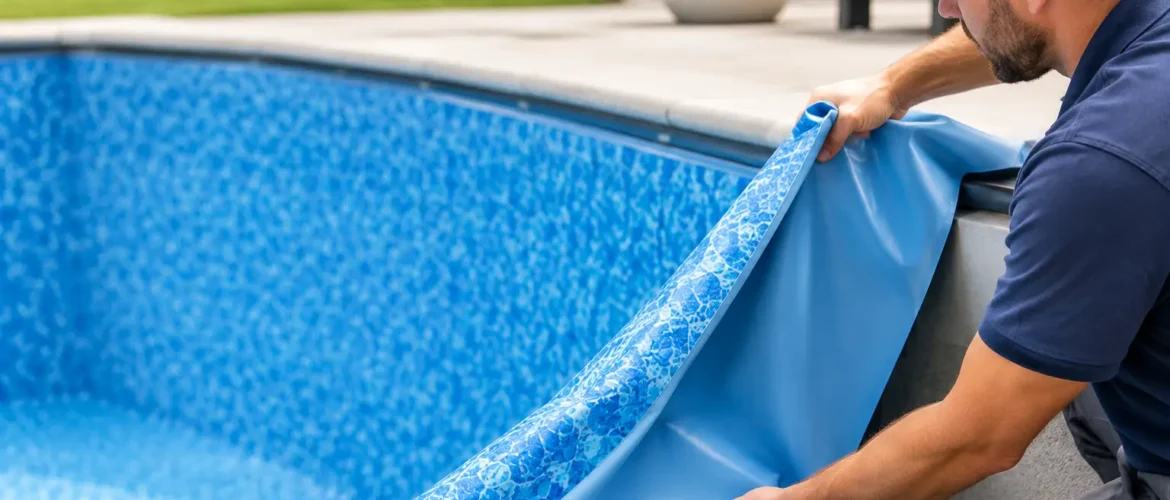
A faded pool floor, a tear near a return fitting, or water that keeps dropping below the skimmer can turn a great backyard into a weekly worry. Vinyl liners are the waterproof barrier that gives a vinyl-lined inground pool its color, pattern, and smooth swimming surface. When that barrier starts to fail, addressing it early can prevent bigger repair issues and get your pool ready for the Connecticut swim season.
For homeowners considering a liner replacement, the key question is not simply, “How old is it?” Condition matters just as much. A properly maintained liner can provide many years of service, but sunlight, water chemistry, winter conditions, ground movement, and normal use all affect its lifespan.
What Vinyl Liners Do for an Inground Pool
A vinyl liner sits between the pool water and the structure behind it. It is custom-made to fit the pool’s dimensions, including steps, deep ends, corners, skimmers, returns, drains, and other fittings. The liner locks into a track at the top of the pool wall and is held smoothly in place as the pool fills.
This system gives homeowners a wide range of visual options. Patterns can create the appearance of tile, stone, or a richer water color without requiring a fully tiled pool finish. The surface is also comfortable underfoot and generally easier to refinish than concrete-based pool interiors.
That flexibility comes with a trade-off. Vinyl is durable, but it is not indestructible. Sharp objects, pet claws, improperly used pool tools, shifting water chemistry, and age can cause damage. A small puncture may be repairable, while a brittle, stretched, or extensively faded liner usually points to replacement.
Signs Your Vinyl Liner May Need Replacement
A liner does not need to be completely torn before it becomes a problem. Homeowners often notice gradual changes first, especially after opening the pool in spring. If you are seeing any of the following conditions, a professional inspection is worthwhile:
- Water loss that cannot be explained by evaporation or splash-out
- Cracks, tears, holes, or separated seams
- Fading, staining, or a rough, chalky texture
- Wrinkles that were not there before
- Areas pulling away from steps, corners, or fittings
- A liner that feels brittle or has lost its elasticity
Water loss deserves prompt attention. A leak behind a liner can wash away material, affect the pool base, and create voids beneath the floor. Not every low-water issue is a liner leak – plumbing, fittings, and equipment can also be responsible – but waiting through a season is rarely the best approach.
Wrinkles can also be more than cosmetic. Some are caused by water behind the liner, while others result from liner aging, improper fit, or changes beneath the pool floor. Left alone, wrinkles collect dirt, make cleaning harder, and can wear more quickly under foot traffic.
How Long Do Vinyl Liners Last?
Most inground vinyl liners last roughly 8 to 15 years, although there is no guaranteed timeline. A well-cared-for liner in a protected backyard may last longer. A liner exposed to intense sun, repeated chemical imbalance, heavy use, or difficult winter conditions may need replacement sooner.
Connecticut weather can be demanding on pool materials. Freeze-thaw cycles, snow load, ice movement, and long periods without regular water circulation all make correct closing and opening procedures especially valuable. A liner should not be allowed to sit through winter with avoidable chemical issues or improper water levels.
Water chemistry has an equally large effect. Low pH, high chlorine levels, and untreated metals can fade patterns and weaken vinyl over time. The goal is not to avoid sanitizing the pool. The goal is to test consistently and make measured adjustments rather than adding chemicals aggressively in one spot or letting an imbalance continue for weeks.
Vinyl Liner Replacement: What the Process Involves
Replacing a liner is a planned renovation project, not simply a matter of dropping in a new sheet of vinyl. The pool is drained, the old liner is removed, and the underlying surface is inspected. This is the best time to identify issues with the pool floor, wall panels, vermiculite base, steps, gaskets, faceplates, and fittings.
Repairs should be completed before the new liner goes in. Installing a fresh liner over an uneven base, damaged fitting, or unresolved leak can shorten its life and compromise its appearance. Depending on the pool’s condition, work may include patching the base, replacing gaskets, repairing steps, or addressing plumbing concerns.
Next, the new liner is positioned, secured in the track, and vacuumed to remove air between the vinyl and the pool surface. As the pool fills, installers monitor the liner’s fit and install or reinstall faceplates and fittings at the proper water level. Precision matters here. A liner that fits correctly should sit smoothly and securely around every opening and contour.
Spring is a popular replacement season because homeowners want their pool ready for summer. However, scheduling earlier can provide more flexibility, especially if the project may involve repairs beyond the liner itself. A pool professional can evaluate the condition of your existing liner and help you decide whether replacement should happen now or can reasonably wait.
Choosing the Right Liner Pattern and Material
Color and pattern are often the fun part of a liner replacement, but practical considerations should guide the decision too. Lighter patterns can make the water look bright and clear, while darker patterns tend to create deeper blue tones and can disguise minor debris more effectively. The way your backyard gets sun will affect how the finished water color appears.
Thickness is another consideration, although thicker is not automatically better in every situation. Proper fit, quality material, careful installation, and balanced water are more important than choosing based on thickness alone. A professional can recommend liner options that match your pool shape, existing steps, and budget.
Before selecting a pattern, think about the larger backyard. Deck color, coping, fencing, landscaping, and nearby home finishes all influence the look. A liner replacement is an opportunity to refresh the pool area without taking on a complete pool rebuild.
Care That Helps a New Liner Last
Once a new liner is installed, small maintenance habits protect the investment. Keep water chemistry in the recommended range, brush the pool with vinyl-safe equipment, and avoid dragging sharp furniture, toys, or tools across the surface. Never place undissolved chemicals directly on the liner, since concentrated products can bleach or damage the material.
Watch the water level throughout the season. Water that stays too low can put stress on the liner around the skimmer and other fittings. During closing, use the appropriate winter cover and follow a winterization plan suited to your pool and local conditions.
If you notice a tear, wrinkle, unexplained water loss, or a loose fitting, get it checked before the problem grows. A targeted repair can sometimes save a liner that still has years of useful life.
For Connecticut homeowners, a liner replacement is also a practical time to assess the rest of the pool. EZ Aqua Fiberglass Pools can help evaluate the condition of a vinyl-lined pool, identify needed repairs, and plan a replacement that fits your backyard and budget. A fresh, properly installed liner gives your pool more than a new look – it gives you a cleaner, more dependable place to spend the season.