

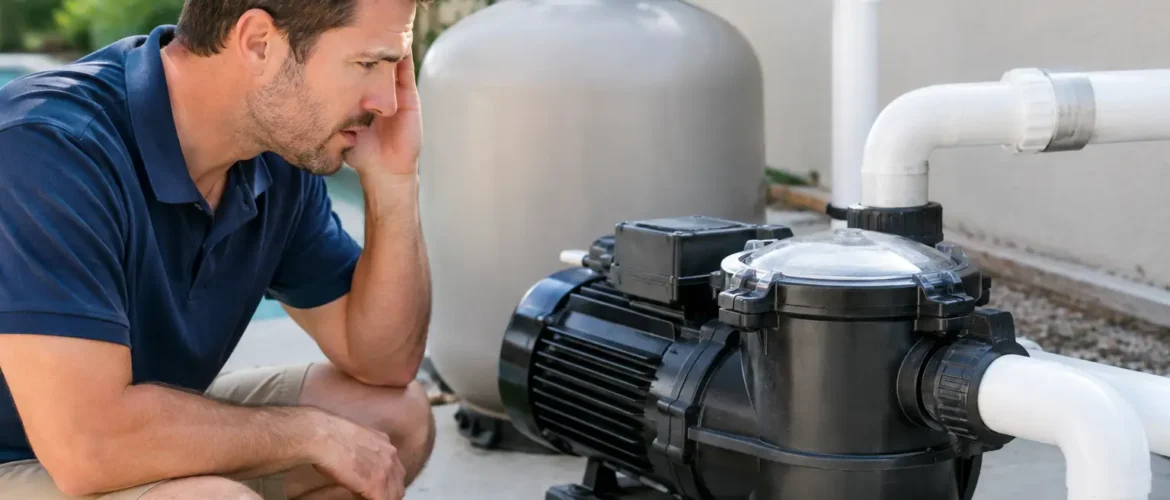
A pool pump should create a steady background hum, not a sound that makes you want to avoid the backyard. If you are asking, “why is pool pump noisy,” the answer often comes down to the type of noise, when it occurs, and whether the pump is still moving water normally. Some sounds point to a simple debris issue. Others can signal a failing motor, restricted plumbing, or a problem that should be addressed before the equipment stops altogether.
For Connecticut pool owners, unusual pump noise is worth checking early. A minor issue during the swim season can become a more expensive repair if it is left until closing time or allowed to worsen over the winter.
Why Is Pool Pump Noisy? Start With the Sound
The noise your pump makes can narrow down the cause quickly. Listen from a safe distance while the system is running, then check whether the sound changes when the pump turns on, runs for several minutes, or shuts off. Do not remove a pump lid, open electrical components, or reach into equipment while power is on.
A high-pitched whine or screech usually comes from the motor area. Grinding, rattling, and a sound like rocks moving through the system are more often related to water flow, loose parts, or worn internal components. A loud vibration can be caused by the pump itself, but it may also be coming from the pad, plumbing, or mounting hardware beneath it.
A Screeching or High-Pitched Whine
A sharp squeal or persistent high-pitched whine often indicates worn motor bearings. Bearings support the rotating shaft inside the motor. As they wear down, friction increases and the motor becomes noticeably louder.
This is not typically a homeowner repair. Depending on the age, size, and condition of the pump, a technician may be able to replace the motor or bearings, although replacing the complete pump can make more sense when the unit is older or inefficient. Continuing to run a pump with failing bearings can lead to motor failure, so this is a good time to schedule service rather than wait for a complete shutdown.
A Grinding, Rumbling, or Metal-on-Metal Sound
Grinding can also point to failing bearings, but it may mean the impeller has been damaged or something has entered the pump. The impeller is the internal part that spins to move pool water. Small debris, cracked components, or a worn seal can create a rough sound and reduce circulation.
First, turn off power at the breaker. Check the pump basket for leaves, mulch, small stones, or broken basket pieces. A packed or cracked basket can restrict flow and allow debris farther into the pump. If the basket is clear and the grinding continues after restarting, the pump should be inspected professionally.
A Loud Rattling or Vibrating Pump
Not every noisy pool pump has an internal mechanical problem. Pumps vibrate naturally, especially at higher speeds, and that vibration can become much louder if the equipment is not sitting securely on its pad.
Look for loose mounting bolts, an uneven concrete or equipment pad, unsecured plumbing, or a loose pump lid. Rigid PVC pipes can transfer vibration into nearby walls, decking, and equipment, making a moderate motor noise seem much worse. Tightening accessible mounting hardware may help, but do not overtighten plastic fittings or force plumbing back into place. A cracked fitting can create a leak and introduce air into the system.
If the pump is mounted on a wood platform or an aging pad, reducing vibration may require a more stable base. The right fix depends on the equipment layout and whether the plumbing has enough support.
A Sound Like Marbles, Gravel, or Rocks
A crackling, gravel-like sound is often cavitation. Cavitation happens when the pump is not receiving enough water and begins pulling in air or creating vapor bubbles at the impeller. It can be loud, and it is hard on the pump over time.
Common causes include a low pool water level, a clogged skimmer basket, a dirty pump basket, a dirty filter, a closed or partially closed valve, or undersized plumbing. An air leak on the suction side of the system can create the same problem. You may also notice air bubbles returning to the pool through the jets, a weak skimmer pull, or a pump basket that will not stay fully filled with water.
Start with the easy checks: bring the water level to the middle of the skimmer opening, empty the skimmer and pump baskets, and confirm the suction-side valves are fully open. If the filter pressure is unusually high, the filter may need cleaning or backwashing, depending on the type of filter installed. If the problem remains, the system may have a suction leak, blockage, or plumbing issue that needs service.
Check Air Leaks Before Assuming the Motor Is Bad
A pump can sound strained when it is pulling air instead of a consistent supply of water. This is especially common around the clear pump lid, lid O-ring, drain plugs, valve stems, and threaded fittings before the pump.
With the pump off, inspect the lid O-ring for cracks, flattening, or dirt. Clean it and apply a pool-approved lubricant if needed. Make sure the lid is seated correctly and that the drain plugs are snug. Avoid using petroleum-based lubricants or excessive thread sealant, both of which can damage components or create future service problems.
A visible drip does not always appear with a suction leak because the system can draw air inward while it is running. If you see recurring bubbles in the pump basket, air in the returns, or a pump that loses prime after shutting off, it is time to have the suction side evaluated.
Variable-Speed Pumps Can Sound Different by Design
If you have a variable-speed pool pump, some changes in sound are normal. These pumps are designed to run at different RPMs, and the noise level should drop significantly at lower speeds. A louder sound at high speed is expected, especially during vacuuming, water feature operation, or when the system needs stronger circulation.
What is not normal is a new squeal, rattle, grinding sound, or a sudden increase in vibration at speeds that were previously quiet. Also pay attention to performance. If the pump is louder and water flow is weaker, the issue is more likely a restriction, air leak, impeller problem, or motor concern than a normal speed change.
Connecticut Weather Can Expose Equipment Problems
Winterization and spring opening put extra stress on pool equipment. A pump that was quiet at closing may become noisy after opening because of a cracked fitting, a damaged valve, an improperly seated plug, or debris that entered the system while it was offline. Freezing temperatures can also shift plumbing or reveal small weaknesses in fittings and seals.
Before running a pool pump for long periods in spring, make sure the pump is properly primed, the water level is adequate, all winter plugs have been removed where appropriate, and the filter system is ready for operation. Never allow a pump to run dry. Even a few minutes without water can damage seals and internal parts.
When to Turn the Pump Off and Call for Service
Shut the pump off and arrange service if you smell burning insulation, see smoke, notice water leaking near the motor, hear loud grinding, or find that the pump repeatedly trips a breaker. Electrical and motor problems are not DIY territory, particularly around water.
You should also call for help if the pump will not prime, loses prime every day, has very weak circulation after baskets and filters are checked, or makes a cavitation sound that does not improve with basic maintenance. Replacing a seal, rebuilding plumbing, correcting an air leak, or selecting a replacement pump requires matching the equipment to your pool’s plumbing, filter, and circulation needs.
EZ Aqua Fiberglass Pools can help Connecticut homeowners diagnose noisy pool equipment and determine whether a repair or replacement is the better investment. A timely inspection can protect your circulation system, preserve water quality, and get your backyard back to sounding the way it should: calm, not mechanical.