

A pool renovation should solve the problems you notice every time you step into the backyard: a faded liner, cracked deck sections, dated equipment, poor lighting, or a pool that no longer fits how your family uses it. The best pool renovation upgrades are not always the flashiest ones. For Connecticut homeowners, the right choices usually improve safety, reduce maintenance, protect the pool through changing seasons, and make the entire backyard more enjoyable.
Before choosing finishes or features, start with the condition of the pool itself. A new light will not fix a leaking line, and beautiful patio furniture cannot make an unsafe deck more practical. A professional pool assessment helps identify what needs repair now, what can be updated later, and which improvements will provide the best return for your home and lifestyle.
1. Replace a Worn Vinyl Pool Liner
For many inground vinyl pool owners, liner replacement is the most important renovation project. Liners do not last forever. Sun exposure, water chemistry issues, age, wrinkles, fading, stains, and small leaks can all signal that it is time for a replacement.
A new liner immediately changes the appearance of the pool, but its purpose is more than cosmetic. It creates the waterproof barrier that protects the pool structure and helps prevent water loss. Today’s liner patterns can also make an older pool feel much more current, whether you prefer a clean blue look, a tile-inspired border, or a darker finish with more visual depth.
The best time to plan a liner replacement is before a small tear becomes a larger problem. If you are also considering new steps, fittings, lighting, or a safety cover, coordinating the work at the same time can reduce disruption and help ensure every component fits properly.
2. Upgrade to Energy-Efficient Pool Equipment
Older pumps, filters, heaters, and control systems often work harder than they need to. Replacing outdated equipment with efficient modern options can lower operating costs and make routine pool care easier.
A variable-speed pump is one of the most practical upgrades available. Unlike a single-speed pump that runs at one high setting, a variable-speed model can operate at lower speeds for normal filtration and increase when the pool needs more circulation. That can reduce electrical use while keeping the water cleaner.
Equipment upgrades are not one-size-fits-all. The right pump size, filter type, and heater capacity depend on the pool’s volume, plumbing layout, usage, and whether you use features such as a spa, waterfall, or solar cover. A properly matched system matters more than simply buying the largest or most expensive option.
3. Add LED Pool Lighting
A pool that disappears after sunset leaves a lot of backyard potential unused. LED lighting makes evening swimming, entertaining, and supervision easier while giving the pool a polished appearance after dark.
Modern LED lights use less energy than older incandescent fixtures and generally provide brighter, more consistent illumination. White lighting gives the water a crisp, classic look. Color-changing systems add flexibility for gatherings, holidays, and quiet evenings on the patio.
Lighting is also a safety upgrade. Clear illumination around steps, shallow areas, and pool edges helps swimmers move around the pool with more confidence. If your existing light is unreliable, dim, or no longer functioning, replacement should be part of the renovation conversation.
4. Refresh the Pool Deck and Coping
The deck is where people walk, sit, grill, supervise children, and set down everything from towels to drinks. When the deck is cracked, uneven, slippery, or undersized, it affects the whole pool experience.
Deck renovation can range from repairing problem areas to replacing the entire surface. Concrete, pavers, stone, and other materials each have different costs, appearances, maintenance needs, and performance in Connecticut weather. Freeze-thaw cycles make proper base preparation and drainage especially important. A beautiful surface installed without attention to water management can shift, settle, or create trouble around the pool over time.
Coping deserves attention at the same time. This is the finished edge around the pool, and it has a major effect on appearance and comfort. Replacing worn coping can give an older pool cleaner lines while addressing loose sections or materials that have deteriorated with age.
5. Install a Pool Safety Cover
A safety cover is one of the best pool renovation upgrades for families, pet owners, and homeowners who want a more secure winter closing. Unlike a basic seasonal cover, a properly fitted safety cover is designed to support weight and create a secure barrier over the pool.
For Connecticut pool owners, this upgrade can provide real peace of mind during the off-season. It also helps keep leaves, branches, and debris out of the water, which may make spring opening less of a cleanup project. Mesh and solid safety covers each have advantages. Mesh covers allow rain and melting snow to drain through, while solid covers block more sunlight and can help limit algae growth. The better choice depends on the property, drainage, and your preferred maintenance routine.
A safety cover must be measured and installed correctly. Features such as raised walls, diving boards, waterfalls, steps, and nearby landscaping can affect the cover design.
6. Update Steps, Rails, and Entry Areas
An older pool may still hold water well but feel inconvenient to enter and exit. New handrails, step rails, ladders, or entry improvements can make a noticeable difference for children, guests, and anyone with limited mobility.
This is particularly relevant when a family’s needs have changed. The pool that worked well when children were small may need better support and visibility as teenagers, grandparents, and visiting guests use it. Non-slip surfaces and clearly defined entry areas can improve safety without changing the entire pool.
For vinyl-lined pools, step upgrades may be coordinated with a liner replacement. For fiberglass pools, renovation options depend on the shell’s condition and the existing installation, so a site evaluation is the right first step. Fiberglass pools do not use liners, but they can still benefit from equipment, lighting, deck, safety, and accessory upgrades.
7. Improve Water Features Carefully
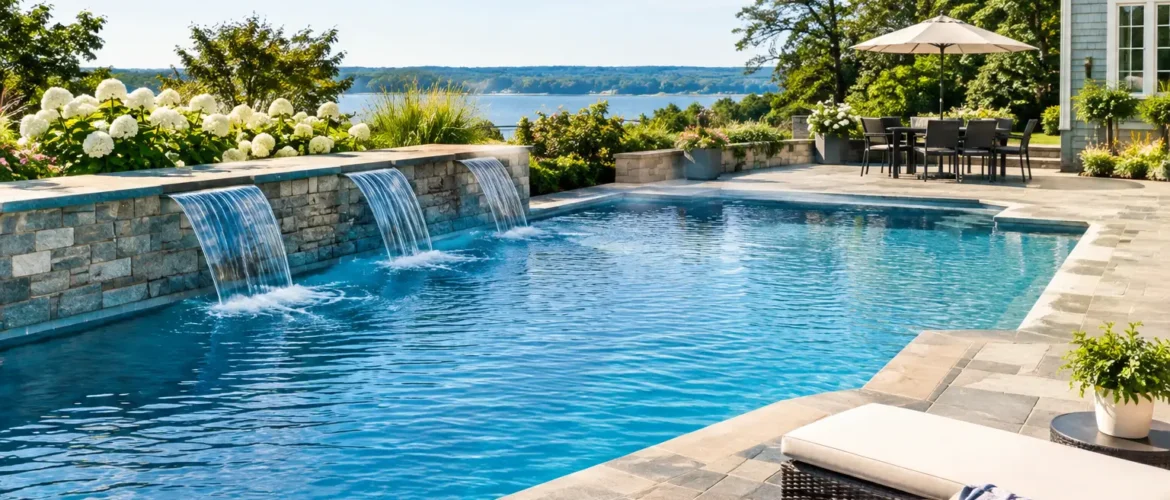
A waterfall, deck jet, bubbler, or sheer descent can give a basic pool a more custom look. Water features also add sound and movement, helping the backyard feel less like an open patio and more like a finished outdoor space.
However, these upgrades need thoughtful planning. Features require plumbing, circulation capacity, and access for future service. They can also increase evaporation and may need to be winterized properly. If your main goal is lower maintenance, a large water feature may not be the right priority. If your goal is creating a more resort-style setting for entertaining, it can be a worthwhile addition.
8. Modernize Controls and Automation
Pool ownership becomes easier when you can manage circulation, heating, lighting, and features from a central controller. Automation systems can schedule pump run times, turn lights on before you get home, and simplify adjustments that would otherwise require a trip to the equipment pad.
For a seasonal Connecticut pool, scheduling is useful because operating needs change throughout the year. A system should still be checked regularly, and automation does not replace basic water testing or professional service. It does, however, reduce the number of small tasks competing for your attention during a busy week.
9. Add Heating for a Longer Swim Season
Connecticut summers can be excellent for swimming, but cool nights and unpredictable spring and fall weather can shorten the season. A pool heater or heat pump can make the pool more comfortable earlier and later in the year.
The right heating option depends on available utilities, desired water temperature, pool size, and how often you plan to swim. A heater is most valuable when the pool is used consistently. If the pool sees occasional weekend use only, a solar cover may be a more cost-conscious first upgrade because it helps retain heat and reduce evaporation.
10. Rebuild the Backyard Around How You Use the Pool
Sometimes the pool itself is in good condition, but the surrounding space no longer works. Expanding the patio, creating a dedicated grilling area, improving drainage, adding privacy landscaping, or reorganizing the equipment area can make the backyard far more functional.
Think about traffic flow. Guests should be able to move from the house to the pool without cutting through a cooking area or squeezing past equipment. There should be a practical spot for towels, outdoor furniture, and pool toys. Small design changes can make the space feel larger and easier to maintain without requiring a complete pool rebuild.
A successful renovation starts with clear priorities: fix structural or safety concerns first, then invest in upgrades that make the pool easier to own and more enjoyable to use. EZ Aqua Fiberglass Pools can help Connecticut homeowners evaluate aging pool components, compare renovation options, and build a practical plan that fits the backyard they have now and the way they want to use it next season.