

Knowing how to clean pool filter equipment properly can be the difference between clear water and a pool that stays cloudy no matter how much chemical you add. Connecticut pools work hard during the season, especially after spring pollen, summer storms, heavy swimmer use, and falling leaves. Cleaning the filter at the right time protects your pump, improves circulation, and helps your sanitizer do its job.
The right cleaning method depends entirely on the filter type. Cartridge, sand, and diatomaceous earth (DE) filters all remove debris differently, so they should not be treated the same way. Before starting, identify your system and use the pressure gauge as your guide rather than cleaning on a fixed weekly schedule.
Know When Your Pool Filter Needs Cleaning
Your clean filter pressure is the most useful number to know. When the pool is operating normally after a thorough cleaning, note the reading on the pressure gauge. Most filters are ready for cleaning when pressure rises about 8 to 10 PSI above that baseline.
A higher pressure reading means water is struggling to move through trapped dirt and debris. You may also notice weak returns, reduced skimmer action, cloudy water, or a pump that sounds like it is working harder than usual. Those signs can point to a dirty filter, although a blocked skimmer basket, clogged pump basket, closed valve, or low water level can cause similar issues.
Do not wait until circulation nearly stops. A neglected filter puts unnecessary strain on the pump and can make a simple maintenance job turn into a service call.
How to Clean Pool Filter Systems Safely
Start by turning off power to the pump at the breaker or timer. Never open a filter tank while the system is running or pressurized. Open the air-relief valve on top of the filter, then confirm the pressure gauge reads zero before loosening a clamp, lid, or drain plug.
Empty the skimmer and pump baskets before cleaning the main filter. This keeps loose debris from immediately working its way back into the system once you restart it. Check O-rings and tank seals while the equipment is open. A dry, cracked, or flattened O-ring can create air leaks or water leaks, so clean it and apply a pool-approved silicone lubricant if needed.
The details from here depend on whether you have a cartridge, sand, or DE filter.
Cleaning a Cartridge Pool Filter
Cartridge filters are common on residential pools because they provide fine filtration without backwashing large amounts of water. Inside the tank are one or more pleated cartridges that trap dirt, pollen, body oils, and fine debris.
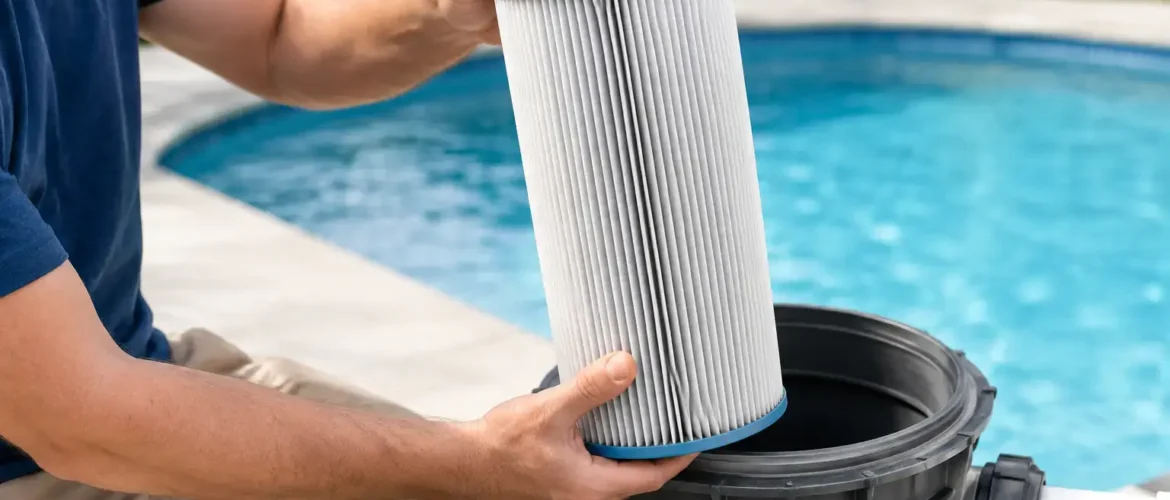
After relieving pressure and opening the tank, remove the cartridge carefully. Use a garden hose with a standard spray nozzle to rinse between the pleats from top to bottom. Work methodically around the entire cartridge. The goal is to flush debris out without damaging the fabric.
Avoid using a pressure washer. High pressure can flatten or tear the pleats, shortening the life of an otherwise usable cartridge. Do not use a wire brush for the same reason.
If the cartridge is coated with sunscreen residue, oils, or a stubborn gray film, a hose rinse may not be enough. Soak it in a cartridge cleaning solution according to the product directions, then rinse thoroughly before reinstalling it. For calcium scale, use a filter cleaner intended for that purpose. Acid washing a cartridge without first removing oils can set the oils into the fabric, so chemical cleaning should be done in the proper order.
A cartridge that remains stained is not automatically worn out. Replace it when the pleats are torn, the end caps are cracked, the bands are broken, or the pressure rises quickly again after cleaning. Most homeowners keep a second set of cartridges so the pool is not shut down while the cleaned set dries.
Cleaning a Sand Pool Filter
Sand filters clean water by pushing it through a bed of specially graded filter sand. Unlike a cartridge filter, the sand stays inside the tank. In most cases, you clean a sand filter by backwashing it.
With the pump off, move the multiport valve to the Backwash setting. Never turn a multiport valve while the pump is running. Turn the pump on and watch the sight glass, if your system has one. Let the filter backwash until the water runs clear, usually for two to three minutes. Turn the pump off, set the valve to Rinse, and run it for about 20 to 30 seconds. Then turn the pump off again, return the valve to Filter, and restart the system.
The rinse step matters because it resettles the sand bed and prevents a burst of dirty water from returning to the pool. Backwashing too often wastes water and can reduce filtration efficiency, so rely on the pressure gauge instead of making it a routine every weekend.
Filter sand generally lasts several years, not one season. If your sand filter needs frequent backwashing, returns sand to the pool, or cannot maintain clear water despite balanced chemistry, the sand, laterals, or valve may need professional attention.
Cleaning a DE Pool Filter
DE filters offer very fine filtration, making them effective for clearing small particles from pool water. They use fabric-covered grids coated with diatomaceous earth powder. Cleaning typically involves backwashing or draining the tank, then recharging the filter with the correct amount of DE.
Begin with the pump off and pressure relieved. Follow your filter manufacturer’s instructions for backwashing or opening the tank, because valve arrangements vary. After the old DE is removed, inspect the grids for tears, broken frames, or loose fabric. A damaged grid can allow DE powder to return to the pool.
When the system is reassembled, add the manufacturer-specified amount of fresh DE through the skimmer while the pump is running. The powder should be added slowly so it coats the grids evenly. Do not guess at the amount. Too little DE reduces filtration, while too much can restrict flow.
DE should be handled carefully. Avoid breathing the dry powder, wear appropriate protective equipment, and follow local requirements for disposal of backwash water. Connecticut homeowners should be especially mindful of where backwash discharges, since it should not be sent into areas where it can create drainage or environmental problems.
Do Not Ignore the Water Chemistry
A clean filter cannot compensate for unbalanced water. If calcium is high, scale can build on cartridges and DE grids. If sanitizer is too low or pH is out of range, oils, algae, and organic contaminants can overwhelm the filter faster than normal.
Keep water chemistry within recommended ranges, brush the walls and steps regularly, and vacuum settled debris before it has a chance to break apart and circulate. After a heavy storm, pool party, algae treatment, or nearby landscaping work, expect the filter to need attention sooner.
For fiberglass pools, this routine is particularly straightforward because the smooth gelcoat surface gives debris fewer places to cling. That does not eliminate filter maintenance, but it can make brushing and overall water care more manageable.
Common Filter Cleaning Mistakes
The most common mistake is cleaning too aggressively or too frequently. A sand filter needs some trapped particles in the sand bed to filter efficiently, while a cartridge can be damaged by harsh tools and chemicals. Another frequent problem is restarting the system without fully opening valves or properly securing the tank clamp and lid.
Homeowners also sometimes mistake cloudy water for a filter problem alone. Cloudiness may be caused by poor circulation, early algae growth, unbalanced chemistry, a failing pump, or undersized equipment. If pressure is normal and the filter is clean but the water will not clear, the issue needs a broader diagnosis.
When It Is Time to Call for Pool Service
Call for professional help if the tank is leaking, the pressure rises immediately after cleaning, the pump loses prime, DE returns to the pool, or sand appears through the returns. These are not problems that more backwashing will solve.
EZ Aqua can help Connecticut pool owners diagnose circulation problems, replace worn filter components, and keep equipment working properly through the swimming season. A clean filter is basic maintenance, but reliable circulation protects the time and money you have invested in your backyard pool.