

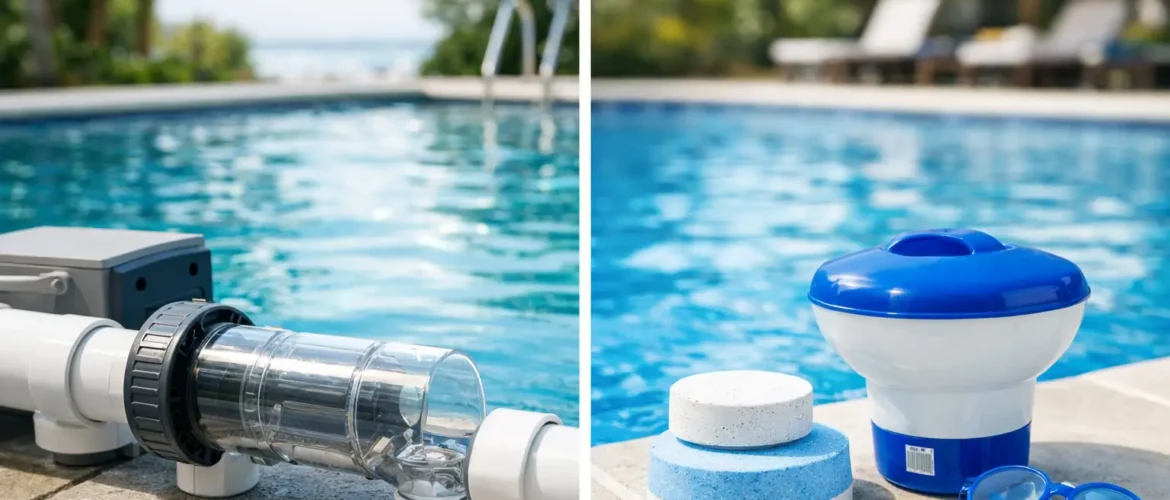
A saltwater pool versus chlorine pool decision is often framed as a choice between chlorine and no chlorine. That is not quite right. A saltwater system still uses chlorine to sanitize the water. The difference is how that chlorine is produced, how consistently it is delivered, and what that means for your budget and maintenance routine.
For Connecticut homeowners planning a new pool or updating an older system, the right answer depends on more than water feel. Your pool type, equipment condition, swimming habits, seasonal schedule, and upfront budget all matter. A saltwater system can be an excellent fit, especially for many fiberglass pools, but a traditional chlorine system remains a practical and reliable choice.
Saltwater Pool Versus Chlorine Pool: The Core Difference
A traditional chlorine pool is sanitized by adding chlorine directly to the water. That may mean liquid chlorine, tablets, granules, or a combination of products. The pool owner or service professional tests the water and adds chemicals as needed to maintain the proper chlorine level.
A saltwater pool uses a salt chlorine generator, often called a salt cell. Pool-grade salt is dissolved in the water, and the cell converts it into chlorine as water passes through the equipment. The chlorine sanitizes the pool, then returns to salt as the sanitation cycle continues. Salt does not replace chlorine in this setup. It provides the source material the generator uses to make it.
That distinction matters because both systems require water testing, balanced pH, circulation, filtration, and occasional shock treatment. A saltwater pool is not maintenance-free. It simply automates one of the most frequent parts of chlorine management.
Water Feel and Swimmer Comfort
The water experience is one reason homeowners consider saltwater. Salt pools typically maintain a steadier, lower level of chlorine production throughout the day. Many swimmers find the water feels softer and report less of the sharp chlorine odor commonly associated with poorly balanced pools.
The salt level is also much lower than ocean water. Most saltwater pools contain around 3,000 to 3,500 parts per million of salt, while ocean water is roughly ten times saltier. You may notice a slightly silky feel, but the water should not taste or feel like the beach.
Traditional chlorine pools can be equally clear, clean, and comfortable when properly maintained. Eye irritation, dry skin, and strong odor are usually signs of chloramines or unbalanced water chemistry, not proof that every chlorine pool is harsh. A well-serviced chlorine pool should not leave swimmers with red eyes after every afternoon in the water.
Upfront Cost and Long-Term Expenses
A standard chlorine system usually costs less to install because it does not require a salt chlorine generator. For homeowners trying to keep the initial pool investment lower, this is a meaningful advantage. Replacement chlorine products are widely available, and the equipment is straightforward.
Saltwater systems require an upfront investment for the generator, salt cell, electrical setup, and initial salt. Over time, many owners spend less on routine chlorine purchases because the system creates chlorine on site. However, the salt cell is a wear item. Depending on water chemistry, use, and maintenance, it will eventually need replacement.
Neither system has one guaranteed lower lifetime cost. A salt system can reduce the effort and expense of buying chlorine, but a neglected cell or consistently unbalanced water can shorten equipment life. A traditional chlorine pool may have lower equipment costs but require more regular chemical purchases and hands-on attention.
When comparing proposals, look beyond the installation price. Ask what equipment is included, how long the salt cell is expected to last, whether electrical work is needed, and what routine chemicals will still be required. Those details give you a more realistic ownership budget.
Maintenance: Automation Versus Simplicity
Saltwater systems are popular because they provide more consistent sanitizer production. Once the generator is properly sized and adjusted, it can maintain chlorine levels with less day-to-day intervention. That can be especially helpful during the peak Connecticut swim season, when warm weather, heavy use, sunscreen, and summer storms all affect water chemistry.
But saltwater equipment needs attention. The cell should be inspected and cleaned when scale builds up. The pool’s pH often tends to rise, so pH testing and adjustment remain important. Salt levels must be checked, especially after heavy rain, splash-out, leaks, or partial draining. The generator also cannot produce chlorine effectively when water is too cold.
A traditional chlorine pool gives the owner more direct control. If chlorine is low, you add the required amount. There is no cell to inspect or replace. For homeowners who prefer a familiar system and do not mind regular testing and dosing, that simplicity has real value.
In either case, the basics do not change: run the circulation system, clean filters, test water regularly, brush surfaces, manage algae before it spreads, and keep the pool properly covered when it is not in use. Automation helps, but it does not replace sound pool care.
Connecticut Weather Changes the Calculation
Connecticut pools are seasonal, and that affects how salt systems perform. Salt chlorine generators work best when pool water is warm enough, generally above the low 60s Fahrenheit. During spring opening and fall closing, the generator may not produce enough chlorine to carry the pool on its own. Owners often need to add chlorine manually during those cooler periods.
Winterizing also needs to be done correctly. The salt cell and related equipment should be protected as part of a professional closing process. Freezing conditions can damage pool plumbing and equipment regardless of sanitation type, so a proper closing is never an area to cut corners.
A conventional chlorine system does not depend on water temperature to generate sanitizer. That makes early-season and late-season chemical management more direct. Still, both options need close attention when opening a pool, after major rainstorms, or when water begins warming in the spring.
Your Pool Surface and Equipment Matter
Saltwater can work very well with fiberglass pools. Fiberglass has a smooth, nonporous gel coat that is easier to clean than many other pool surfaces and does not require a liner replacement schedule. With correctly balanced water, a saltwater system can be a comfortable, low-touch pairing for families who want more time swimming and less time measuring chlorine.
The key phrase is correctly balanced water. High salt concentration, low pH, and poor water chemistry can accelerate wear on certain metal components, heaters, lights, handrails, and surrounding materials. This is not a reason to avoid saltwater, but it is a reason to install compatible equipment and stay on top of testing.
Homeowners with vinyl-lined pools should also consider how saltwater may affect metal fixtures, coping, and equipment over time. Existing pools deserve an equipment review before converting. A properly designed system is far less likely to create avoidable repair issues.
Which System Is Right for Your Backyard?
Choose saltwater if you value steady chlorine production, a softer water feel, and reduced routine chlorine handling. It is often a strong option for busy families, particularly when it is included in a well-planned new pool installation with compatible equipment.
Choose traditional chlorine if you want the lowest upfront equipment cost, prefer direct control over chemical dosing, or are maintaining an existing pool where a conversion does not make financial sense. It is a proven system that works well when water is tested and treated consistently.
The best choice is not the system with the most marketing behind it. It is the one that fits your pool, your budget, and the level of maintenance you want to take on. Before making a decision, have your pool equipment and water-care expectations reviewed by a local professional. EZ Aqua Fiberglass Pools can help Connecticut homeowners evaluate the system that will make pool ownership easier, not more complicated.