

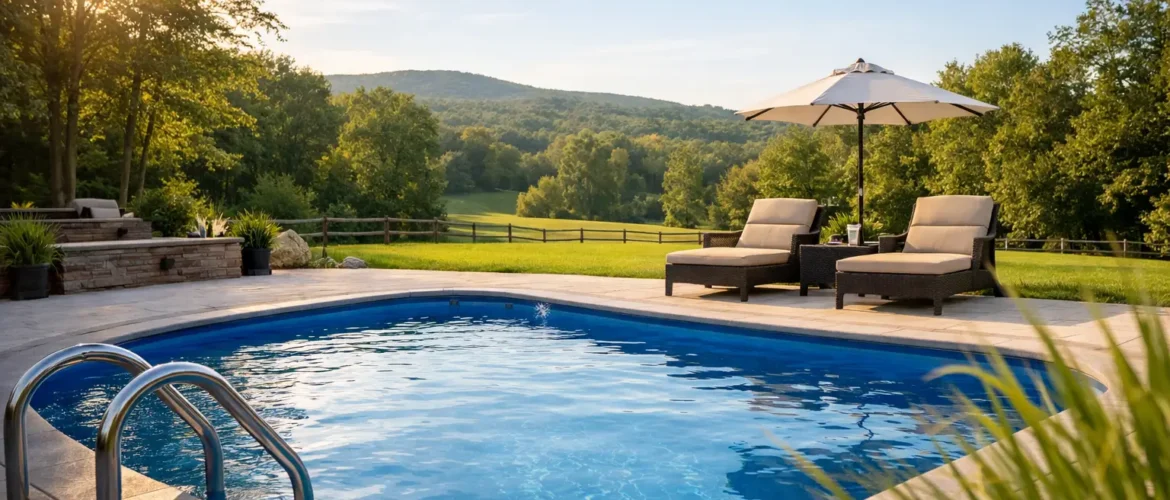
A fiberglass pool is not a short-term backyard feature. For Connecticut homeowners weighing a major investment, the better question is not whether fiberglass will last a few seasons. It is how long do fiberglass pools last when they are installed correctly, maintained consistently, and prepared for our changing weather.
A well-made, professionally installed fiberglass pool can commonly last 25 to 30 years or more. The shell itself may remain structurally sound for decades beyond that. Over its life, however, certain components such as pumps, filters, heaters, lights, and plumbing fittings may eventually need service or replacement. That is normal pool ownership, not a sign that the entire pool has failed.
How Long Do Fiberglass Pools Last Compared With Other Pools?
Fiberglass pools are known for long service life because the shell is a single, factory-built structure. Unlike a vinyl-lined pool, there is no liner that must be replaced every several years. Unlike many concrete pools, fiberglass does not require regular resurfacing to restore a rough or deteriorating interior, the fiberglass surface is naturally smooth and nonporous, which helps limit algae attachment and makes routine brushing easier. Less aggressive cleaning can mean less wear on the pool finish over time.
For many homeowners, the long-term appeal comes down to fewer major interior renovations. A vinyl liner may need replacement roughly every 7 to 12 years, depending on water chemistry, sun exposure, use, and care. A concrete pool can last a very long time structurally, but its plaster or finish generally requires periodic renovation. A fiberglass pool avoids those recurring interior replacement cycles, provided the shell and finish are cared for properly.
What Determines a Fiberglass Pool’s Lifespan?
The manufacturer matters, but installation and ownership habits matter just as much. A quality shell installed on a properly prepared base has the best chance of delivering decades of use.
Installation quality comes first
A fiberglass shell must be set level, supported correctly, and backfilled according to the manufacturer’s specifications. The installer also needs to account for soil conditions, drainage, groundwater, plumbing connections, and the pool’s relationship to the patio and surrounding grade.
This is especially relevant in Connecticut, where soil conditions can vary widely from one property to the next. Poor drainage or unmanaged groundwater can create pressure around and beneath a pool. A professional site evaluation and proper drainage plan help protect the pool structure and the finished backyard around it.
Backfilling and filling the pool with water must also be coordinated carefully during installation. This keeps pressure balanced as the shell is set in place. Rushing this stage or cutting corners can lead to avoidable settling, plumbing stress, or coping and patio issues later.
Water chemistry protects the gelcoat
The gelcoat is the smooth, colored finish homeowners see and feel inside a fiberglass pool. It is durable, but it should not be exposed to consistently unbalanced water.
Very low pH, excessive chlorine, high calcium, metals in the water, or prolonged neglect can contribute to staining, fading, scale, or surface dullness. Most cosmetic issues can be prevented with regular testing and adjustment. If a problem does appear, early service is far easier than letting it become a season-long issue.
Connecticut pool owners should be especially careful when opening a pool in spring. Water chemistry can be out of range after winter, and getting it balanced promptly helps protect the pool surface and equipment before heavy use begins.
Winter care matters in Connecticut
Fiberglass performs well in cold climates, but it still needs a proper winter closing. The pool should be closed at the right time, chemically balanced, lowered only as recommended for the equipment and cover setup, and protected with a properly fitted safety cover or winter cover.
Do not drain a fiberglass pool completely for the winter unless a qualified pool professional specifically directs you to do so for a repair. An empty shell can be vulnerable to groundwater pressure. Keeping the appropriate water level in the pool provides important support.
A secure safety cover also does more than keep leaves out. It helps protect the pool, improves backyard safety, and reduces the cleanup required when it is time to open in spring.
Equipment will not last as long as the shell
It is reasonable to expect some equipment replacements during the life of a fiberglass pool. Pumps, filters, salt systems, heaters, automation controls, lights, and valves all have their own service life. Usage levels, winterization, water balance, and equipment quality affect how long each part performs.
Planning for normal equipment updates helps homeowners look at pool ownership realistically. Replacing a pump or upgrading a heater years down the road does not mean the pool is nearing the end of its life. In many cases, it is simply an opportunity to improve efficiency, convenience, or comfort.
Signs a Fiberglass Pool Needs Attention
Most fiberglass pool concerns are manageable when addressed early. Watch for persistent stains, a rough-feeling surface, fading that seems to worsen quickly, cracks near fittings, unexplained water loss, or deck settling around the pool. These issues do not automatically mean the shell is failing, but they deserve a professional inspection.
Small spider cracks in the gelcoat can sometimes be cosmetic rather than structural. Leaks may come from plumbing, fittings, skimmers, lights, or equipment rather than the fiberglass shell itself. That is why diagnosis matters. Guessing at a repair can turn a limited service issue into unnecessary work.
If the pool has been in place for many years, an inspection can also identify drainage concerns, aging plumbing, or equipment that should be serviced before it creates a larger problem. Regular attention is one of the most practical ways to extend the life of any pool.
Can a Fiberglass Pool Be Repaired or Renovated?
Yes. Fiberglass pools can often be repaired, refreshed, or renovated rather than replaced. Depending on the condition of the pool, work may include gelcoat repair, stain treatment, crack repair, plumbing repairs, coping updates, equipment replacement, patio improvements, or a full backyard refresh.
This is a key advantage for long-term owners. A pool that looks dated or has a surface issue does not necessarily need to be removed. The right repair plan can restore appearance, improve function, and add years of enjoyment.
The best approach depends on whether the issue is cosmetic, structural, mechanical, or related to the surrounding deck and drainage. An experienced pool contractor can separate urgent repairs from improvements that can be planned over time.
How to Help Your Fiberglass Pool Last Longer
The basics are straightforward: maintain balanced water, keep debris from sitting in the pool, clean the filter as needed, inspect equipment regularly, and close the pool correctly every fall. Do not ignore small leaks, recurring stains, or changes in water level. Those are the moments when prompt service can save money and prevent disruption later.
It also helps to use pool professionals who understand fiberglass construction, not just general pool maintenance. The shell, fittings, plumbing, water level, and surrounding site conditions all work together. A repair that makes sense for one pool type may not be the right solution for another.
For homeowners planning a new installation or evaluating an older pool, EZ Aqua Fiberglass Pools can help assess the practical details that affect long-term performance. The goal is not simply to install a pool that looks good on day one, but to build and maintain one your family can enjoy for decades.
A fiberglass pool should be viewed as a long-term part of your property, much like a patio, roof, or major landscape feature. Choose quality installation, stay ahead of routine care, and address concerns early. With that approach, your pool can remain a reliable centerpiece of your backyard for many summers to come.
Pingback: Pool Skimmer Problems and How to Fix Them - EZ Aqua Fiberglass Pools