

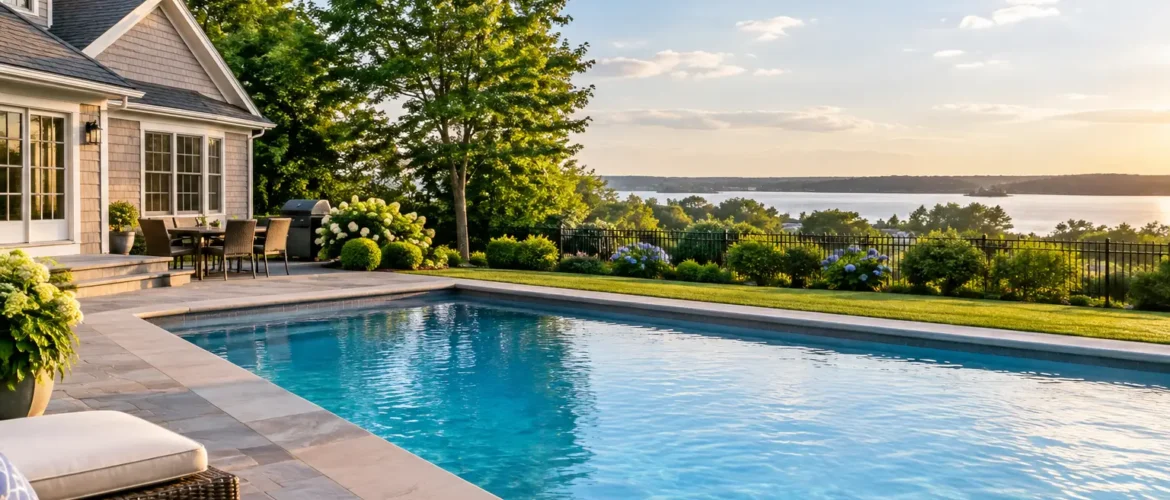
A pool should make your backyard easier to enjoy, not create a new weekend job every time the weather turns warm. This pool ownership guide explains what Connecticut homeowners should expect after installation: routine water care, seasonal opening and closing, equipment decisions, safety responsibilities, and the repairs that are easiest to address before they become expensive.
The right ownership plan depends on your pool type, how often you use it, the surrounding landscape, and whether you prefer hands-on care or professional service. A fiberglass pool, for example, has a smooth, nonporous surface that can simplify cleaning and algae control. A vinyl-lined pool has different long-term needs, especially when it comes to liner care. Either way, good ownership begins with realistic expectations.
Start With a Pool Budget That Includes Ownership
The installation price is only part of the investment. Homeowners should also plan for seasonal service, electricity, water, chemicals, equipment upkeep, and eventual repairs or upgrades. The exact cost varies by pool size, equipment package, local utility rates, and how much maintenance you handle yourself.
The most predictable annual expenses are water treatment products, filter cleaning or replacement, and opening and closing service. A pool heater can extend your swimming season, but it also adds fuel or electricity costs. Automatic cleaners, variable-speed pumps, salt systems, safety covers, and automation can raise the upfront price while reducing manual work or operating costs over time.
Avoid choosing equipment based only on its initial price. A lower-cost single-speed pump may cost more to run than a properly sized variable-speed pump. Similarly, a quality safety cover is not just a winter accessory. It can reduce debris, improve safety, and make spring opening less frustrating.
Water Care Is the Core of Pool Ownership
Clear water is not a matter of adding chlorine whenever the pool looks cloudy. Balanced water protects swimmers, pool surfaces, plumbing, and equipment. When chemistry is ignored, small imbalances can lead to scale, corrosion, staining, algae growth, cloudy water, or premature equipment wear.
Most homeowners should test their pool water regularly during the season, especially after heavy use, rainstorms, heat waves, or a long stretch without circulation. The goal is to keep sanitizer, pH, alkalinity, calcium hardness, and stabilizer within appropriate ranges for your specific pool and treatment system.
A basic weekly routine usually includes checking the water, emptying skimmer and pump baskets, brushing steps and walls, vacuuming or running a cleaner, and inspecting the waterline. The work is manageable when performed consistently. Waiting until water turns green often means more chemicals, more cleaning, and lost swim time.
Chlorine, Salt, and Other Treatment Choices
Saltwater pools are still chlorine pools. A salt chlorine generator produces chlorine from salt in the water, which can provide a more consistent sanitizer level and a softer feel for many swimmers. It still requires testing, balancing, cell inspection, and occasional supplemental treatment.
Traditional chlorine systems can be straightforward and effective, particularly for homeowners who want lower initial equipment costs. The better choice depends on your budget, maintenance preferences, and existing equipment. No system eliminates the need for circulation, testing, and regular cleaning.
If you prefer professional support, routine service can take the guesswork out of water chemistry. It is also useful for busy families, second-home owners, and homeowners who would rather spend Saturday in the pool than managing it.
Keep Circulation Equipment Working Efficiently
Your pump, filter, heater, and plumbing do the behind-the-scenes work that keeps water clean and comfortable. Poor circulation causes many common pool problems, from dead spots that collect debris to water that never seems to clear.
Run time should be based on pool size, pump flow, bather load, weather, and water temperature. During a hot Connecticut summer, a pool generally needs more circulation than it does early or late in the season. A professional can help determine an efficient schedule rather than relying on a one-size-fits-all setting.
Filters need attention as well. Cartridge filters should be cleaned when pressure and flow indicate it is time, not simply on a random calendar date. Sand and DE filters have their own service requirements. Overcleaning some filters can be counterproductive, while neglecting them restricts flow and strains the pump.
Listen for changes in your equipment. A loud pump, air bubbles returning through the jets, weak suction, leaking water, or a heater that cycles off can signal a problem worth addressing early. Small repairs are usually simpler than replacing equipment after it has been forced to work under poor conditions for months.
A Connecticut Pool Ownership Guide for the Seasons
Connecticut pool ownership is seasonal, and each season has a job to do. Spring opening is the time to inspect equipment, remove the cover carefully, reconnect components, start circulation, and bring chemistry back into balance. Opening early enough to get ahead of pollen and warming temperatures can make cleanup easier.
Summer maintenance is about consistency. Keep the water circulating, stay ahead of debris, monitor chemistry, and check the pool after parties or storms. Trees may provide welcome shade, but they also increase leaves, pollen, and organic material in the water. Trim back vegetation where practical and use a skimmer or cleaner often enough to prevent buildup.
In fall, do not wait for the first hard freeze to think about closing. A proper winterization process includes balancing the water, lowering it as appropriate for the pool and cover, protecting plumbing from freeze damage, and securing the pool with a correctly fitted cover. Connecticut winters can be hard on exposed equipment and improperly winterized lines.
During winter, periodically check the cover and water level. Remove excess standing water from a solid cover when needed, keep debris from accumulating, and make sure the cover remains secure. A damaged cover or an unusual water-level change deserves attention before spring.
Safety Is an Everyday Responsibility
Pool safety is not limited to the day the pool is installed. A compliant barrier, self-closing and self-latching gates, secured access, and a dependable safety cover all help reduce risk. Local codes and insurance requirements can vary, so homeowners should confirm what applies to their property.
Safety also depends on household habits. Keep rescue equipment accessible, establish clear rules for children and guests, and avoid treating supervision as optional just because multiple adults are nearby. A pool alarm, gate alarm, or smart monitoring system can add another layer of protection, but none replaces active supervision.
If your backyard layout is changing, revisit the safety plan. New decking, landscaping, furniture, sheds, or gates can create climbable access or block a clear view of the pool. A renovation is a good time to correct those issues.
Plan for Long-Term Repairs and Upgrades
Every pool eventually needs service. Pumps, heaters, lights, valves, filters, covers, and plumbing components have useful life spans. Vinyl liners can fade, wrinkle, leak, or become brittle over time. Even a durable fiberglass pool may need equipment updates, coping work, or repairs to surrounding decking as the years pass.
The best approach is to fix issues while they are isolated. A minor leak, a failing pump seal, or a torn liner area should not be left until it affects the pool structure, surrounding soil, or electrical equipment. If you notice a persistent water loss, cracks in decking, a sudden change in filter pressure, or equipment that trips breakers, schedule an inspection.
Upgrades can also make an older pool more enjoyable. LED lighting, energy-efficient pumps, a new heater, automation controls, replacement liners, and updated safety covers can improve comfort and reduce the day-to-day work of ownership. The right upgrade depends on what is actually limiting your pool now, not simply what is newest on the market.
When Professional Pool Service Makes Sense
Some homeowners enjoy managing their own pool. Others want a reliable local team for openings, closings, repairs, water testing, or ongoing maintenance. Professional service is especially valuable when diagnosing leaks, electrical concerns, heater failures, structural issues, or persistent water-quality problems.
EZ Aqua Fiberglass Pools can help Connecticut homeowners evaluate maintenance concerns, repair aging equipment, and plan improvements that fit the pool they already own. Getting practical advice before a small problem becomes a major interruption is often the easiest way to protect your backyard investment.
A well-maintained pool rewards consistency. Set a simple routine, address changes early, and make safety part of how your household uses the backyard. That leaves more time for the reason you built or bought a pool in the first place: enjoying it.