

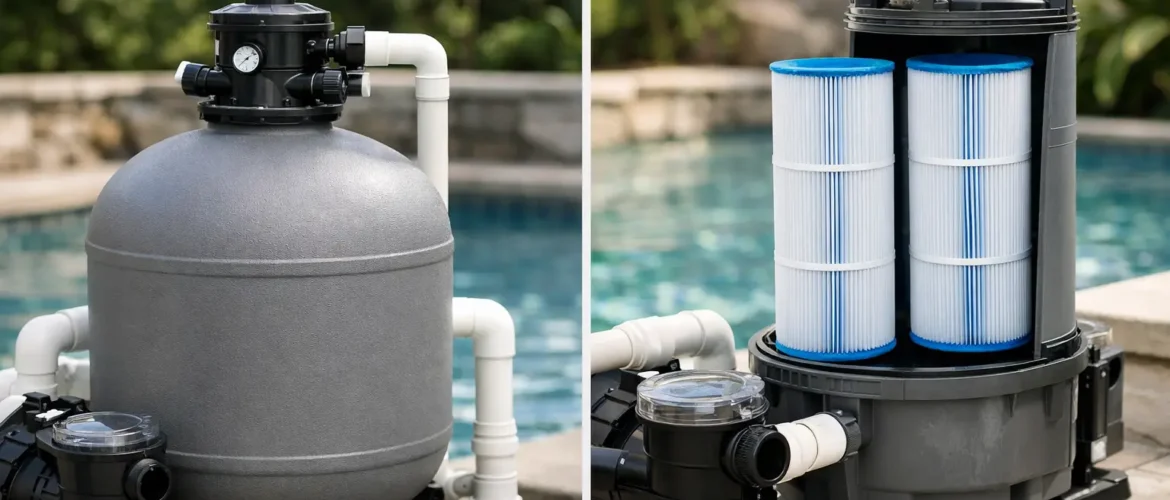
A pool filter has a bigger effect on your ownership experience than most homeowners expect. When comparing sand filters versus cartridge filters, the right answer is not simply which one keeps water clean. It is which system fits your pool’s size, your maintenance habits, your water source, and how you want to spend your weekends in Connecticut.
Both options can produce clear, healthy swimming water when they are properly sized and maintained. The differences show up in day-to-day work, water use, operating cost, and how each filter handles pollen, dust, leaves, sunscreen, and the occasional heavy bather load.
Sand Filters Versus Cartridge Filters: The Main Difference
A sand filter pushes pool water through a tank filled with specially graded filter sand or another approved media. Dirt and debris are trapped between the grains of media, while cleaned water returns to the pool. As pressure rises, the filter is cleaned by backwashing – reversing the water flow and sending dirty water out through a waste line.
A cartridge filter uses one or more pleated fabric elements inside a tank. Water passes through the pleats, which capture fine debris. Instead of backwashing, the owner removes the cartridges and rinses them with a hose when the pressure rises above the system’s normal clean operating pressure.
Neither design is automatically better for every pool. A properly installed sand filter can be dependable and forgiving. A properly sized cartridge filter can reduce water waste and capture finer particles. The best choice depends on how the pool will actually be used.
Water Clarity and Filtration Performance
Cartridge filters generally capture smaller particles than standard sand filters. In practical terms, that can mean faster cleanup after a pollen-heavy spring week, a windy day, or a busy pool party. The finer filtration is one reason cartridge systems are common on many new residential pools, including fiberglass pools.
A sand filter usually captures larger particles than a cartridge filter, but that does not mean it leaves a pool looking cloudy. Sand filters have a long record of keeping residential pools clean when circulation, chemistry, and run time are correct. They can also become more effective as a slight amount of debris builds within the sand bed, although waiting too long to clean the filter restricts circulation.
Water clarity is never only about the filter. Poor chlorine balance, low circulation, algae, high calcium, or an undersized pump can create water problems that no filter can solve on its own. Homeowners sometimes replace a filter expecting a complete cure, only to find the real issue is plumbing, chemistry, or insufficient daily run time.
Maintenance: Backwashing vs. Cleaning Cartridges
This is where many homeowners make their decision.
Sand filters are cleaned by moving a multiport valve to the backwash setting. The process is straightforward: turn off the pump, change the valve setting, run the pump until the sight glass is clear, rinse briefly, and return the system to filter mode. It is a familiar process for many pool owners and service technicians.
The trade-off is water loss. Each backwash sends pool water to waste, which means the pool needs to be refilled afterward. That can affect water chemistry and increase water use over a season. In areas with septic systems, drainage restrictions, or concerns about where chlorinated water is discharged, backwashing also requires some planning.
Cartridge filters do not require routine backwashing. When the pressure gauge rises roughly 8 to 10 psi above the clean starting pressure, the pump is shut off, the tank is opened, and the cartridges are removed and rinsed. This saves water, but cleaning cartridges is more hands-on. A homeowner needs room to work, a hose, and enough time to rinse between the pleats thoroughly.
For many Connecticut homeowners, cleaning cartridges two or three times during the swimming season is manageable. A pool surrounded by mature trees, heavy pollen, construction dust, or frequent debris may need attention more often. Having a spare set of cartridges can make the job easier because one set can be cleaned and dried while the pool continues operating with the other.
Upfront Cost and Long-Term Expenses
Sand filter equipment is often less expensive to purchase than a comparably sized cartridge system. It is also mechanically simple, and replacement sand is relatively affordable. The media does not need annual replacement. Depending on water conditions and maintenance, filter sand often lasts about five to seven years before replacement is worth considering.
Cartridge filters can cost more initially, especially larger models with greater filtration area. The cartridges themselves are consumable parts. With proper cleaning and water chemistry, a quality cartridge may last several years, but eventually it will need to be replaced. Oils, scale, chemical damage, and aggressive cleaning can shorten its life.
The long-term math is not always obvious. A sand filter may cost less at installation but use more water through backwashing. A cartridge filter may save water and support fine filtration but require replacement elements later. For a homeowner focused on lower upfront cost and familiar maintenance, sand is often appealing. For a homeowner who wants to conserve water and avoid backwashing, cartridge filtration may justify the higher initial investment.
Which Filter Works Best for a Fiberglass Pool?
Fiberglass pools have smooth, nonporous surfaces that are easier to keep clean than many older pool finishes. That does not eliminate the need for a well-matched filtration system. The filter still needs enough capacity to handle the pool’s water volume, the pump’s flow rate, and the debris load around the backyard.
Cartridge filters are frequently a strong match for fiberglass pools because they offer fine filtration without routine backwashing. That can be especially useful for homeowners who want less water loss and a simple equipment-pad setup. Large cartridge filters also have more surface area, allowing them to run longer between cleanings when properly sized.
Sand filters remain a solid choice for fiberglass pool owners who prefer a simple backwash routine or already have compatible plumbing and equipment. They can be particularly practical for pools that collect a lot of larger debris, provided the filter is sized correctly and the backwash discharge has a safe, permitted place to go.
The pool shell material does not dictate the filter choice. Proper sizing and installation matter more. A filter that is too small will create frequent maintenance, reduced circulation, and unnecessary strain on the pump, regardless of whether it uses sand or cartridges.
Consider Your Yard, Water, and Pool Use
A quiet backyard with limited trees has different filtration needs than a property surrounded by oak leaves, pine needles, and spring pollen. Families who use the pool daily, host gatherings, or have pets that swim should also expect more frequent filter cleaning than occasional users.
Local water conditions matter as well. Hard water can leave mineral scale on cartridge fabric, while fine sediment can load either filter quickly. Homeowners filling from a well may need a more careful startup process than those using municipal water. A pool professional can assess the water source and recommend the right treatment plan alongside the filter selection.
Equipment access is another practical consideration. Cartridge filters require space above the tank to remove the elements. Sand filters need room to operate the valve and a properly routed waste line. If you are renovating an older pool system, the best option may be influenced by existing plumbing, drainage, electrical capacity, and the condition of the pump.
How to Make the Right Choice
Choose a sand filter if you want a lower initial equipment cost, a straightforward backwash process, and a system that is familiar to many pool owners. It is a dependable option when water use and discharge are not major concerns.
Choose a cartridge filter if finer filtration, reduced water loss, and fewer routine cleaning events matter more to you. It is often a good fit for homeowners who would rather rinse cartridges periodically than backwash water from the pool.
The right filter should be selected as part of the entire circulation system, not as an isolated purchase. Pump horsepower, plumbing size, pool volume, skimmer capacity, heater requirements, and sanitation method all affect performance. EZ Aqua can help Connecticut homeowners evaluate those details during a new pool installation, equipment upgrade, or repair visit.
Before replacing a filter, have the full system checked and ask what size filter your pool actually needs. A correctly matched filter turns routine pool care into a predictable task, leaving more time for the reason you built the pool in the first place: enjoying your backyard.