

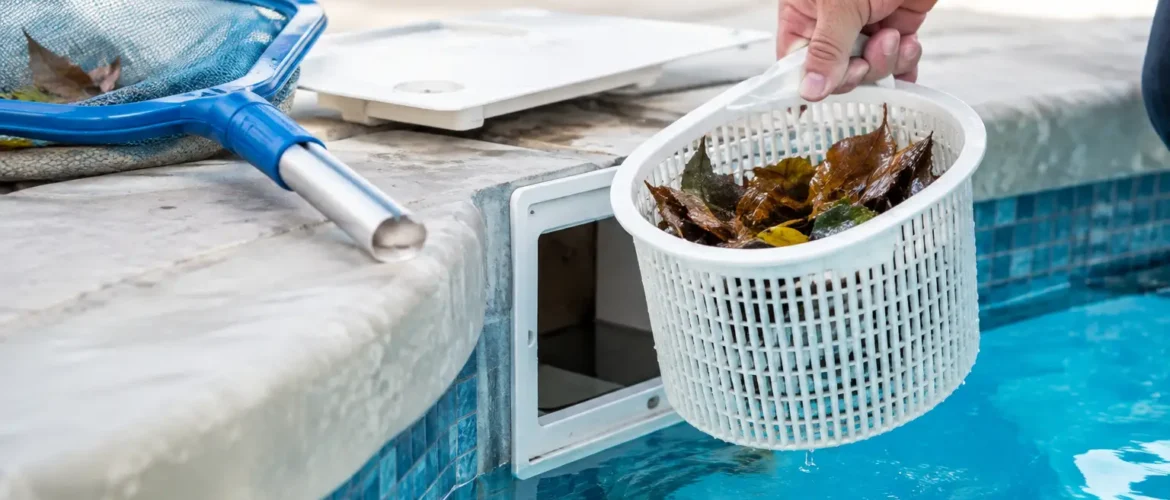
A skimmer that is not doing its job can turn clear pool water cloudy faster than many homeowners expect. Pool skimmer problems affect the entire circulation system, not just the basket at the waterline. When debris is not being pulled in properly, your pump, filter, sanitizer, and water chemistry all have to work harder.
For Connecticut pool owners, a weak skimmer is especially frustrating during spring opening, heavy pollen season, and fall leaf drop. Some causes are simple enough to correct in a few minutes. Others point to an air leak, plumbing issue, or damaged skimmer that should be repaired before it creates a larger problem.
Why the Pool Skimmer Matters
Your skimmer is the opening along the pool wall that draws in surface water. It captures leaves, bugs, grass clippings, sunscreen residue, and other floating debris before that material sinks to the pool floor or reaches the pump basket and filter.
A properly operating skimmer also helps circulate treated water across the pool surface. That matters because stagnant surface water is more likely to collect debris, develop algae, and show uneven chemical readings. One skimmer may not create a dramatic whirlpool, but you should see a steady pull toward the opening when the pump is running.
If your pool has two skimmers, they may not pull equally at all times. Valve settings, plumbing layout, and the use of a vacuum line or main drain can change how much suction reaches each one. The goal is consistent circulation, not necessarily identical movement at every opening.
Signs You Have Pool Skimmer Problems
A full basket is not always the issue. Pay attention to what the water is doing. Leaves that stay on the surface for hours, cloudy water near the pool edges, or a skimmer basket that remains nearly empty despite visible debris can all signal reduced suction.
Other common warning signs include air bubbles returning through the pool jets, a pump that loses prime, a skimmer weir door that stays closed or gets stuck, and a water level that drops below the skimmer opening. In some cases, you may notice that the pump runs normally until the water falls just below the middle of the skimmer mouth, then begins drawing air.
A skimmer issue can also look like a filter or chemistry issue. Before adding more chemicals or assuming the filter has failed, check whether the surface water is actually reaching the circulation system.
Common Pool Skimmer Problems and Their Causes
Weak or No Suction at the Skimmer
The most common cause is a blockage. Start with the skimmer basket, then check the pump basket. A packed basket can restrict water flow enough to make the skimmer appear inactive. Fine debris, pine needles, and leaf fragments can also pass through a damaged basket and collect farther down the line.
A dirty filter may be the next culprit. When filter pressure is high or flow is restricted, the pump cannot move water efficiently through the system. Depending on your equipment, the fix may involve backwashing, cleaning cartridge elements, or servicing a DE filter.
Low suction can also result from valve settings. If a valve is set to favor the main drain, spa, vacuum port, or another suction line, less pull will reach the skimmer. Never force a valve handle. If you are unsure what a valve controls, have a pool professional identify it before making major adjustments.
Low Water Level
Your water level should generally sit around the middle of the skimmer opening. If it falls too low, the skimmer starts drawing air instead of water. That can cause the pump to lose prime and potentially damage equipment if it runs dry for too long.
Water can drop after splash-out, evaporation, vacuuming to waste, or a period of dry, windy weather. A sudden or ongoing loss may indicate a leak. Add water to the proper level first, then watch whether the level continues to decline more quickly than expected.
Air Bubbles and Loss of Prime
Bubbles coming from the return jets often mean air is entering the suction side of the system. The skimmer may be involved, but the actual leak could be at the pump lid, pump lid O-ring, drain plugs, unions, valves, or plumbing fittings.
Check that the pump lid is clean, seated correctly, and has a lubricated, undamaged O-ring. Also inspect the skimmer water level and basket for obvious restrictions. If bubbles continue after these checks, avoid assuming the problem will resolve on its own. Small suction-side air leaks can make circulation inconsistent and put unnecessary strain on the pump.
A Stuck or Missing Weir Door
The weir is the floating flap inside the skimmer opening. It helps direct surface debris into the skimmer and prevents debris from floating back into the pool when the pump shuts off. A weir that sticks closed can reduce surface skimming, while one that is missing or broken makes skimming less efficient.
Leaves, warped plastic, or a damaged hinge can keep the door from moving freely. Turn the pump off before reaching into the skimmer. Remove debris and confirm that the door swings easily. Replacement weirs are usually straightforward, but the correct size and hinge style matter.
Cracked Skimmer Body or Plumbing Connection
A cracked skimmer is a more serious repair. Cracks can develop around the skimmer throat, faceplate, fitting connections, or underground plumbing. On vinyl-lined pools, a worn gasket or failed faceplate seal may allow water to escape behind the liner. On fiberglass pools, the skimmer and its connections still need a watertight seal even though the pool shell itself is highly durable.
Signs of a structural or plumbing issue include recurring water loss, damp soil near the pool, air entering the system, or a water level that stops dropping at roughly the bottom of the skimmer. Professional leak detection and pressure testing can pinpoint the source without unnecessary digging.
Simple Checks Homeowners Can Make
Before scheduling a repair, turn the pump off and inspect the visible components. Empty the skimmer and pump baskets, check the water level, and look for a damaged basket or weir door. Make sure the pump lid is sealed and that no valve has been accidentally moved into an unusual position.
Then restart the system and watch it for several minutes. Look through the clear pump lid, if your pump has one. A properly primed pump should be filled with water and should not show a persistent stream of air. At the pool, observe whether debris begins drifting toward the skimmer and whether the return jets are producing steady water flow.
Do not use a garden hose, drain snake, or high-pressure air to force a suspected clog through the skimmer line. Those methods can damage fittings, shift debris deeper into the plumbing, or create a bigger repair. A service technician has the right tools to clear and test the line safely.
Connecticut Weather Can Make Skimmer Issues Worse
Seasonal conditions place extra demands on pool equipment in Connecticut. Spring openings often reveal baskets packed with winter debris, dry pump lid O-rings, and valves that need to be reset for normal circulation. Summer storms can quickly fill skimmer baskets with leaves and mulch. In fall, a skimmer may need daily attention if mature trees surround the backyard.
Winterization is equally important. Skimmer lines must be properly prepared before freezing temperatures arrive. Water left in a vulnerable line can freeze and expand, potentially cracking fittings or plumbing. A correct closing process protects the skimmer, plumbing, and equipment so your pool is ready for a smoother opening next season.
When to Call for Pool Skimmer Repair
Call a pool service professional when the skimmer has no suction after the baskets, water level, filter, and visible valve settings have been checked. You should also schedule service for recurring air bubbles, a pump that will not hold prime, visible cracks, unexplained water loss, or suspected underground line damage.
Prompt repair is usually less expensive than waiting. Poor circulation can lead to algae growth, increased chemical use, overworked equipment, and a pool that is less enjoyable when your family is ready to use it. EZ Aqua Fiberglass Pools can evaluate the circulation system, locate the cause of the issue, and recommend the practical repair rather than treating the symptom alone.
A skimmer should quietly handle the debris you barely notice. If yours is not pulling water the way it should, address it early and keep your pool circulation working the way it was designed to.