

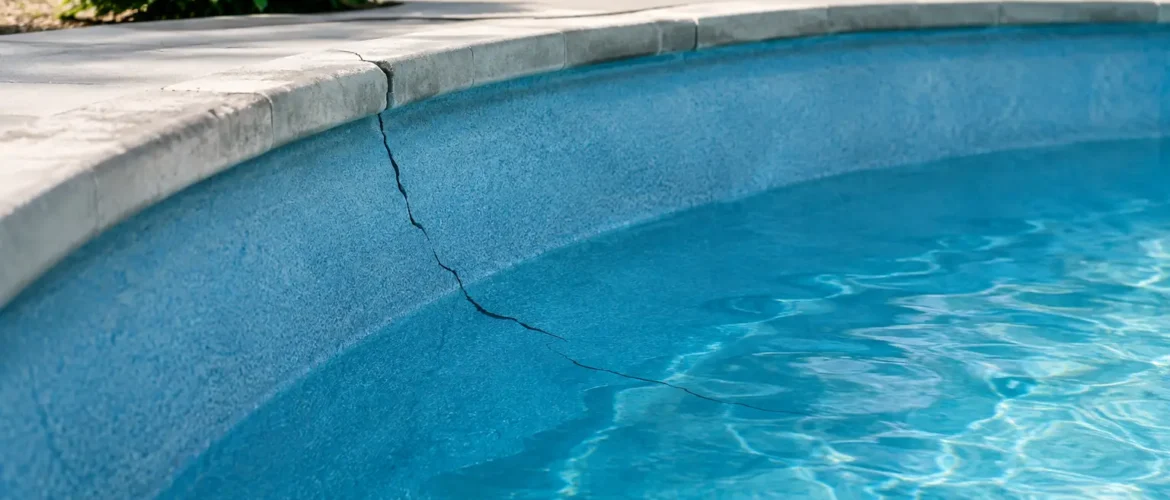
A thin line on a pool wall can be unsettling, especially when you have invested in an inground pool and your backyard is finally where you want it to be. The good news is that not all pool shell cracks mean the same thing. Some are limited to the surface finish, while others point to movement, water pressure, or damage that needs prompt professional attention.
For Connecticut homeowners, the right response depends on the pool material, where the crack is located, whether it is changing, and whether the pool is losing water. A quick inspection can prevent a small repair from becoming a larger renovation project.
Not All Pool Shell Cracks Are Structural
The word “crack” covers several very different conditions. In a fiberglass pool, homeowners may see fine hairline marks in the gel coat. These are often called crazing or spider cracking. They can affect the appearance of the pool surface without extending through the fiberglass structure itself.
A structural crack is more serious. It may run deeper into the fiberglass layers, appear as a longer split, create a sharp edge, or allow water to move behind the shell. In concrete pools, cracks can develop as the structure settles or shifts. Vinyl-lined pools do not have a visible finished shell in the same way, but a tear in the liner or a problem behind the liner can also require investigation.
The key is not to assume the worst, but also not to paint over a crack and hope it disappears. The proper repair starts with identifying what has actually cracked.
Signs a Crack Needs a Professional Inspection
A surface mark that has looked the same for years may be primarily cosmetic. A new or growing crack deserves closer attention. Watch for changes in the pool water level, soft soil around the pool, damp areas near the shell, or a section of decking that has shifted or settled.
You should also schedule an inspection if the crack is wide enough to catch a fingernail, has sharp or lifted edges, crosses a fitting or return line, or appears near steps, benches, or the floor-to-wall transition. These areas can experience different stresses than a flat pool wall.
Water loss is particularly important. Evaporation is normal, particularly during hot, windy weather, but a pool that loses water faster than expected may have a leak. Do not rely on a visual check alone. A technician can determine whether the water loss is from plumbing, equipment, a liner, or the pool structure.
Why Fiberglass Pools Can Develop Surface Cracks
Fiberglass pools are manufactured as a one-piece shell with layers of fiberglass and a protective gel coat. They are designed to flex slightly and perform well in changing ground conditions. Still, no pool is completely immune to damage.
Fine gel coat cracking can result from age, repeated temperature changes, impact damage, or stress around an accessory or fitting. In some cases, improper backfill, poor compaction, or inadequate support around the pool can contribute to shell movement. A major impact from heavy equipment, a falling object, or aggressive pressure washing can also damage the surface.
Connecticut’s seasonal weather adds another consideration. Freeze-thaw cycles, saturated soils, and groundwater conditions can put pressure on the area around an inground pool. Proper installation and drainage matter because the shell needs stable, even support over the long term.
That does not mean every fiberglass surface crack is an installation failure. A qualified pool professional needs to examine the location, depth, pattern, and surrounding conditions before drawing that conclusion.
Settlement and Groundwater Are Worth Taking Seriously
Soil movement can create stress on any inground pool. Poor drainage can allow water to collect around the pool, while changing groundwater levels can create pressure beneath an empty or partially drained shell. This is one reason homeowners should never drain an inground pool without professional guidance.
If you notice cracks after a period of heavy rain, landscaping work, deck construction, or excavation near the pool, mention that timing during your service call. Those details can help identify whether the issue is isolated surface damage or part of a larger site condition.
How Pool Shell Cracks Are Repaired
The correct repair depends on the material and the cause. For fiberglass pools, minor gel coat damage may be cleaned, prepared, filled, color-matched, and refinished. A good cosmetic repair should blend with the surrounding surface as closely as possible while restoring a smooth, safe finish.
When damage extends into the fiberglass, the repair may require grinding out the affected area, rebuilding fiberglass layers, allowing proper curing time, and applying a new finish coat. If the crack is related to movement or inadequate support, repairing the surface alone may not be enough. The contractor may first need to address drainage, backfill, plumbing, or soil conditions.
Concrete pool crack repairs can involve structural patching, injection methods, resurfacing, or more extensive renovation work. For vinyl-lined pools, the focus may be on patching or replacing the liner and checking the wall, floor, and plumbing behind it.
A repair estimate should explain what is being repaired and why. Homeowners should be cautious about any one-size-fits-all answer, especially if the contractor has not checked for leaks or examined the pool in person.
What You Can Do Before the Service Visit
There are a few practical steps that make an inspection more productive. Take clear photos of the crack from several angles and include a wider photo showing its location in the pool. If possible, note when you first noticed it and whether it has changed in length, width, or appearance.
Keep the water level at its normal operating level unless a pool professional tells you otherwise. Avoid draining the pool, using harsh abrasive cleaners, or attempting a DIY epoxy repair before the cause is known. Temporary products can make a later repair more difficult and may hide clues that help diagnose the problem.
If the crack has a sharp edge, limit use of that area until it is inspected. If you believe the pool is leaking or you see soil washing out near the pool, contact a pool service company promptly.
Preventing Future Cracking and Damage
Prevention begins with a proper installation, stable base preparation, correct backfill, and drainage planning. It continues with routine ownership habits. Maintain balanced water chemistry, because highly aggressive water can dull or damage pool finishes over time. Use appropriate tools for cleaning, and do not allow heavy equipment or excavation work near the pool without considering the shell, plumbing, and surrounding deck.
Seasonal care also matters in Connecticut. A properly installed safety cover, correct winterization, and attention to drainage help protect the pool area through the off-season. If you are adding a patio, retaining wall, outdoor kitchen, or major landscaping, involve pool professionals early so the project does not create drainage or access issues around the pool.
For homeowners considering a repair, renovation, or replacement, EZ Aqua Fiberglass Pools can inspect the condition of the pool and help determine whether a surface repair, leak investigation, or broader project is the appropriate next step.
A crack is not automatically a reason to replace a pool, but it is a reason to get clear answers. The sooner you understand whether you are dealing with a cosmetic finish issue or a structural concern, the more choices you have to protect your pool and keep your backyard ready for the season.