

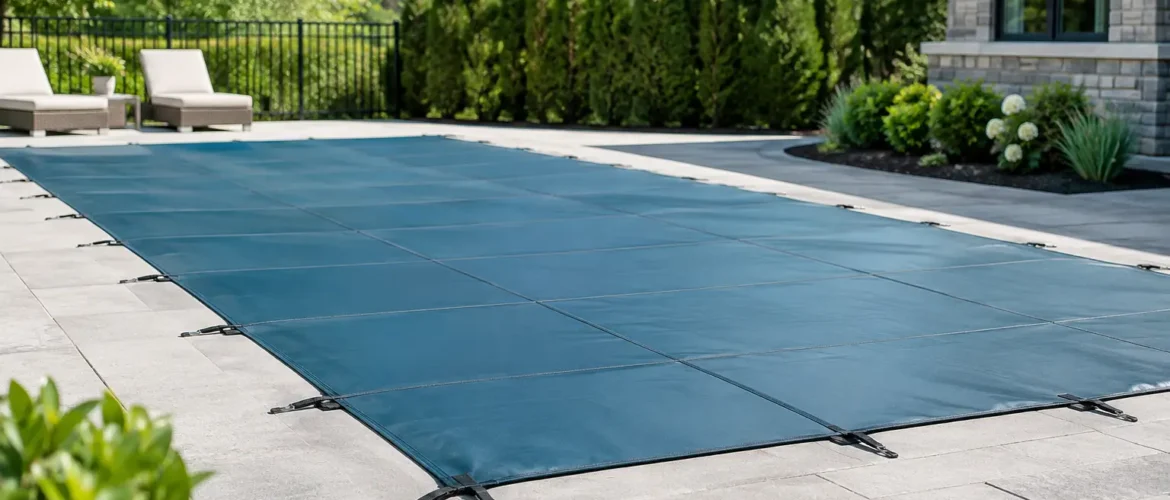
A safety cover can look like a simple piece of material stretched across the pool, but it has a serious job to do through a Connecticut winter. The best pool safety cover reviews do more than praise a cover’s appearance or price. They look at how securely it is anchored, how it handles snow and water, how well it fits the pool, and whether the installation is built for real family use.
For homeowners with children, pets, or frequent backyard visitors, a properly selected and installed safety cover is one of the most practical pool safety upgrades available. It also reduces the mess that reaches your pool over the off-season, helping make spring opening more manageable.
Pool Safety Cover Reviews Should Start With Safety
A true safety cover is not the same thing as a basic winter cover. Standard winter covers are often held down by water bags, blocks, or cable systems. They can keep leaves and debris out, but they are not designed to support the weight of a person or pet who accidentally walks onto the surface.
Safety covers use a tensioned system of straps, springs, and recessed anchors around the pool perimeter. When correctly measured and installed, the cover is designed to stay secure over the pool opening rather than sagging into the water. Many quality safety covers are manufactured to meet ASTM F1346 safety requirements when installed according to the manufacturer’s instructions. That distinction matters, especially for a household with young children or animals.
When reading reviews, pay attention to comments about the cover’s fit and tension. A cover can be made from excellent material and still underperform if it was measured poorly, installed with weak anchors, or left without proper tension adjustment.
Mesh vs. Solid Safety Covers
The biggest decision in most pool safety cover reviews is whether mesh or solid material makes more sense for the property. Neither choice is automatically better. The right option depends on your backyard, your maintenance expectations, and how much water and debris your pool receives.
Mesh safety covers
Mesh covers allow rain and melting snow to drain through the material. This prevents water from pooling on top, which is a major advantage during Connecticut’s wet fall and winter weather. Because they do not need a cover pump, mesh safety covers are generally easier to manage after installation.
They are also lighter and easier to handle when it is time to remove, clean, or store the cover. For many homeowners, that convenience is the deciding factor.
The trade-off is that fine debris, dust, and sunlight can pass through the mesh. A standard mesh cover may leave more sediment in the pool at opening time than a solid cover. Higher-density mesh materials can filter more debris and light, but they may cost more and still will not provide the same complete barrier as a solid cover.
Solid safety covers
Solid safety covers block sunlight, rainwater, leaves, and fine debris from entering the pool. This can help limit algae growth and often results in cleaner water when the cover comes off in spring. If your property has heavy tree cover, a solid cover can be especially appealing.
The important consideration is water management. A solid cover needs a way to remove water that collects on top. Some systems use a cover pump, while others include a drain panel that allows water to pass through a designated section. A pump adds another piece of equipment to monitor and maintain. Drain panels reduce that task, but some debris and sunlight can still enter through the panel.
For homeowners who want the cleanest possible opening and do not mind checking a pump, a solid cover may be worthwhile. For those who prefer low-maintenance winter care, mesh is often the more practical choice.
What to Look for in Pool Safety Cover Reviews
Online ratings can be helpful, but a five-star review does not tell you much unless it explains why the homeowner was satisfied. Focus on the details that affect performance over many winters, not just the delivery experience or how the cover looked on day one.
Look for feedback on these four areas:
- Fit around the pool: The cover should extend beyond the pool edge and account for the exact shape, steps, raised walls, ladders, rails, and other features.
- Anchor and hardware quality: Brass anchors, stainless steel components, durable springs, and properly installed straps all contribute to dependable long-term use.
- Water and debris handling: Reviews should explain whether the cover drains well, resists leaf buildup, and keeps the pool reasonably clean.
- Installer service: Accurate measuring, clear operation instructions, seasonal adjustments, and responsive service matter as much as the cover material itself.
Be cautious with reviews that only compare covers by price. A lower-cost cover can become the expensive option if it fits poorly, requires frequent repairs, or needs replacement after only a few seasons. A safety cover is a long-term piece of pool equipment, not an accessory to buy based on the lowest quote.
Installation Is Part of the Product
Safety cover installation is especially important on custom-shaped pools, fiberglass pools with wide coping, pools with attached spas, and backyards with stone patios or irregular deck layouts. The installer must create a precise template and place anchors where they will provide consistent tension without damaging the surrounding surface.
Concrete, pavers, natural stone, wood decks, and composite decking all require different installation approaches. In some cases, extra hardware or custom work is needed around raised walls, diving boards, handrails, water features, or unusual step configurations. That is normal. It is also why an estimate based only on a pool’s length and width may not be enough.
A professional installation should include a demonstration of how to put the cover on, remove it, adjust strap tension, and store it. You should also know how to inspect springs, straps, anchors, and any drainage equipment before winter arrives.
For a fiberglass pool, proper measurements are particularly important because the cover needs to work with the pool’s finished deck and the shape of the shell. The pool itself may be a standard model, but the surrounding patio and features are rarely identical from one property to the next.
Questions to Ask Before Choosing a Cover
Before ordering a safety cover, ask whether the proposed material is mesh, solid, or solid with a drain panel. Ask how water will be managed, what hardware is included, and whether the quote covers installation, measuring, and a storage bag.
It is also smart to ask about warranty coverage. Find out what is covered for the fabric, straps, springs, anchors, and installation work. Normal wear is different from a manufacturing defect, and knowing the difference ahead of time prevents surprises later.
Ask your contractor how the cover will work with your specific backyard. A property under mature trees has different needs than an open yard exposed to wind. A family with a dog that spends time outside may prioritize a high-strength safety system. A homeowner who travels often in winter may favor a mesh cover that does not rely on a pump.
A Better Way to Compare Safety Cover Quotes
When comparing quotes, make sure each one covers the same scope of work. Material type, cover size, hardware, special features, installation method, and water-removal equipment can all change the price. A quote for a basic mesh cover should not be compared directly with a solid cover package that includes a pump and custom treatment around stairs.
The best choice is usually the cover that fits your pool, your deck, and your winter maintenance routine – not the cover with the most impressive marketing language. At EZ Aqua Fiberglass Pools, homeowners can get help evaluating safety cover options based on the pool they own and the way they use their backyard.
A safety cover should give you confidence when the pool is closed, not create another seasonal chore to worry about. Choose one that is measured correctly, installed professionally, and matched to the conditions your Connecticut backyard actually faces.