

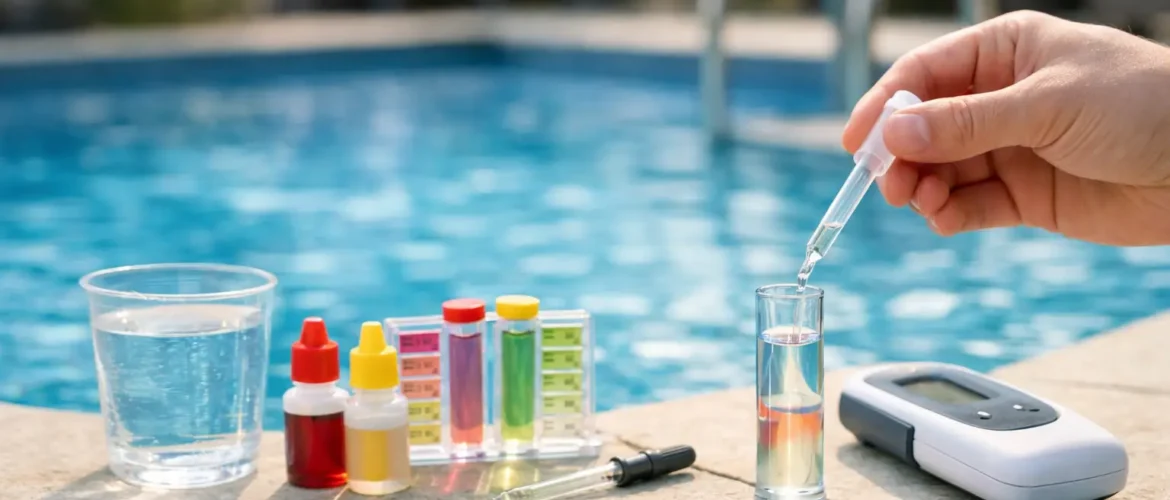
A pool can look clear and still have water chemistry headed in the wrong direction. If your pH seems to bounce around, chlorine is not performing as expected, or you are seeing scale near the waterline, total alkalinity may be the reason. Knowing how to test pool alkalinity gives you an early warning before a small chemistry issue turns into cloudy water, staining, or unnecessary wear on equipment.
For Connecticut pool owners, regular testing matters even more during spring opening, heavy summer use, heat waves, and the weeks leading up to closing. Rain, sunscreen, fresh fill water, and chemical additions can all change the balance. The good news is that testing alkalinity is quick once you have the right kit and know what the result means.
What Total Alkalinity Does in Pool Water
Total alkalinity, often shown as TA, measures the water’s ability to resist sudden changes in pH. Think of it as a buffer for your pool water. When alkalinity is in range, pH is more stable and the rest of your water care routine is easier to manage.
Low alkalinity can allow pH to swing quickly. That may lead to corrosion of metal components, etched surfaces, irritated eyes, and difficulty keeping chlorine effective. High alkalinity often pushes pH upward and can contribute to cloudy water, calcium scale, and deposits on heaters, filters, and waterline tile.
Most residential pools do well with total alkalinity between 80 and 120 parts per million, or ppm. The best target can vary based on your sanitizer, water source, and pool finish. For example, some saltwater pools run more smoothly at the lower end of that range because of their natural tendency to rise in pH. Follow the recommendations for your specific equipment and chemical program if they differ.
How to Test Pool Alkalinity With a Test Kit
A liquid drop test kit is the most reliable at-home option for most homeowners. Test strips are convenient for a fast check, but they can be harder to read precisely, especially when a result falls between color blocks. Digital testers can also be useful, provided they are calibrated and maintained correctly.
Before testing, run the circulation system long enough to mix the water thoroughly. Take the sample from elbow depth, away from return jets, skimmer openings, and chemical feeders. Testing water right at the surface or beside a return can produce a misleading result.
Using a liquid alkalinity test
Rinse the sample tube with pool water first, then fill it to the line indicated in your kit. Add the alkalinity reagent according to the kit directions, usually one drop at a time while gently swirling the tube. Count every drop until the sample changes to its final color, often from green to red or pink.
Many common kits use a simple formula: multiply the number of drops by 10 to get total alkalinity in ppm. If it takes nine drops to reach the endpoint, your result is 90 ppm. Read your particular kit’s instructions, since reagent strengths and calculations can vary.
A clean tube and fresh reagents make a difference. Old test chemicals, especially those that have been stored in a hot shed, can give unreliable readings. Replace reagents when they expire or if colors and results no longer seem consistent.
Using pool test strips
Dip a strip briefly, remove it without shaking excess water onto the pads, and hold it level for the time listed on the package. Compare the alkalinity pad to the color chart in natural light. Indoor lighting can make blue, green, and tan shades difficult to distinguish.
Strips are useful for routine checks, but confirm an unexpected high or low result with a liquid kit before making a large chemical adjustment. That extra five minutes can prevent overcorrecting the water.
Test Alkalinity Before Adjusting pH
Pool owners often reach for pH increaser or pH reducer first. That can be the wrong order. Because alkalinity helps control pH movement, total alkalinity should generally be corrected before making a final pH adjustment.
Test pH at the same time as alkalinity. A typical residential pool pH target is 7.2 to 7.8, with many owners aiming near the middle of that range. If TA is low and pH is low, raise alkalinity first, circulate the water, and retest. The pH may improve along with it.
If alkalinity is high, lowering it requires more patience. Pool acid lowers both pH and total alkalinity. The usual approach is to add the correct amount of acid with the pump running, allow it to circulate, then retest before deciding whether another treatment is needed. Avoid adding a full season’s worth of correction at once. Overshooting can create a low-pH problem that is just as frustrating.
What to Add When Alkalinity Is Low
Sodium bicarbonate, commonly sold as alkalinity increaser, is used to raise total alkalinity. It is different from soda ash, which has a stronger effect on pH. Use a pool volume calculation that is as accurate as possible, then follow the product dosage chart for the number of ppm you need to raise.
Add the product in portions rather than dumping a large amount into one spot. With the pump running, broadcast it across the pool surface or dissolve it first if the label directs you to do so. Brush any material that settles, particularly around steps and shallow areas. Let the water circulate for several hours, then retest.
Do not treat a reading of 75 ppm as an emergency when your pool is otherwise balanced and stable. Small differences are often less concerning than repeated, aggressive chemical corrections. The goal is stable water, not chasing a perfect number every day.
How to Lower High Pool Alkalinity Safely
Muriatic acid or a dry acid product can lower alkalinity, but both must be handled carefully. Wear appropriate safety gear, keep chemicals away from children and pets, and never mix products together. Always add chemicals to pool water as directed on the label, never water to a container of chemical.
High alkalinity is commonly paired with high pH, so acid treatment often addresses both readings. Add only the amount recommended for your pool volume and current test result. Keep the pump running, wait for the manufacturer-recommended circulation period, and retest before adding more.
Aeration can help bring pH back up after an acid treatment without raising alkalinity. Point returns upward to create surface movement, run water features, or use other normal circulation methods. This is a controlled process, not a reason to rush repeated acid doses.
When and How Often to Test Pool Alkalinity
During swim season, test total alkalinity at least once a week. Test it more often after a major rainstorm, a large pool party, a water change, algae treatment, or a significant chemical adjustment. When opening a pool in Connecticut, test alkalinity before bringing chlorine, pH, and calcium into their normal operating ranges.
You may not need to adjust TA every week. Once a pool has settled into a consistent routine, alkalinity can remain steady for long periods. Testing is still worthwhile because it helps you spot trends before they affect water clarity or equipment.
Keep a simple record of readings, chemicals added, and unusual events. If pH keeps climbing or alkalinity repeatedly drops, your notes can reveal whether the cause is rainwater, a sanitizer system, frequent splash-out, new fill water, or a dosing habit that needs adjustment.
Common Testing Mistakes That Create Bad Readings
The most common mistake is testing immediately after adding chemicals. Give the pump time to circulate water before checking the result. Another is using a sample collected near a return jet, where chemical concentrations may be different from the rest of the pool.
Homeowners can also misread the color-change endpoint in a liquid test. Add drops slowly near the expected endpoint and swirl between drops. If the final color seems to fade or you are unsure whether it has changed fully, repeat the test with a fresh sample.
Finally, do not assume every pool needs the same chemistry target. A fiberglass pool, a vinyl-lined pool, and a plaster pool can have different maintenance considerations. Your equipment, sanitizer, source water, and local conditions all affect the right approach.
If your readings will not stabilize or you are dealing with cloudy water, scale, stains, or repeated pH problems, professional water testing can save time and chemicals. EZ Aqua Fiberglass Pools can help Connecticut homeowners identify the cause and get their pool water back to a manageable routine, so more of the season is spent swimming instead of troubleshooting.
Pingback: How to Balance Cyanuric Acid in Your Pool - EZ Aqua Fiberglass Pools
Pingback: Pool Ownership Guide for Connecticut Homes - EZ Aqua Fiberglass Pools